REVIEW · BEIJING
4-Hour Private Tiananmen Square and Forbidden City Tour
Book on Viator →Operated by Sunflower Tours China · Bookable on Viator
Tiananmen and the Forbidden City, in one focused pass. This private half-day tour helps you avoid the language mess and move through Beijing’s top sights with a guide who explains what you’re actually looking at. I also like that it’s door-to-door, with pickup offered and transport included within the 4th Ring Road, so you spend less time sorting logistics and more time seeing the sites. One thing to keep in mind: this tour needs to be booked 8 days in advance, because the Forbidden City ticket situation can fall apart if you wait too long.
You’ll get a friendly English-speaking guide, and the pacing is built for first-time visitors who don’t want to wander blindly for hours. I’m especially glad this format gives you personalized attention and room for a little customization, since Tiananmen and the Forbidden City mean different things to different people. The main drawback is that the schedule is tight—4 hours goes fast—so if you want long, slow museum-style time in every hall, you’ll feel a bit rushed.
In This Review
- Key things I’d focus on before you go
- Price and what you actually get for $188
- Meeting point to Forbidden City exit: how the tour flows
- Tiananmen Square with context, not confusion
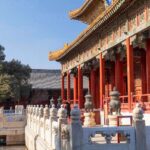
- Forbidden City (Palace Museum): the “walkthrough” that actually teaches
- Hall of Middle Harmony: rehearsal space and imperial messaging
- Hall of Great Harmony: the biggest hall, fast look
- Hall of Preserving Harmony: national exams and royal events
- Palace of Heavenly Purity: the emperor’s sleeping-to-office role
- Hall of Union: timing, water, and imperial seals
- Gate of Heavenly Purity and the quiet side of court spaces
- Palace of Earthly Tranquility: the Empress’s rooms and weddings
- Imperial Garden: a calmer finish inside the walls
- Why the itinerary length works for first-timers
- What I’d ask your guide before you arrive
- Getting value: who should book this private tour
- A quick reality check on timing: book early for Forbidden City access
- Should you book the 4-hour private Tiananmen and Forbidden City tour?
- FAQ
- FAQ
- How long is the tour?
- Is hotel pickup offered?
- Where does the tour start and end?
- Are tickets included for Tiananmen Square and the Forbidden City?
- How far in advance do I need to book?
- Is lunch included?
Key things I’d focus on before you go
- Private guide, English support that helps you make sense of what’s in front of you instead of just taking photos.
- Door-to-door convenience, including pickup offered and taxi fare within the 4th Ring Road.
- Forbidden City time management, with a set sightseeing plan that hits the big halls plus the garden.
- Ticket timing matters, because this experience requires booking at least 8 days ahead for access.
- Short stops with context, like the halls used for ceremonies and imperial rehearsals, not just random wandering.
- One extra you should plan for, since there’s a coffee break option that’s at your own expense.
Price and what you actually get for $188
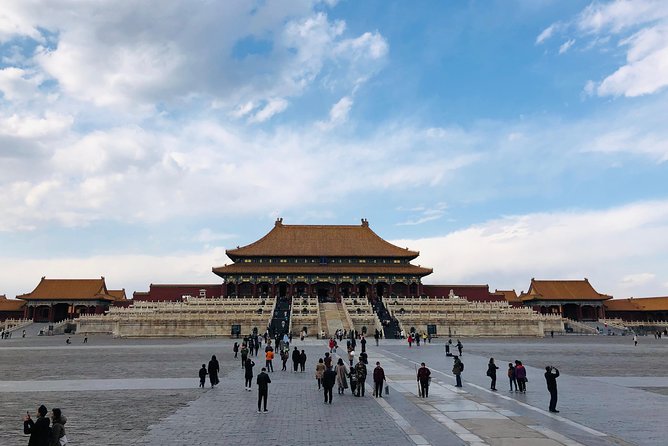
At $188 per person for a 4-hour private tour, the value depends on how you travel. If you’re coming as a small group—or you simply hate navigating independently—this price starts to make sense fast. You’re paying for three things that matter in Beijing: translation help, pre-arranged access, and less time spent figuring out transport and entry points.
The tour includes entrance fees and the Tiananmen Square reservation, plus taxi fare within the 4th Ring Road. If you’re staying near that zone (or you’re okay limiting taxi rides to where the tour covers), you’ll likely feel like you’re getting your money’s worth. If you’re farther out and end up paying extra for transport, the cost advantage shrinks a bit—but you still gain the structure of a private plan.
Also, you’ll be happy to know the experience runs about half a day and includes a morning or afternoon option. That flexibility is useful if you’re trying to line up other activities in the same day.
You can also read our reviews of more city tours in Beijing

Meeting point to Forbidden City exit: how the tour flows
The tour starts at the Beijing Planning Exhibition Hall (20 Qian Men Dong Da Jie, Dong Cheng Qu) and ends at the Forbidden City area near Jing Shan Qian Jie. Practically, that means you get dropped off where the Forbidden City sightseeing actually begins, and you don’t have to coordinate a separate route for your afternoon plans.
The guide meets you at the lobby (or at the designated start location), and then you go straight into the main attractions. The end point is inside the broader Forbidden City area, which can be a win if you want to keep exploring after the tour window.
You should wear comfortable shoes. This is “look up, walk, and stand” sightseeing, and the Forbidden City surfaces and routes can be uneven. You’ll also want a moderate fitness level, since you’re moving between halls and spending time outdoors or in large buildings.
Tiananmen Square with context, not confusion
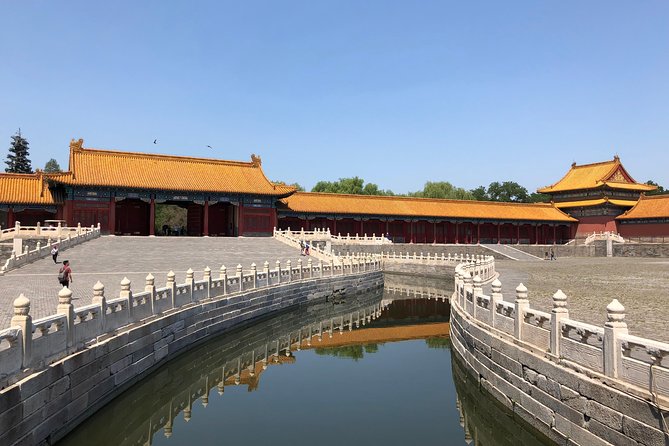
The tour’s first stop is Tiananmen Square, where you’ll spend about 20 minutes. Admission is listed as free, but the real value here is that you don’t just stand in the plaza like a tourist postcard—you get explanations about why the place matters and what to look for.
For many first-time visitors, Tiananmen Square is overwhelming. It’s huge, and it’s easy to miss the meaning while you’re busy trying to figure out orientation. A private guide helps you get your bearings fast: where important sightlines are, what events are tied to the area, and how the square relates to the imperial city you’ll see next.
A practical note: the schedule depends on advance ticket planning. If this tour isn’t booked early enough, the Forbidden City portion may not be available. So treat Tiananmen time as the first step in a planned ticketed route, not a standalone stop.
Forbidden City (Palace Museum): the “walkthrough” that actually teaches
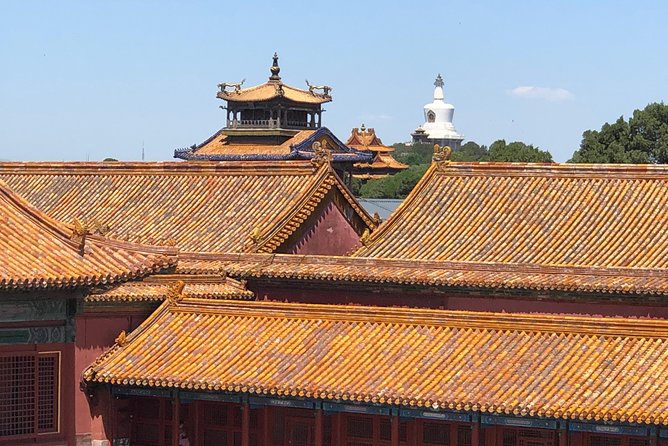
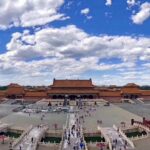
After Tiananmen, you head to the Palace Museum, the Forbidden City. You’ll spend about 3 hours exploring, with several key halls included along the way. This is the portion where the guide’s explanations make the biggest difference.
The Forbidden City can be a blur if you’re only looking at architecture. The private tour format makes it easier to “read” the space: why certain buildings mattered, what roles they played, and how the layout reflects imperial authority. It’s not just pretty gold roofs and big rooms—it’s the physical logic of an empire, simplified into a tour you can handle in a half day.
You’ll also get included time at some of the most famous structures inside the complex, which is ideal if it’s your first visit and you want the highlights without missing the major ceremonial areas.
Hall of Middle Harmony: rehearsal space and imperial messaging
Next up is the Hall of Middle Harmony (Zhonghe Dian). You’ll spend about 10 minutes here. This hall served as a kind of rehearsal room, where emperors practiced speeches or rested before major ceremonies.
That detail matters. When you hear what the hall was for, the grandeur stops being just decoration. You begin to notice the building as a stage—an in-between space where the performance of power was prepared.
The itinerary also points out specific decorative elements (like golden unicorn details). Even if you don’t have time to study every symbol, the guide’s pointing and quick explanations help you catch the “why” behind the visuals.
You can also read our reviews of more private tours in Beijing



Hall of Great Harmony: the biggest hall, fast look
Then you’ll go to the Hall of Great Harmony (Taihe Dian) for about 20 minutes. This is identified as the biggest hall in the Forbidden City, and it’s the kind of room that makes you understand why the emperors needed architecture that felt unmovable.
In a tight tour, you won’t have endless time to wander, but you do get the key viewing moments: you see the scale, the details, and the ceremonial layout. If you’re the type who likes getting the main photo and the main meaning in the same stop, this pacing works well.
Hall of Preserving Harmony: national exams and royal events
You’ll also visit the Hall of Preserving Harmony (Baohedian) for around 15 minutes. This hall is described as the second largest, and it has a specific story: it’s connected to national royal examinations and also royal banquets.
That’s a nice change of pace because it broadens the Forbidden City beyond just rulers and ceremonies. You’re getting a reminder that the imperial system wasn’t only about thrones—it also controlled education, exams, and the broader selection of officials.
There’s even a coffee break option listed here, but it’s at your own expense. For me, that’s a helpful moment to reset, especially if you’ve been standing and walking in strong sun or cold winter air.
Palace of Heavenly Purity: the emperor’s sleeping-to-office role
The itinerary includes the Palace of Heavenly Purity with about 20 minutes. It’s described as having served as the emperor’s sleeping chamber, then later becoming an office in the back court.
This stop is useful because it shows how the daily life of power worked. It’s not all formal ceremonies and public moments. The guide can connect the space to how authority was managed behind the scenes.
If you’re the kind of visitor who likes “what happened here” answers, this is a strong stop because it’s tied to human routines—sleep, work, and administration.
Hall of Union: timing, water, and imperial seals
Next is the Hall of Union for about 10 minutes. Here, the itinerary highlights birthday celebrations of the Empress and mentions a water clock and imperial seals.
Even in 10 minutes, those details give you something to hold onto. Instead of only thinking about architecture, you can picture events and objects tied to court life. This is exactly the kind of quick, practical interpretation that makes a short tour feel smarter—not just faster.
Gate of Heavenly Purity and the quiet side of court spaces
You’ll pass through the Gate of Heavenly Purity and then move through areas associated with the royal family’s sleeping chambers, with about 10 minutes here.
This part is a bit more about atmosphere and layout. You’re walking a transition between grand, ceremonial spaces and the more private functions of the palace complex. The guide’s explanations can help you understand why certain areas feel more sheltered or “inside” compared with the outward halls.
If you like your sightseeing guided by meaning rather than sightseeing-for-sightseeing’s-sake, this stop is worth it.
Palace of Earthly Tranquility: the Empress’s rooms and weddings
You’ll spend about 10 minutes at the Palace of Earthly Tranquility. The itinerary describes it as the Empress’s sleeping chamber and also notes it served as a wedding hall for the emperor.
Again, context makes this easier to appreciate. A fast visit doesn’t let you linger, but it does let you connect the dots: court life wasn’t separate from personal life. It was all part of the same system, displayed through rooms and functions.
Imperial Garden: a calmer finish inside the walls
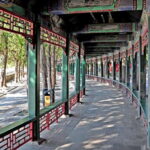
The last Forbidden City stop on the itinerary is the Imperial Garden of the Palace Museum, about 15 minutes. The garden is described as an oasis inside the Forbidden City, with flowers, trees, plants, pavilions, and rock formations.
This is a really practical way to end. After you’ve seen multiple halls and ceremonial spaces, you need a visual “exhale.” The garden gives you that. You’ll also notice how nature and crafted elements were used to soften the empire’s hard edges.
If you’re traveling with anyone who gets tired of indoor halls, this garden is a morale booster—and it breaks up the walking rhythm just enough.
Why the itinerary length works for first-timers
A common worry with any short tour is missing too much. Here, the structure makes a lot of sense: Tiananmen for orientation, then the Forbidden City for the highest-impact buildings plus quick interpretations.
The time distribution is tight, but it’s designed to prevent the most common first-visit mistake: spending an entire day in one section and then realizing you skipped the big ceremonial halls. You don’t do that on this plan.
You also avoid one more problem: traveling without language support. Even if you can read signs, a guide helps you connect the dots quickly—what each hall was for, how imperial life worked, and why the Forbidden City layout is the way it is.
What I’d ask your guide before you arrive
Because this is private and customizable, you can get more out of it with a few targeted questions. If you want to make the most of the 4 hours, ask:
- Which 2–3 halls do you consider essential for a first visit, and why?
- What should I pay attention to at each hall: layout, function, or specific symbols?
- If I want photos, where are the best moments to stand without blocking others?
- Is there any flexibility in order if the entry flow is slow?
Also, based on a standout experience from the guides, it helps to know you might get real problem-solving, not just scripted explanations. One review specifically thanked Maggie for going above and beyond and for helping book tickets for other activities the same day. That kind of coordination can turn a simple tour into a smoother Beijing itinerary.
Getting value: who should book this private tour
This tour is a good fit if you:
- Are visiting Beijing for the first time and want Tiananmen + Forbidden City without spending hours planning routes.
- Don’t speak Chinese and want someone to handle communication and ticket access.
- Prefer guided interpretation over self-guided wandering.
- Like a structured half-day that still leaves time for other activities later.
It might feel less ideal if you:
- Want a slow, museum-level pace with long breaks in every room.
- Are hoping for deep study of artifacts or long audio-style reading.
- Are planning to take lots of taxis outside the 4th Ring Road (since that transport isn’t included).
A quick reality check on timing: book early for Forbidden City access
The itinerary makes the key requirement clear: this tour must be booked 8 days before your travel date, otherwise Forbidden City tickets may not be available. That single detail is worth treating like the headline.
If you’re arranging multiple bookings in Beijing (even just a couple), lock this one in early first. It’s the kind of plan that can save you from last-minute disappointment when ticket windows tighten.
Should you book the 4-hour private Tiananmen and Forbidden City tour?
I think this is a smart booking for first-time visitors who want the biggest Beijing icons with minimal friction. You’re not paying just for a car and an English voice—you’re paying for ticket access, interpretation, and a route that keeps the day from collapsing into confusion.
If your priorities are meaning over guesswork, and you like the comfort of a guide handling the hard parts, you’ll probably enjoy this. If you’re the type who thrives on independent exploration and you’re comfortable dealing with tickets on your own, you might find a cheaper approach. But for most people, the combination of private guidance and tight, efficient sightseeing is exactly the kind of value that makes a short visit feel complete.
FAQ
FAQ
How long is the tour?
The tour runs about 4 hours (approx.).
Is hotel pickup offered?
Yes, pickup is offered, and your guide will meet you in your hotel lobby or at the tour start point.
Where does the tour start and end?
It starts at Beijing Planning Exhibition Hall and ends at the Forbidden City area (near Jing Shan Qian Jie, Dong Cheng Qu).
Are tickets included for Tiananmen Square and the Forbidden City?
Yes. Tian’an Men Square reservation is provided, and entrance fees are included, including admission for the Palace Museum and several halls inside the Forbidden City.
How far in advance do I need to book?
This tour must be booked 8 days before your travel date, or Forbidden City tickets may not be available.
Is lunch included?
No, lunch is not included. There’s a coffee break option during the tour, but it’s at your own expense.