REVIEW · BEIJING
Beijing Private Religious Tour: White Cloud Temple, Lama Temple, Niujie Mosque
Book on Viator →Operated by Catherine Lu Tours · Bookable on Viator
Four faith stops, a calmer Beijing day. This private religious route links Lama Temple, Confucius/Guozijian, White Cloud, and Niujie Mosque with stories your guide tells as you go. I especially like the entry fees handled in advance so you’re not stuck at the ticket booth, and the day is run with a private driver from your hotel. One drawback to plan for: the total day is about 8 hours, and if you want extra time at a site, the tour notes there may be an extra fee after that window.
The pace works well if you want context without getting bounced from stop to stop. You’ll start around 8:30 am, get a included Chinese lunch, and keep moving between monuments with air-conditioning. The itinerary is also flexible, so if weather or your interests shift, the order and timing can be adjusted.
In This Review
- Key Points to Know Before You Go
- Why This Beijing Religious Route Works Better Than a Rushed Group Day
- Lama Temple (Yonghegong): A Big, Colorful First Stop for Buddhism
- Temple of Confucius and Guozijian: Where China Taught Officials to Think
- White Cloud Temple (Baiyunguan): Daoism and the Quanzhen Tradition
- Niujie Mosque: Islam’s Long Presence in Beijing
- Lunch and Timing: How the Pace Stays Comfortable for 8 Hours
- Price and Value: Why $144 Can Be a Smart Deal for This Day
- English Guide Quality: When Peter and Stephen Know How to Explain
- Who Should Book This Private Religious Tour
- Should You Book It? My Practical Take
- FAQ
- What time does the tour start?
- How long is the tour?
- Is hotel pickup and drop-off included?
- Does the tour include an English-speaking guide?
- Are entrance tickets included?
- Is lunch included?
- What sites are visited?
- Is this a private tour?
- Is there an extra charge if the tour runs longer than 8 hours?
- Is gratuity included in the price?
Key Points to Know Before You Go
- Pre-paid entry saves time: admission is covered so you skip the ticket-booth wait.
- Hotel pickup and drop-off: you’re not navigating transit or sorting taxis between sites.
- Four major religious monuments: Buddhism, Confucianism, Daoism, and Islam, all in one day.
- Lunch is included: a local Chinese meal is part of the value equation.
- English guides with strong explanations: guides Peter and Stephen are called out for clear English and detailed storytelling.
- Time is the trade-off: each stop is about an hour, so bring curiosity, not stopwatch pressure.
Why This Beijing Religious Route Works Better Than a Rushed Group Day
Beijing has a way of eating up time. Lines, transfers, and “quick photo, next stop” energy can turn a meaningful site into a blur. This tour is built to avoid that trap by keeping the day tight in structure but relaxed in flow. You’ll visit a compact cluster of religious monuments—enough variety to feel like you learned something, without the frantic sprint of many big group tours.
What I like most is that the tour doesn’t treat religion as a checklist. With an English-speaking guide (and strong clarity from guides like Peter and Stephen), you get the background you need to read what’s in front of you: why these places matter in Chinese history, and how different faith traditions took shape in China over time.
Also, the practical setup helps: pickup from your hotel, an air-conditioned vehicle, and entrance tickets handled for you. That means less mental math and more attention on the buildings, the symbolism, and the stories.
You can also read our reviews of more private tours in Beijing
Lama Temple (Yonghegong): A Big, Colorful First Stop for Buddhism
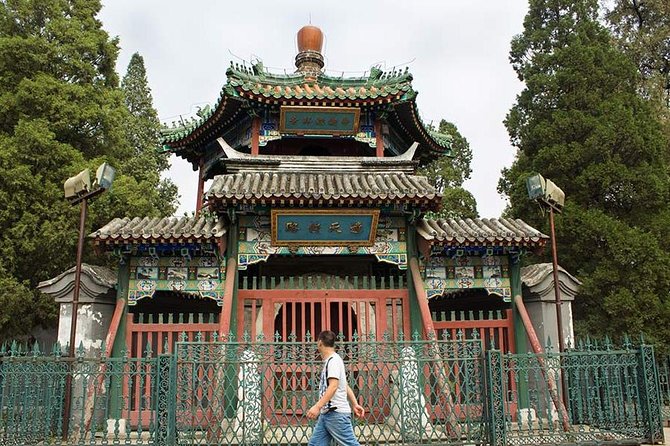
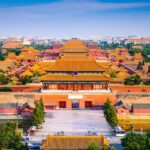
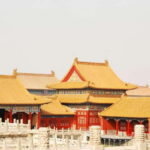
Starting with Lama Temple (Yonghegong) is a smart move. It gives you an immediate anchor point for Beijing’s Buddhist heritage before the day’s other traditions come into focus. You’ll have about an hour here, and the included admission keeps things simple.
In a place like Yonghegong, the key is to let the guide frame what you’re seeing. The architecture and interior details can look like they’re just decorative at first glance, but the guide’s explanations help you connect elements to Buddhist meaning—so you’re not just looking, you’re understanding.
How to make the most of your hour
- Go in ready to follow the guide’s story, not just your photo instincts.
- If you’re sensitive to crowds, you’ll still likely feel the site’s popularity—an hour is best for seeing highlights without getting stuck in a long wander.
A small watch-out
If you want a slow, linger-at-every-hall kind of visit, one-hour time blocks across multiple sites may feel short. The tour’s strength is the overall day flow, not deep-dive time at a single location.
Temple of Confucius and Guozijian: Where China Taught Officials to Think
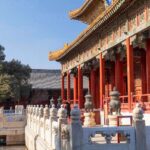
Next up is the Temple of Confucius and the Guozijian museum area. This pairing matters because Confucianism wasn’t just a set of beliefs; it shaped how education and government worked in imperial China. The Temple of Confucius connects you to worship and tradition, while Guozijian is tied to the ancient system that trained scholar-officials.
This stop is also about switching your lens. After Buddhism’s visual richness, Confucianism can feel more restrained—yet it’s still full of meaning. With the guide interpreting the relationship between learning, ceremony, and authority, you start to see why Confucianism influenced daily life and state ideology for centuries.
What you’ll likely enjoy here
- The sense of structure: you’re looking at a system, not just a religion.
- A clear explanation of how worship and scholarship overlapped in imperial culture.
Time check
Again, you’ll have about an hour. That’s usually enough for a guided understanding and a good circuit, but it won’t replace a longer, museum-heavy visit if you’re a Confucian-history specialist.
White Cloud Temple (Baiyunguan): Daoism and the Quanzhen Tradition
Then you’ll head to White Cloud Temple, also connected to Baiyunguan. This is one of the bigger Daoist landmarks in Beijing and tied to the Quanzhen School of Daoism. The temple’s background includes a title that translates as The First Temple under Heaven, and it traces back to early foundations dating to the mid-8th century.
This is a stop where the guide’s storytelling really pays off. Daoist sites often look like they’re built for both spiritual practice and visual symbolism. Without context, you can miss the point of the design choices—how tradition shapes what matters, what’s emphasized, and what visitors are expected to notice.
Why this stop is valuable on a single-day itinerary
You’ll see how a different tradition adapted to China’s cultural environment. By placing it after Confucius, the day helps you compare belief systems side-by-side: ethics and governance on one side, Daoist spirituality and tradition on the other, then back to a living religious community later with Islam.
Possible drawback
If you’re not interested in Daoism specifically, this stop can feel slower, because it rewards attention to detail and explanation. If you do like symbolism and spiritual history, it’s one of the most interesting hours of the day.
Niujie Mosque: Islam’s Long Presence in Beijing
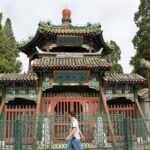
The last major stop is Niujie Mosque. The tour describes it as one of the oldest and most important mosques in China, and also as the largest mosque in Beijing. That’s a big claim, and it’s exactly why this stop works as a finale: it shifts from temple complexes to a living, community-centered religious site.
With about an hour here, you’ll have time to take in the setting and listen to your guide connect the mosque to Islam’s presence in China. This is also where you feel the different rhythm of the day. Earlier stops are strongly tied to historic religious traditions in architecture and ritual space; Niujie Mosque brings a sense of ongoing community significance.
How to approach this hour
- Keep your focus on what your guide explains about the mosque’s history and importance.
- Avoid turning it into a quick photo-only stop. The meaning sits in the context.
A practical note
Like many famous religious sites, it may involve areas where people are moving through for worship and daily activities. That means you may need to adjust your pace and be respectful about where and when you walk.
Lunch and Timing: How the Pace Stays Comfortable for 8 Hours
This tour runs for about 8 hours, starting at 8:30 am. In practice, that means you’ll spend roughly an hour at each of the four big stops, plus driving time between them. The good news is that the itinerary is designed to avoid that “one minute per site” syndrome.
Lunch is included, and it’s described as a complimentary Chinese lunch at a local restaurant. That’s not a small detail for value. It saves you from spending time hunting for food between sites, and it reduces the mental overhead of planning meals while you’re in transit.
Your guide also has flexibility to adjust the itinerary based on interests, weather, or unexpected conditions. That flexibility can be a lifesaver in Beijing, where weather shifts can change comfort levels fast.
One timing consideration
The tour notes an extra fee after the 8-hour mark. So if you’re the type who always wants one more photo round or wants to sit quietly for a longer spell, decide early what pace you want. The tour’s best use is to let the structure carry you.
Price and Value: Why $144 Can Be a Smart Deal for This Day
At $144 per person for an 8-hour private tour, the key question is what you’re actually buying. Here, you’re getting more than a guide’s time.
Included in the price:
- Hotel pickup and drop-off
- Air-conditioned vehicle with a private driver
- Entrance tickets to the sights
- Lunch at a local restaurant
- Guide service fee, plus gas, tolls, and parking
That combination matters. Beijing monuments are spread enough that transit and entry can add up quickly if you do it on your own, especially when you factor in time lost to logistics. For a day that covers four major religious sites, you’re paying to protect your time and make the experience smoother.
It’s also a private tour, meaning it’s just your group, not a shared shuffle with strangers. That usually leads to a better flow for questions and pacing.
The only reason the price might not feel right
If you’re already strong at navigating Beijing and you don’t care about a guide’s explanations, you could DIY parts of this day. But if you want context and a handled schedule, this price starts to look fair.
English Guide Quality: When Peter and Stephen Know How to Explain
One of the best clues that this tour delivers is the specific praise for guide performance. Guides named Peter and Stephen are highlighted for clear English, kindness, and complete explanations. That matters more than people think.
Religious monuments can be visually impressive, but without explanation they can stay “pretty” instead of meaningful. Strong English and thoughtful storytelling turn the day into education you can actually use. It also makes the experience more enjoyable if you’re traveling with family or you want historical stories you can share afterward.
There’s also mention of Chinese fables and folklore being woven into explanations. That kind of storytelling helps history feel less like a textbook and more like something that shaped everyday culture.
Who Should Book This Private Religious Tour
I’d point you to this tour if:
- You’re in Beijing for a short time and want a structured day with minimal hassle.
- You like religious and cultural history, not just sightseeing.
- You want a guide who can explain connections between traditions, from Confucianism to Daoism to Islam.
- You appreciate comfort: pickup, a private driver, and an included meal.
It’s also a solid choice for your first day, because it gives you a framework for understanding Beijing’s cultural identity quickly—especially with the four-faith layout.
Family note
The tour states that children must be accompanied by an adult. If you’re traveling as a family, plan for your kids to handle about 8 hours with multiple sites.
Should You Book It? My Practical Take
If you want a calmer, guided day that covers four major religious monuments without the usual chaos, I think this tour is worth booking. The pre-paid entry saves you time, the hotel pickup removes logistics stress, and the included lunch keeps the day from turning into a hunt for food between temples.
My only hesitation is time pressure. With about an hour per stop, you’ll get a strong guided overview, but not a long, slow reverent wander at a single location. If that’s your style, look for longer individual-site tours. If you like a guided route that helps you connect the dots across traditions, this is a smart way to spend a Beijing day.
FAQ
What time does the tour start?
The start time is 8:30 am.
How long is the tour?
The duration is listed as approximately 8 hours.
Is hotel pickup and drop-off included?
Yes. The tour includes hotel pickup and drop-off.
Does the tour include an English-speaking guide?
Yes. The English-speaking tour guide service fee is included.
Are entrance tickets included?
Yes. Entrance tickets for the sights are included, and entry fees are paid in advance by the tour operator.
Is lunch included?
Yes. A complimentary Chinese lunch at a local restaurant is included.
What sites are visited?
You’ll visit Lama Temple (Yonghegong), the Temple of Confucius and Guozijian Museum, Baiyunguan/White Cloud Temple area, and Niujie Mosque.
Is this a private tour?
Yes. It’s a private tour/activity, and only your group participates.
Is there an extra charge if the tour runs longer than 8 hours?
The information notes that an extra fee is requested after an 8-hour tour.
Is gratuity included in the price?
No. Gratuity to the guide and driver is not included.