REVIEW · BEIJING
4-Hour Small Group Tour to Forbidden City with Entry Tickets
Book on Viator →Operated by Discover Beijing Tours · Bookable on Viator
One walk through the Forbidden City feels like time travel. You get prebooked access plus a guide who explains what you’re seeing, not just where it is—then you can add either Tian’anmen Square or panoramic Jingshan views.
What I like most is the pacing and focus. A small group (up to 15) makes it easier to ask questions, hear the Ming and Qing stories clearly, and keep moving through big ceremonial spaces without feeling totally lost.
One drawback to plan for: Tian’anmen Square security can mean long waits in cold weather, and you’ll often spend more time standing around than you expect. Security lines can stretch past an hour, and sometimes the day runs long.
In This Review
- Key things that make this tour work
- Forbidden City, but with a guide who keeps it straight
- Meeting up, getting in, and why your passport is non-negotiable
- Stop 1: Beijing Urban Planning Exhibition Hall as your quick orientation
- Inside the Palace Museum: a story-first route that still hits the classics
- The Halls of Harmony: where ritual becomes visible
- Palace of Heavenly Purity: the emperor’s work and life
- Imperial Garden: a calm finish that lets you keep exploring
- Tian’anmen Square option: massive scale and strict security
- Jingshan Park (Coal Hill) option: the classic Forbidden City skyline view
- Price and value: what $15 buys you in Beijing
- What the best guides bring (and why it changes the whole experience)
- Who this tour suits best
- Should you book this Forbidden City tour?
- FAQ
- Do I need a passport for this tour?
- What time does the tour start?
- Where do I meet the guide?
- What’s included in the price?
- Can I choose Tian’anmen Square or Jingshan Park?
- How long is the tour?
- What if Tian’anmen Square is closed on the day?
Key things that make this tour work
- Prebooked, fast-access entry to the Palace Museum with a mobile ticket and a guide who helps you get through efficiently
- A story-first route through key spaces like Meridian Gate and the main Halls of Harmony
- Built-in photo help, because the guide will point you toward good viewpoints as you go
- Imperial Garden wrap-up, where you can finish the tour and still keep exploring on your own
- Two optional add-ons: Tian’anmen Square or Jingshan Park (you pick one)
- Passport required, with your name and number tied to the ticket process
Forbidden City, but with a guide who keeps it straight
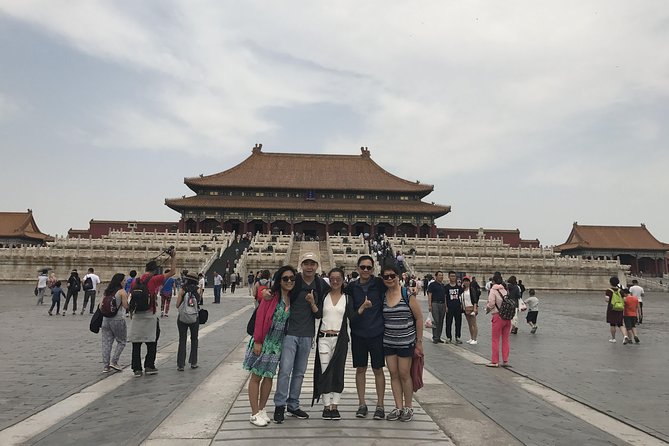
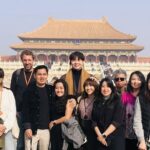
The Forbidden City is huge, but this tour doesn’t try to cram every corridor into your schedule. You’re guided through the big, legible highlights—places that help you understand how the palace functioned across the Ming and Qing dynasties—while the group stays small enough to stay oriented.
This matters because the Forbidden City can be overwhelming fast. Even when you’re staring at a major hall, it’s easy to miss what the building says about power, rituals, and everyday imperial life. A good guide turns the walk into a narrative you can actually remember.
Also, the tour’s structure is practical: you get frequent short stops rather than endless wandering. That keeps energy up, especially when weather turns chilly or windy. And yes, you do get time to sit briefly at the right moment to get the story background before you start moving again.
You can also read our reviews of more tours and experiences in Beijing
Meeting up, getting in, and why your passport is non-negotiable
You’ll make your own way to the meeting area near Beijing Urban Planning Exhibition Hall or Donghuamen. The tour’s start is listed at 10:00am, and the group departs punctually—arrive early.
Here’s the biggest real-world thing: you must bring your passport. Your passport name and number are required at booking, and if the identity check doesn’t match, you can be refused entry. There’s no substitute document situation mentioned—so don’t plan on using a photo or copy.
This is also why the prebooked system helps. The tour provides a fast-access, prebooked ticket, so you’re not starting from scratch at the ticket window. That can shave off a lot of time when crowds are intense.
One more practical tip: you’re walking about 4 hours, and terrain includes stairs and underground passageways. If you have mobility or visual limitations, this route may be rough.
Stop 1: Beijing Urban Planning Exhibition Hall as your quick orientation
You start at Beijing Urban Planning Exhibition Hall for a short orientation break (listed at about 10 minutes and admission free). Think of this as a warm-up so the rest of the day makes sense.
Why it’s useful: the Forbidden City sits in a much larger urban system—streets, squares, ceremonial routes. If you understand the city’s layout, you read the palace differently. Instead of random walls and gates, you start noticing how everything lines up.
You’ll then head toward the Forbidden City entrance as a group, with your guide leading the process so you can focus on learning rather than figuring out logistics.
Inside the Palace Museum: a story-first route that still hits the classics
Once inside, the tour includes a short sit-down intro (listed at about 30 minutes total at the Palace Museum). This is a smart start because the Forbidden City isn’t just one sight—it’s layers of design, rules, and symbolism. You’ll hear Ming and Qing stories early so the buildings stop being just shapes.
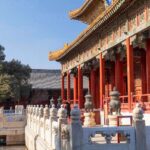
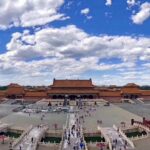
After that, the tour moves through the ceremonial core. You’ll pass and stop near major halls, including the Hall of Great Harmony (Taihe Dian), the Hall of Preserving Harmony (Baohedian), and the Palace of Heavenly Purity area.
Here’s what makes these stops valuable:
The Halls of Harmony: where ritual becomes visible
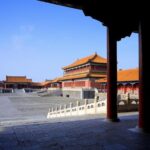
The Hall of Great Harmony (Taihe Dian) is where imperial ceremony peaked. You’re there long enough to walk the courtyards and halls without rushing through the details (listed around 20 minutes). The guide’s job is to explain how the space was used and why it mattered.
Then comes Hall of Preserving Harmony (Baohedian) (also around 20 minutes). This is another key ceremonial layer, and the tour frames it in terms of how emperors prepared and held major occasions. Even if you’re not a history nerd, the explanation makes the architecture feel logical instead of decorative.
One good sign: the tour doesn’t just point at buildings—it helps you understand why there are so many halls and why they’re arranged the way they are.
You can also read our reviews of more city tours in Beijing
Palace of Heavenly Purity: the emperor’s work and life
Next is the Palace of Heavenly Purity zone, where you get into imperial quarters (listed about 20 minutes). You’ll see the Hall of Heavenly Purity and hear about the symbolic couple-space in the Hall of Union. You’ll also be guided to the adjoining area tied to the emperor’s living and working routine.
This portion is less about ceremonies and more about daily rule—what the emperor’s world looked like, and how the palace mirrored authority down to small symbolic choices.
Imperial Garden: a calm finish that lets you keep exploring
The tour ends in the Imperial Garden area (listed around 20 minutes for the guided portion). This is a great ending point because it’s a natural decompression space after the major ceremonial halls.
It also gives you options. The tour stops there, and you can spend longer inside the Forbidden City on your own if you want. Your guide can suggest where to head next, depending on what you’re most curious about.
In practical terms, this is a smart design for a first-time visit. You get the must-see structure, then you’re free to follow your interests—whether that’s more buildings, smaller courtyards, or just lingering for photos.
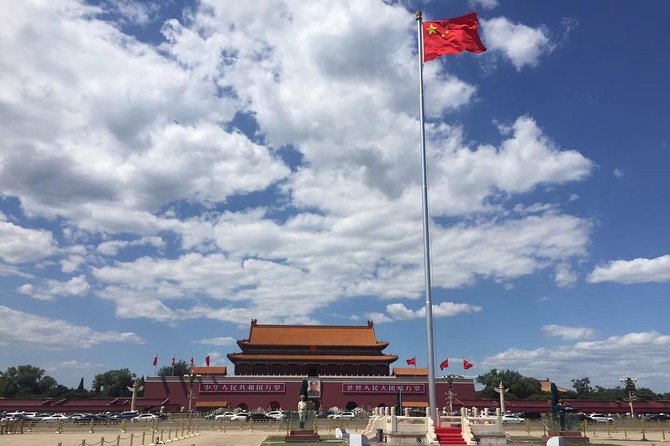
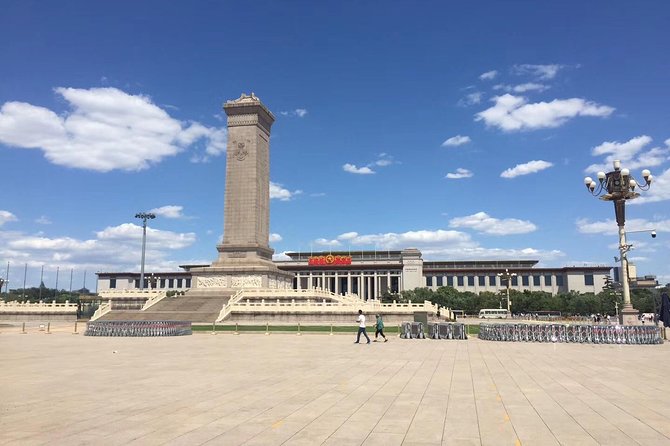
Tian’anmen Square option: massive scale and strict security
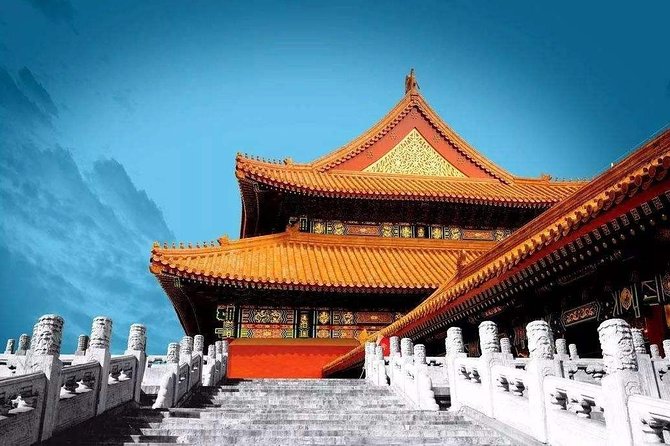
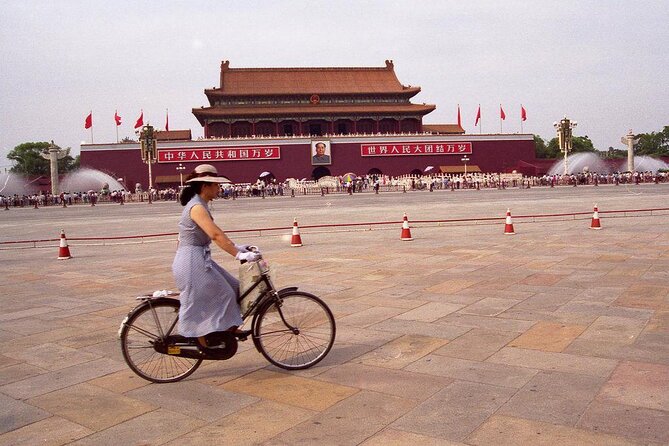
If you choose the Tian’anmen Square + Forbidden City option, the day continues after your Forbidden City time.
Tian’anmen Square is listed at about 440,000 square meters (about 109 acres). It’s hard to picture that size until you’re standing in it. Your guide points out major buildings and explains why the square became such a central stage for public life.
But you’re also walking into the reality of security and crowd control. The tour notes that Tian’anmen Square can close without advance notice due to government activity, and in that case you skip the square. It also warns that security checks can be especially stringent, and if waiting tops one hour, a bus ride that passes by the square may be suggested if most of the group agrees.
In cold weather, that waiting can really wear you down. So my advice is simple: bring a warm layer you can’t compromise on, and treat hydration as part of the plan, not an afterthought.
Jingshan Park (Coal Hill) option: the classic Forbidden City skyline view
If you choose the Forbidden City + Jingshan Park option, you’ll skip Tian’anmen Square and instead add a short climb in Jingshan Park.
This is a different kind of payoff: you’re going up toward a summit for panoramic views of Beijing, including a standout view of the Forbidden City from above. The guide’s role here is practical—getting you to the right spots and managing time so you still leave with energy.
The listed time for this part is about 30 minutes, and the admission is listed as free. Even if you’re not big on viewpoints, this is one of the best ways to “solve” the Forbidden City in your mind—suddenly the whole layout clicks.
Price and value: what $15 buys you in Beijing
At $15 per person, this tour is strongly positioned for value because it bundles three things most visitors end up paying for separately:
- a professional guide
- Forbidden City entrance access
- and (depending on the option) access related to the add-on area
You’re also getting a small-group format capped at 15 travelers. That cap matters in places like this. Larger groups tend to move like a crowd; small groups move like a team, with more chances to ask questions or pause for photos.
And because it’s a prebooked ticket with a mobile ticket, you’re reducing friction at one of the busiest choke points of the day.
The one thing you should value-check is your tolerance for standing time. If you pick the Tian’anmen option and security lines are heavy, you’ll spend more time waiting than you would in an ideal world.
What the best guides bring (and why it changes the whole experience)
One pattern shows up across different guides by name—Jimmy, Maria, Miko, Mina, Sophie, Mike, Vivian, Allen, Jay, Tony, and others. The common thread is clear, energetic explanations and help with timing.
You can feel the difference when a guide:
- explains Ming and Qing stories in a way that stays connected to what you’re looking at
- keeps the route organized so you’re not wandering inside the palace trying to remember what to see next
- helps with photos by pointing you toward good viewpoints while you’re already in the right spot
This is especially useful at the Forbidden City, where the architecture is stunning but also repetitive if you don’t have context. A guide’s storytelling makes the repeated “same-looking” courtyards and halls feel different.
Who this tour suits best
This is a strong fit if you’re:
- first-time in Beijing and want a structured Forbidden City introduction
- short on time but still want the key ceremonial halls and the Imperial Garden finish
- the type of traveler who likes stories tied to architecture, not just facts read off a sign
It’s not a great fit if you:
- need a low-walking, fully flat route (the day includes stairs and uneven steps)
- want to spend the entire day at a single slow pace inside the palace without guided timing
If you’re traveling as a couple, a small family group, or solo, the small-group limit keeps you from getting lost in the crowd shuffle.
Should you book this Forbidden City tour?
Yes, if you want a guided, efficient first look with prebooked entry and a story-driven route through the main ceremonial heart of the palace. The ending at the Imperial Garden is a nice bonus because it gives you both structure and freedom.
Skip or reconsider the Tian’anmen option if you hate waiting in security lines or you’re visiting in deep cold, since time spent standing can quietly eat into your day. If you want the view and less queue stress, the Jingshan Park option is often the calmer choice.
FAQ
Do I need a passport for this tour?
Yes. You must bring your actual passport, and your passport name and number are required at booking. Don’t leave it behind, or you may be refused entry.
What time does the tour start?
The listed start time is 10:00am, and the tour departs punctually. The instructions ask you to arrive about 10 minutes early.
Where do I meet the guide?
You’ll meet your guide at the Beijing Urban Planning Exhibition Hall or Donghuamen area. Your tour instructions also list an exact address near Jing Shan for the meeting point.
What’s included in the price?
The tour includes a professional guide and the Forbidden City entrance fee. Depending on your chosen option, Tian’anmen Square access and/or Jingshan Park ticket access are included as well.
Can I choose Tian’anmen Square or Jingshan Park?
Yes. There are two options: Tian’anmen Square and Forbidden City, or Forbidden City and Coal Hill Park (Jingshan Park). You won’t visit both.
How long is the tour?
It’s listed as about 3 to 4 hours, with walking time that can be around 4 hours.
What if Tian’anmen Square is closed on the day?
Tian’anmen Square might close without advance notice due to government activity. If that happens, the tour skips the Square.