REVIEW · BEIJING
4 Hours Private Discover Beijing Tour by Sidecar
Book on Viator →Operated by Beijing Sidecar Tours · Bookable on Viator
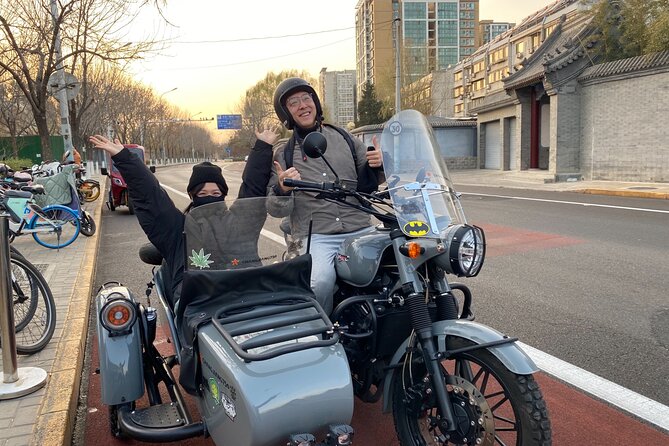
A sidecar gives Beijing a pulse. This 4-hour sidecar tour takes you beyond big streets into hutongs, so you see the city’s monuments and its everyday lanes in one smooth loop.
I love the way it mixes big, landmark areas with smaller, less-obvious spots, with plenty of photo stops along the way. You also get short walks into temples and alleys to slow down, look up, and actually notice details.
I also like the practical hotel pickup and drop-off, which keeps your morning easy. And the ride can come with a helmet setup that includes Bluetooth audio, so you can hear the commentary without fiddling with your phone.
The main drawback is simple: this experience needs good weather. If it’s raining or the conditions are rough, the plan may shift or you’ll be offered a different date or a refund.
In This Review
- Key highlights you’ll remember
- Why a sidecar tour makes sense in Beijing
- From the Bell & Drum Towers to the hutongs: your quick orientation
- Houhai lake stop: a calm break between classic landmarks
- White Dagoba (Baita Si) and Miaoying Temple area: a quick temple moment
- Niujie Mosque and Ox Street: food and local life in a Muslim neighborhood
- Yongding Gate and Ming City Wall Park: understanding Beijing’s layout
- The 9:30 start and how the pacing feels
- Safety and comfort: helmets, rain gear, and seat switching
- Guide quality: local storytelling and real help with photos
- Price and value: what $129 per person buys you
- Who should book this (and who might skip it)
- Should you book the 4-Hour Sidecar Discover Beijing Tour?
- FAQ
- What time does the tour start, and how long is it?
- Is hotel pickup and drop-off included?
- What’s included with the tour besides the sidecar ride?
- How does seating work in the sidecar?
- Are admission tickets included for the sights?
- What happens if the weather is poor?
Key highlights you’ll remember
- Private ride for your group: only your party participates.
- Central-axis orientation: Bell & Drum Towers to Yongding Gate helps you understand Beijing’s layout.
- Hutong time with real street life: narrow alleyways where you feel the day-to-day rhythm.
- Houhai pause by the lake: a chance to relax with coffee or tea.
- Ming City Wall drive-by: you’ll see the ancient wall areas as part of the route.
Why a sidecar tour makes sense in Beijing
Beijing can feel huge at first. One day you’re staring at grand buildings; the next you’re trying to figure out where the old city fits with the newer parts. A sidecar tour is a smart way to compress that learning curve into a few hours.
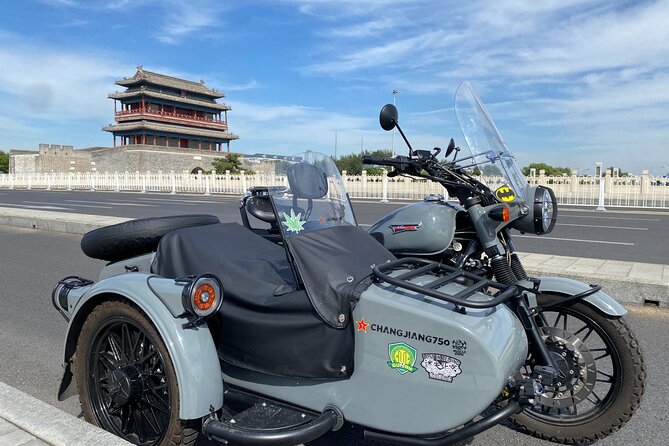
Instead of just sitting in traffic, you move like you belong to the streets. The sidecar format is ideal for photo stops too—you can pull in close, pause at viewpoints, and then continue without losing the flow of the day. And because the route includes both central landmarks and smaller hutong areas, you get a balanced first impression rather than a checklist.
This tour is also built around short, workable moments. You’ll ride a lot, but you’ll still have chances to step out briefly: into temple areas, into alleyways, and into the kind of streets where you can see daily life up close.
You can also read our reviews of more private tours in Beijing

From the Bell & Drum Towers to the hutongs: your quick orientation
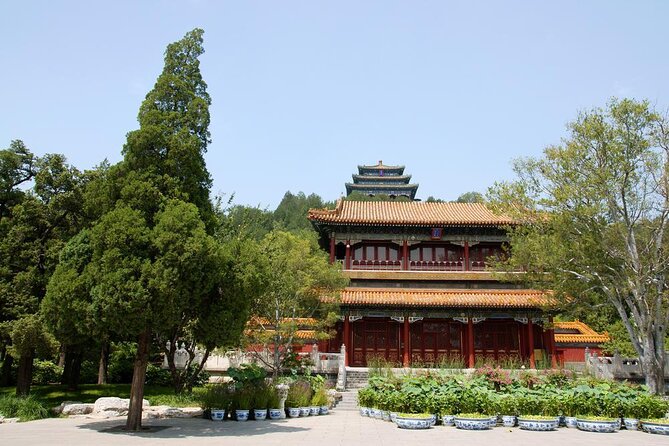
The tour begins at Bell & Drum Towers, and the setup makes sense right away. From the pickup, you head toward Beijing’s central axis, where these two landmark buildings anchor the city’s famous north-south layout.
Bell & Drum Towers
- Admission is free for this stop.
- It’s a prime photo spot, and the route is timed so you can view the area without it turning into a long drawn-out visit.
Then the real Beijing starts to show up. After the landmark area, you ride into the hutongs—those traditional small alleys that make Beijing feel human-scale. This is the part I’d treat as the heart of the experience: not because it’s trendy, but because the narrow lanes are where you notice how people actually live. You don’t need to be an architecture expert. You just need to look around.
Photo pauses and small walking breaks
You’ll get lots of photo opportunities, and the itinerary includes brief walks into a few alleys so the tour doesn’t feel like a constant drive-by. That’s the difference between seeing Beijing and getting a feel for it.
Houhai lake stop: a calm break between classic landmarks
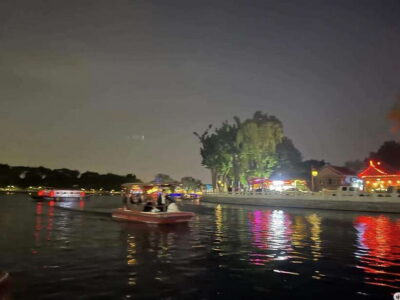
Next comes Houhai, a beautiful lake in the old hutong area. This stop changes the tempo. After moving through tight streets, you get open space and a slower visual rhythm.
Houhai is also where the tour gives you a simple comfort: you ride along the lake and have time to relax with coffee or tea. That matters more than it sounds. Four hours can pass quickly, and this is one of those breaks that makes the whole day feel balanced rather than rushed.
If you’re the type who likes to photograph landscapes, reflections, or just atmospheric street scenes, this is a natural moment to do it. Even if you’re traveling fast, a pause by the water gives your brain a reset.
White Dagoba (Baita Si) and Miaoying Temple area: a quick temple moment
After Houhai, the route continues south toward the Temple of the White Dagoba (Baita Si), also tied to Miaoying Temple. The stop is short, but it’s designed for a meaningful glance at spiritual architecture rather than a full-day temple expedition.
This is what you can expect:
- You’ll ride onward and pass the well-known landmark White Tower Temple area.
- The time at the temple stop is about 15 minutes.
- Admission is free for this stop.
A short temple visit can work well on a sidecar tour. You get the atmosphere without needing a long commitment, and you can spend your energy on observation: the form of the pagoda, surrounding temple structures, and the sense of place.
Niujie Mosque and Ox Street: food and local life in a Muslim neighborhood
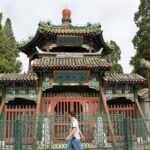
One of the best “feel the city” segments is Niujie Mosque in the Niujie area, often linked with Ox Street. This part of the day is practical: it mixes sightseeing with a local food break.
At Niujie / Ox Street
- You’ll have about 30 minutes here.
- Admission is free for this stop.
- The itinerary is set up so you can taste local food and have something to drink, like coffee or tea or another beverage.
This is also where the route gets interesting geographically. The Niujie area is known for its distinct Muslim community life, and the street experience adds variety to the day. Instead of only temples and old-city gates, you also get markets, storefront energy, and everyday conversation.
One more layer here: the route passes by an older Buddhist temple and notes that the Buddhist Academy of China is located there. Even if you don’t do a long interior visit, the area helps you connect Beijing’s religious landmarks across different communities.
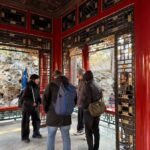
Yongding Gate and Ming City Wall Park: understanding Beijing’s layout
As the tour continues, you head toward Yongding Gate, described as the south starting point of the old city central axis. If you’ve ever felt lost in Beijing’s big-circle planning, this kind of anchor point helps.
Yongding Gate stop
- It’s part of your orientation—how Beijing’s central structure is laid out, from the south approach.
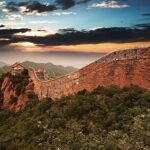
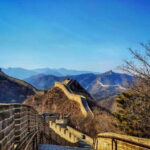
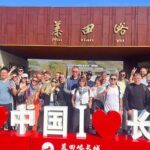
Then you reach Site of Ming City Wall Park, where you explore parts of the Ming Dynasty city wall. The route highlights that you’ll drive through antique sections of the wall that are tied to around 600 years of history.
What you’ll like here:
- It’s not just a wall behind a fence; the sidecar ride keeps you moving through the area.
- The stop is around 15 minutes, which works well for a morning/early afternoon sightseeing block.
This portion is valuable because it completes the old-to-old loop: central axis landmarks, old-city gates, and then the wall structure that physically defined the city’s boundaries.
The 9:30 start and how the pacing feels
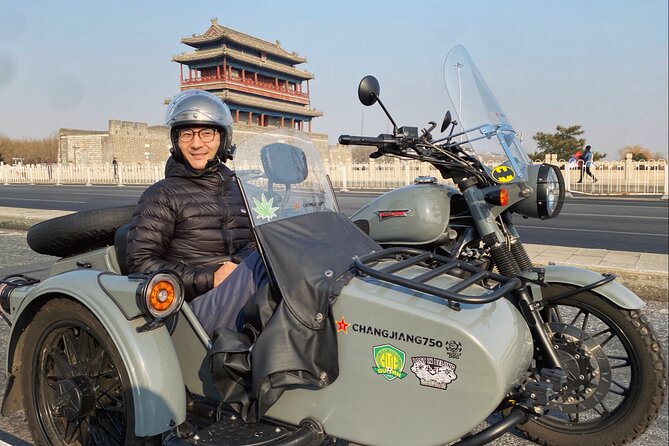
The tour starts at 9:30 am and runs about 4 hours. Within that window, you’re doing a lot without it feeling like marathon travel. That’s the advantage of a private sidecar route: you don’t waste time regrouping or waiting on other tour groups.
The pacing is built from:
- short landmark/photo stops (often around 10–15 minutes),
- at least one longer street/food moment (about 30 minutes),
- and several “ride + view + quick walk” sections.
What you can plan for practically
- Wear comfortable shoes even if you only walk briefly.
- Bring a light layer if the weather is cool; you’ll be outside for parts of the day.
- If rain is possible, count on getting the included rain gear, and be ready for slower visibility.
Because it runs on good-weather conditions, this tour is best when Beijing is offering clear skies or at least manageable conditions for short walks.
Safety and comfort: helmets, rain gear, and seat switching
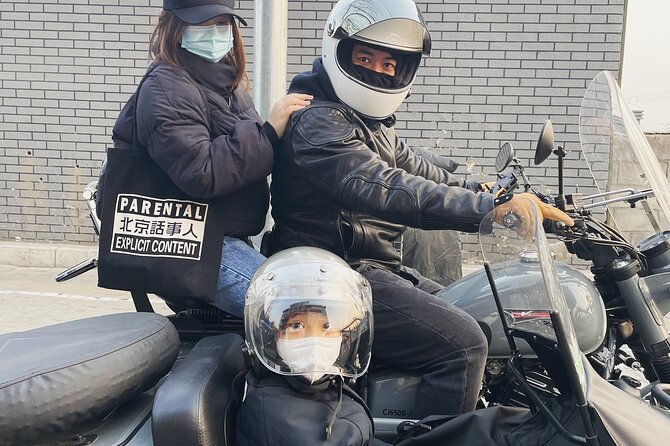
This tour is set up with safety gear from the start. You’ll get helmets, plus bottled water and a raincoat. There’s also a phone charge cable included, which is a small detail, but it helps if you’re relying on your phone for maps, photos, or translation.
Seating and flexibility
There are 2 passengers in one sidecar: one in the sidecar and one behind the driver. The tour also notes you can switch half way. That’s worth knowing if you have motion-sensitivity preferences or if one seat offers better views for photos.
Sound and cold-weather comfort
One standout detail mentioned in the experience notes is that the helmets can include Bluetooth so you can hear the guide while you ride. In colder conditions, guides may provide comfort items like a scarf and hot tea, which can turn a chilly ride into something you actually enjoy.
Guide quality: local storytelling and real help with photos
The tour runs with a professional driver/guide, and the guide part is not just about facts. You get practical context while you move through streets, plus guidance for seeing what matters.
In the kind of tour where you’re hopping between gate areas, temple zones, and hutongs, the guide’s job is to:
- explain what you’re looking at,
- connect the landmarks to Beijing’s layout,
- and help you stop at good photo moments without overdoing it.
Guides can also shape the day based on your interests. If you care more about neighborhoods than temples, or you want more central landmarks, you can often steer the balance. One guide named John is specifically mentioned as friendly and as someone who grew up in the city and shares that personal, street-level perspective. That local angle is what makes the tour feel like a real introduction rather than a scripted ride.
Price and value: what $129 per person buys you
At $129 per person, this isn’t the cheapest way to tour Beijing—but it can be excellent value for what’s included.
Here’s what you’re getting beyond transportation:
- Private tour just for your group.
- Hotel pickup and drop-off (big time-saver).
- Helmets, bottled water, and a raincoat.
- A phone charge cable.
- Lunch: Beijing local fast food or snacks.
- Short admissions are listed as free for key stops.
If you’re comparing it to doing all the pieces yourself—taxi rides between scattered locations plus admissions plus food—you start to see why the price can feel fair. The sidecar ride itself also adds value that a regular car can’t replicate. The ability to reach and navigate tight areas like hutongs is the point.
Best fit for the price
- Couples or small groups who want a special “first Beijing day.”
- People who prefer guided flow rather than planning every turn.
- Travelers who like photos and want lots of quick stops without standing in line.
Who should book this (and who might skip it)
You should book if you want:
- a first impression of Beijing that includes both central landmarks and local alley life,
- a fun way to ride through hutongs without the hassle of navigating,
- a guided day where someone else handles timing and route logic,
- a practical tour length—about 4 hours.
You might think twice if:
- you’re very sensitive to motion or noise from a motorcycle ride,
- you dislike weather-dependent tours,
- or you want a long, slow visit at major museums/temples. This tour is built for short stops, not all-day deep interiors.
Should you book the 4-Hour Sidecar Discover Beijing Tour?
For most first-timers, I think this is a smart choice. It’s private, timed well, includes hotel pickup, and uses the sidecar format to access the kind of small alley life that most conventional tours miss. The stops are also well spaced: landmarks for context, hutongs for texture, Houhai for a breather, and city-wall areas to tie it back together.
If you’re traveling with someone who needs comfort and straightforward logistics, the included rain gear, helmets, water, and lunch help a lot. If you’re traveling in conditions that promise clear, rideable weather, you’ll get the full benefit.
If weather looks questionable, treat it as a day that might need flexibility. The experience requires good conditions, and the provider will offer an alternate date or a refund if they must cancel.
FAQ
What time does the tour start, and how long is it?
The tour starts at 9:30 am and runs for about 4 hours.
Is hotel pickup and drop-off included?
Yes. Hotel pickup and drop-off are included.
What’s included with the tour besides the sidecar ride?
You’ll get helmets, bottled water, a raincoat, and a phone charge cable. Lunch is also included (Beijing local fast food or snacks).
How does seating work in the sidecar?
The tour notes that there are 2 passengers per sidecar: 1 in the sidecar and 1 behind the driver. Seat switching is possible halfway through.
Are admission tickets included for the sights?
For the listed stops, admission tickets are free (including Bell & Drum Towers, Temple of the White Dagoba, and Niujie).
What happens if the weather is poor?
This experience requires good weather. If it’s canceled due to poor weather, you’ll be offered a different date or a full refund.