REVIEW · BEIJING
All Inclusive Private Tour to Mutianyu Great Wall and Ming Tombs
Book on Viator →Operated by Jenny's Guide & Driver Service · Bookable on Viator
Two UNESCO sites in one calm day. This private outing pairs Mutianyu Great Wall with the Ming Tombs so you get two of China’s biggest history hits without juggling multiple tours. I like the way the plan is built around less-crowded Mutianyu, plus a fully restored section where the steep climbs come with hand rails. I also like the front-to-back convenience: hotel or airport pickup, an English-speaking guide, and entrance fees handled for you.
The main thing to consider is physical effort. The Great Wall sits up on the mountain top, and while you can save time with the included chairlift/cable car, you’ll still be walking on uneven terrain and climbing stairs in spots. The tour also isn’t recommended for people with cardiopathy or asthma.
If you want a private day with clear time blocks and good context—without feeling rushed—you’ll likely appreciate this route. It’s a longish day (about 9 hours), but the pacing is designed to squeeze in meaningful sightseeing at both sites.
In This Review
- Key highlights I’d plan around
- Why Mutianyu and Ming Tombs work so well together
- Private pickup in Beijing: fewer headaches, smoother start
- Mutianyu Great Wall: restored stone, better views, less chaos
- A note on how long 3 hours really feels
- Cable car vs walking: the practical time-saver (and why it’s included)
- Ming Tombs: emperors, stone beasts, and a plan you can actually follow
- The Sacred Way: why it’s more than just a walkway
- The tomb blocks: what you should expect in the time window
- What’s actually included (and what that means for your day)
- Price and value: is $218 per person a fair deal?
- Pacing, timing, and the kind of traveler who’ll enjoy this most
- The biggest wins from real-day feedback
- Should you book All Inclusive Private Tour to Mutianyu Great Wall and Ming Tombs?
- FAQ
- How long is the tour?
- Do we get hotel pickup and drop-off?
- Is lunch included?
- Are entrance tickets included for both sites?
- How do we reach the Great Wall on the mountain?
- Which parts of the Ming Tombs will we visit?
- Is the tour suitable for everyone?
- What are the rules for children?
- What documents are required on travel day?
- Can I cancel and get a refund?
Key highlights I’d plan around
- Mutianyu instead of the busiest wall section for a calmer feel and better viewing
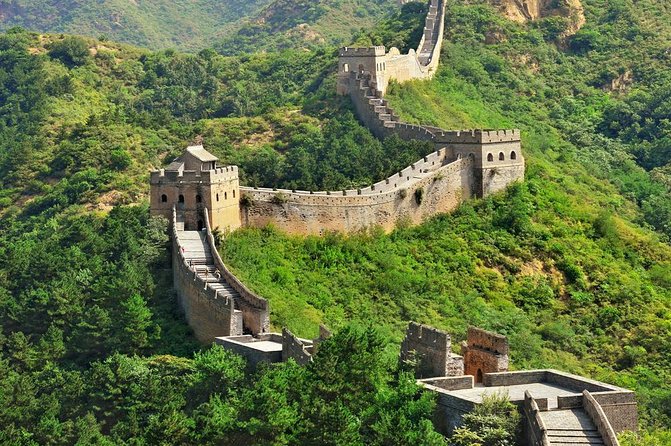
- Restored Wall + hand rails on steep parts, for safer, easier footing
- Cable car/chairlift included so you can spend more time on the Wall, not waiting or walking up
- Ming Tombs on a royal scale tied to 13 Ming emperors and a huge imperial burial complex
- Sacred Way stone sculptures that turn the tomb area into a coherent “story” walk
- Private, English-guided logistics with hotel pickup and drop-off built in
Why Mutianyu and Ming Tombs work so well together
This is one of those Beijing pairings that makes sense on day one. The Great Wall at Mutianyu gives you architecture you can actually study—restored sections, steep terrain, and long sight lines. Then the Ming Tombs shift the mood from dramatic defense to royal ritual: emperors laid out in an imperial burial landscape designed to impress.
What makes the combo valuable is the pacing. You get a dedicated block at Mutianyu (around 3 hours), plus a separate block at the tomb complex (about 2 hours). That keeps you from feeling like you’re speed-walking through two major sites. You’re also not stuck on public transport. Private pickup and drop-off means you’re dealing with fewer moving parts during a full day away from the city.
One more practical plus: lunch is handled. You’ll stop for a nice meal at local Chinese restaurants, so you’re not hunting for food when you’re already tired from the Wall.
You can also read our reviews of more private tours in Beijing

Private pickup in Beijing: fewer headaches, smoother start
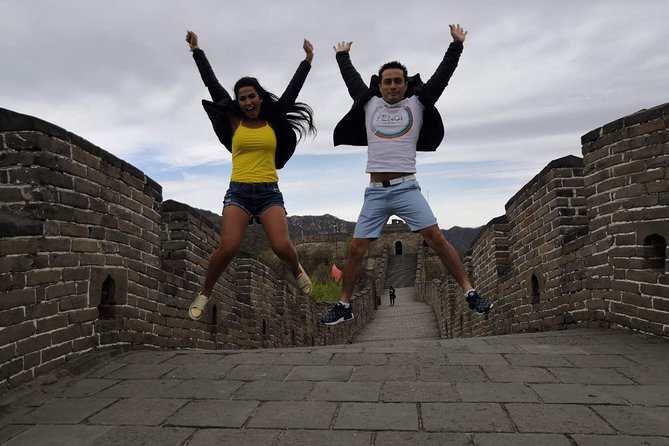
The day begins with hotel or airport pickup, with private transport and a professional driver. Expect about 1.5 hours from downtown Beijing to Mutianyu.
That drive time matters more than most people think. If you try to piece this together yourself—taxis, buses, ticket lines—you often burn energy before you even reach the views. Here, you start with a clean plan. You also get bottled water, which is a small thing until you’re halfway up a stair-and-slope kind of day.
And because this is private, your schedule stays yours. The tour blocks are set (about 9 hours total), but you’re not waiting for a large group to shuffle together.
Mutianyu Great Wall: restored stone, better views, less chaos
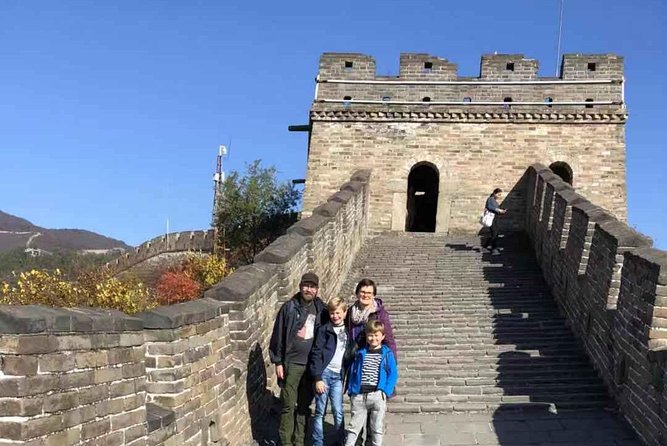
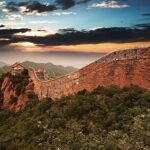
Mutianyu is a bit farther from Beijing than the most famous wall section people tend to rush to first. The reward is that it doesn’t feel as packed. That matters because the Wall is one of those places where crowds can ruin the experience fast—noise, photo jostling, and bottlenecks at the steep sections.
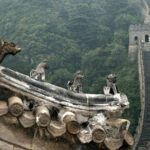
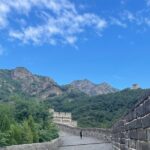
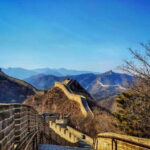
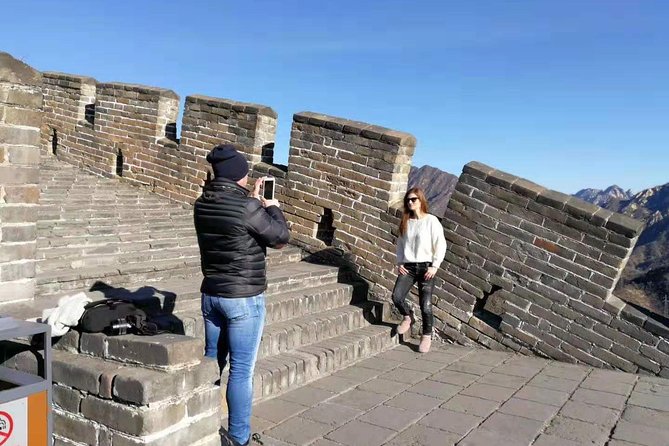
At Mutianyu, the section you visit is fully restored, and the steep parts include hand rails. That combination is exactly what you want if you’re there for the experience rather than a strenuous workout challenge. You still get the drama of the Wall, but you don’t have to guess where your footing should go.
The sightseeing angle is strong too. You’re up high enough to get wide, open views over the surrounding hills. This isn’t just walking on a wall; it’s watching how the Wall relates to the terrain.
A note on how long 3 hours really feels
Three hours on the Wall can feel short when you’re taking photos and pausing for views. Plan on moving at a comfortable pace. The tour’s structure helps here: you’re not trying to cover every inch of Mutianyu in a sprint.
Cable car vs walking: the practical time-saver (and why it’s included)
A key tip here is how the tour handles getting up to the Wall. Since it’s on a mountain top, the route recommends using the cable car/ chairlift instead of a roughly 40-minute walk each way along the mountain path. That’s not just about comfort. It’s about time.
More time on the Wall means:
- better chances to enjoy views without rushing
- fewer fatigue hits that can make the steep sections feel harder
- a calmer pace for photos and stops
The good part is that the cable car/ chairlift and toboggan tickets are included in the tour. You don’t need to figure out pricing or operating rules on the spot. You just follow the plan and keep energy for the sightseeing.
If you prefer walking for fitness, you might still find it appealing, but the tour is clearly optimized for spending your limited hours looking outward, not just getting to the starting point.
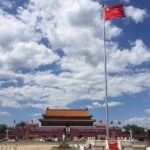

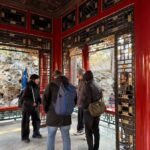
Ming Tombs: emperors, stone beasts, and a plan you can actually follow
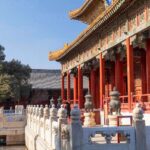
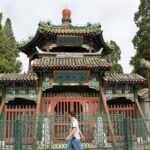
After the Wall, you’ll have lunch at local Chinese restaurants and then head to the Ming Tombs (Ming Shishan Ling). This is the royal burial complex for Ming Dynasty emperors. It’s described as the largest cluster of imperial cemeteries in China, built across a long period of Ming rule.
There’s an organized logic to the site. Three parts are open to the public:
- the Sacred Way
- Changling Tomb
- Dingling Tomb
During your tour, you’ll visit the Sacred Way and then either Changling Tomb or Dingling Tomb, depending on what’s included in your route. Either way, the structure of the visit helps the story make sense: you move from a ceremonial approach into the tomb area.
The Sacred Way: why it’s more than just a walkway
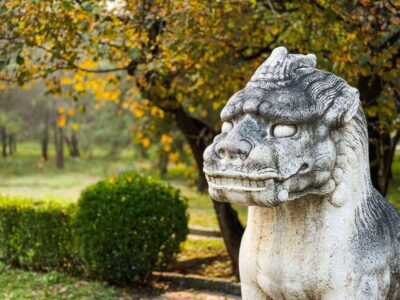
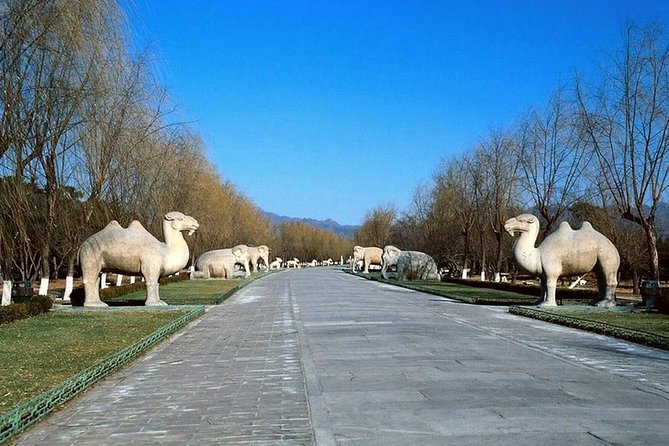
The Sacred Way is the first major attraction and functions like the symbolic entrance to the imperial burial zone. It’s lined with stone sculptures that people recognize immediately as “tribute to power”—including pairs and rows of lifelike figures. The description highlights two lines of stone sculptures, including 12 beasts.
Even if you’re not a hardcore history reader, this part clicks because it gives you a clear sense of how the Ming emperors wanted visitors to feel. You’re not wandering randomly. You’re walking a designed pathway.
The tomb blocks: what you should expect in the time window
You’ll only have about 2 hours at the tomb complex, so it’s not set up as a slow, museum-style day. Instead, it’s a highlight approach: the approach route plus one major tomb visit.
That can be a benefit. If you try to do everything in one day on your own, you’ll spend more time deciding than seeing. Here, the time allocation is simple: enough to feel you covered the key parts, not enough to guarantee every stone carving gets your full attention.
What’s actually included (and what that means for your day)
This tour is designed as an all-in-one private experience, which is why the day feels manageable. Included are:
- private vehicle transport with a professional driver
- an English-speaking tour guide
- hotel pick-up and drop-off
- meals as per itinerary (including lunch)
- bottled water
- entrance fees
- cable car tickets or chairlift and toboggan tickets
That “entrance fees + cable car” combo matters. Those items are often the hidden budget stress on do-it-yourself days. Having them bundled means you’re less likely to lose time at ticket counters or deal with last-minute confusion.
Not included: gratuities, which is pretty standard. If you’re the type who likes to plan in advance, you can decide your tipping approach before the day starts.
Price and value: is $218 per person a fair deal?
At $218 per person, this isn’t a budget hop. But it can be good value if you look at what’s included for the day.
You’re paying for:
- private transport (not shared)
- an English-speaking guide
- entrance fees for both main sites
- lunch
- the cable car/chairlift and toboggan tickets
If you were to recreate this yourself, the “real cost” usually climbs once you factor in tickets, transport, and the time you spend coordinating. For a one-day visit with two major landmarks, paying for the structure can actually save money compared to the DIY route—especially if you’d otherwise hire separate services.
Also, the booking timing mentioned (on average, about 69 days in advance) hints that this is popular. If you can plan early and lock in a schedule, you’ll probably feel the value more strongly. Private days are rarely the kind of thing you want to wing at the last second.
Pacing, timing, and the kind of traveler who’ll enjoy this most
This is a 9-hour day, built around travel time plus fixed blocks at Mutianyu and the Ming Tombs. That means:
- You’ll start early enough to make the most of daylight.
- You’ll likely feel tired at the end, even with cable car help.
- You’ll have less flexibility to wander off-plan than you would on your own.
Who this suits best:
- You want a private day with clear structure.
- You care about getting correct context from an English-speaking guide.
- You prefer Mutianyu over the most crowded wall areas.
- You like the idea of a highlight visit to the tomb complex rather than a full-day dig.
Who should be careful:
- Anyone with cardiopathy or asthma (not suitable as noted).
- People who struggle on uneven ground or steep stair sections, even with hand rails.
- Travelers who want a slow, unstructured day with maximum time at each site.
The biggest wins from real-day feedback
A strong theme in the experience feedback is that the day runs well organized and that the guide is engaging. There’s also praise for guides who answer questions and help the visit feel more connected to both historical context and modern China.
That matters for two reasons. First, the Great Wall can be just rocks and stairs if nobody explains what you’re looking at. Second, the Ming Tombs can feel like “another mausoleum” if the guide doesn’t link the layout to the meaning behind the site.
When you get a guide who stays responsive and keeps to the plan, the day feels like it matched expectations. You spend your time seeing, not waiting.
Should you book All Inclusive Private Tour to Mutianyu Great Wall and Ming Tombs?
I’d book this if you want a straightforward private day that hits the big UNESCO targets without turning your schedule into a puzzle. The biggest reasons are the structure and the included extras: mutianyu time, restored-wall access with hand rails, and the convenience of cable car/chairlift tickets plus entrance fees and lunch.
Don’t book it if you’re chasing an easy, fully flat walking day. You’ll be on a mountain top and the site involves steep terrain. Also pass if you’re dealing with cardiopathy or asthma.
If your priority is seeing Mutianyu for views and getting a meaningful introduction to the Ming imperial burial complex, this tour is built for exactly that.
FAQ
How long is the tour?
The duration is about 9 hours (approx.).
Do we get hotel pickup and drop-off?
Yes. Pickup and drop-off are included, from your Beijing city hotel or the airport.
Is lunch included?
Meals as per the itinerary are included, and lunch is part of the plan at local Chinese restaurants.
Are entrance tickets included for both sites?
Yes. Entrance fees are included for Mutianyu and the Ming Tombs areas.
How do we reach the Great Wall on the mountain?
The tour recommends using the included cable car or chairlift (instead of the longer walk). Chairlift/cable car tickets and toboggan tickets are included.
Which parts of the Ming Tombs will we visit?
The Sacred Way is included, along with either Changling Tomb or Dingling Tomb during the tour.
Is the tour suitable for everyone?
No. This tour is not suitable for people with cardiopathy & asthma.
What are the rules for children?
Children must be accompanied by an adult, and the child rate applies only when sharing with 1 paying adult.
What documents are required on travel day?
A current valid passport is required, and it must include the visa to the third country on the day of travel.
Can I cancel and get a refund?
Yes. You can cancel up to 24 hours in advance for a full refund.
If you tell me your travel month and your walking comfort level, I can suggest whether the cable car plan will be enough for you or if you should think about a different style of tour.