REVIEW · BEIJING
Beijing lama Temple Or Confucius Temple Tickets Reservation
Book on GetYourGuide →Operated by Private China Trips · Bookable on GetYourGuide
Beijing temples, timed right, feel effortless. This ticket reservation setup lets you plan a smooth visit to Lama Temple with advance QR-code entry, and it can be paired with a quick second stop at Confucius Temple if your booking includes both. I like how the Lama Temple complex is visually organized (easy to follow once you know the key buildings), and I also like that the entry plan helps you sidestep the worst crowd chaos by booking ahead. One drawback: there’s no built-in English guide included, so you’ll get the most out of it if you do a little reading before you go.
Here’s the practical heart of it: you send passport details plus your contact info (email, mobile, WhatsApp), and your QR code is delivered to you so you can scan at the entrances. If you prefer deep explanations on-site, consider the optional guided upgrade, otherwise you may find yourself wanting more context while you look at the halls and symbols.
In This Review
- Key Points to Know Before You Go
- QR Code Tickets: The Real Reason This Is Worth It
- Getting to Lama Temple: Subway Exit F vs Taxi Door-to-Door
- Lama Temple Grounds: What You’ll Actually See and Why It Matters
- Confucius Temple After Lama: Central Axis, Yellow Glazed Tiles, Exam Legacy
- How the Timing Works: From 2 Hours to a Full Day
- Price and Value: About $16, With the Right Expectations
- What If You Don’t Have a Guide? I’d Still Go, But Do This
- Who This Fits Best (and Who Should Skip It)
- Should You Book This Temple Ticket Reservation?
- FAQ
- What do I need to bring?
- Do I get the ticket QR code in advance?
- What info do I have to provide when booking?
- How do I get to Lama Temple?
- Can I visit Confucius Temple too?
- Is lunch included?
- Is an English speaking guide included?
- Are pets allowed?
- How long does the visit take?
Key Points to Know Before You Go
- QR code delivery means less time in ticket lines if you booked correctly ahead of time
- Passport details required at booking, so gather them early and double-check names and numbers
- Lama Temple layout is designed around a clear set of three pagodas and five grand halls
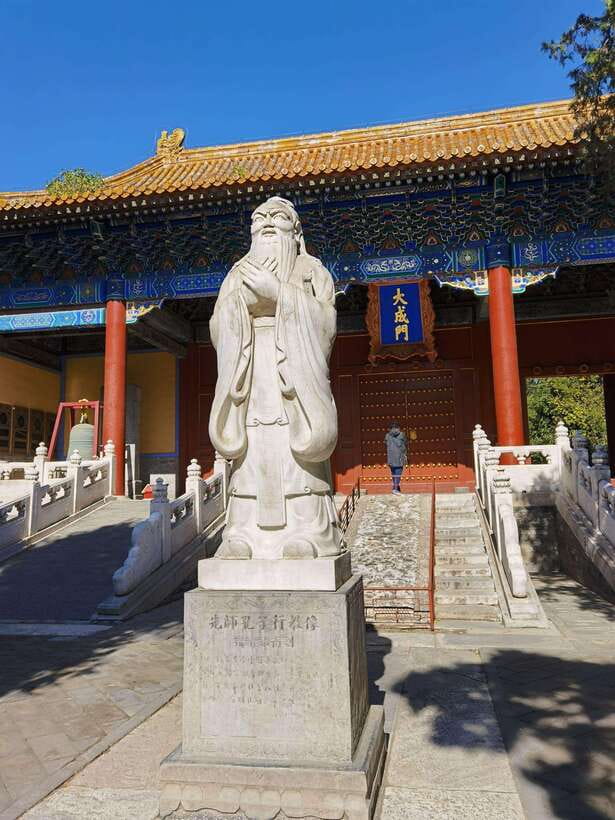
- Confucius Temple follows a symmetrical, central-axis plan with three courtyards
- Optional guiding can add meaning if you don’t want to rely on your own pre-reading
- Lama-only pricing may apply unless you added Confucius in your booking
QR Code Tickets: The Real Reason This Is Worth It
The biggest value here is not the temple itself. It’s how you enter.
Instead of dealing with counter lines, you scan a QR code you receive in advance. The local supplier sends it to your email, mobile number, and WhatsApp, so you can show the code directly at the entrance. This matters in Beijing because timing can turn a 10-minute errand into a half-hour delay.
Another smart part: the temples are served by an entry workflow that supports a short sequence. After you finish Lama Temple, you can walk out and enter the next site using another QR code—if your booking includes that ticket. If your booking is Lama-only, you’ll want to plan accordingly so you’re not surprised at the gate.
One more practical thing: you’ll be asked for passport name, passport number, and date of birth during booking. If you’ve ever tried to match a typo to a passport, you know this can be painful—so treat your submission like paperwork, not casual form-filling.
You can also read our reviews of more tours and experiences in Beijing



Getting to Lama Temple: Subway Exit F vs Taxi Door-to-Door
You’ve got two easy ways to get there, depending on how you like to move through the city.
If you want public transit, take subway line 5 and get off at the Lama Temple station, exit F. From there, it’s about a 5-minute walk to the temple. This is usually the best choice when you want predictable timing and you’re comfortable with walking a short distance in the streetscape.
If you want minimal walking and maximum simplicity, take a cab directly to Lama Temple, then scan your QR code at the entrance.
My suggestion: if you’re doing this as a half-day between other sights, taxi can save stress. If you’re doing a longer day and want control, subway keeps things calm and affordable.
Lama Temple Grounds: What You’ll Actually See and Why It Matters
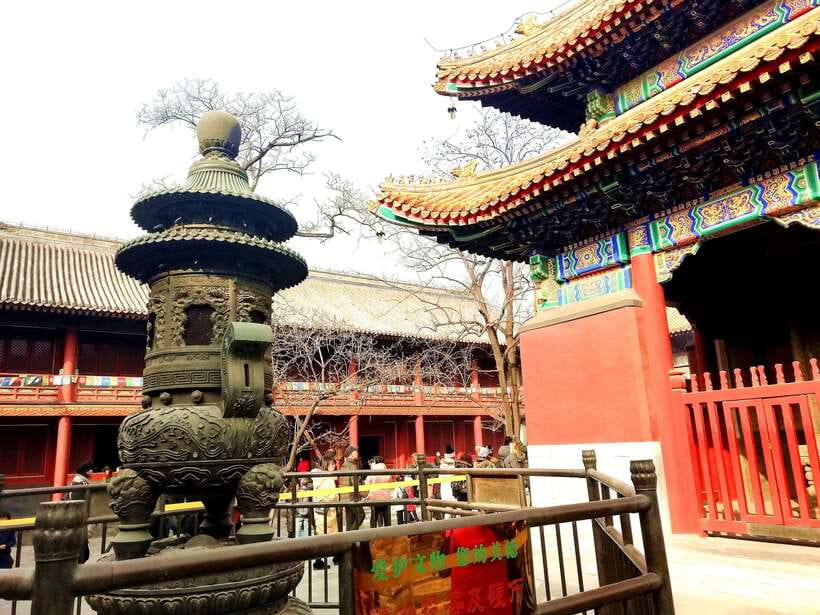
Lama Temple isn’t just a pretty stop. The way the complex is arranged helps you understand what you’re looking at.
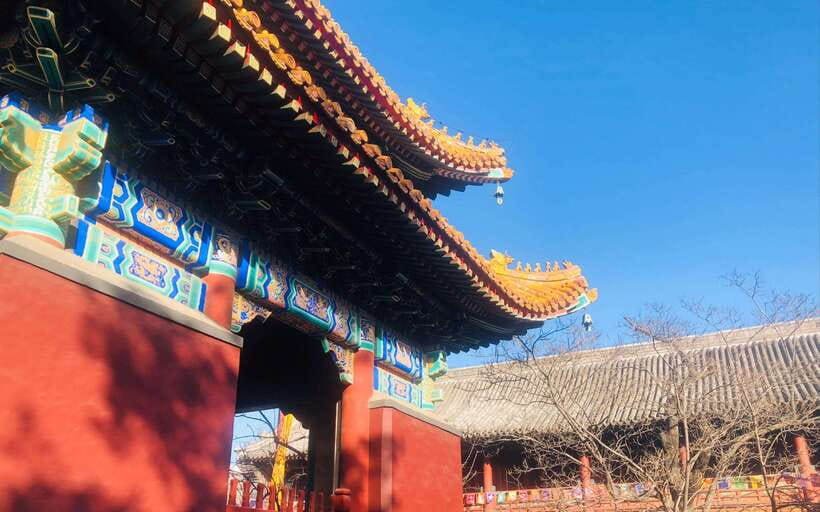
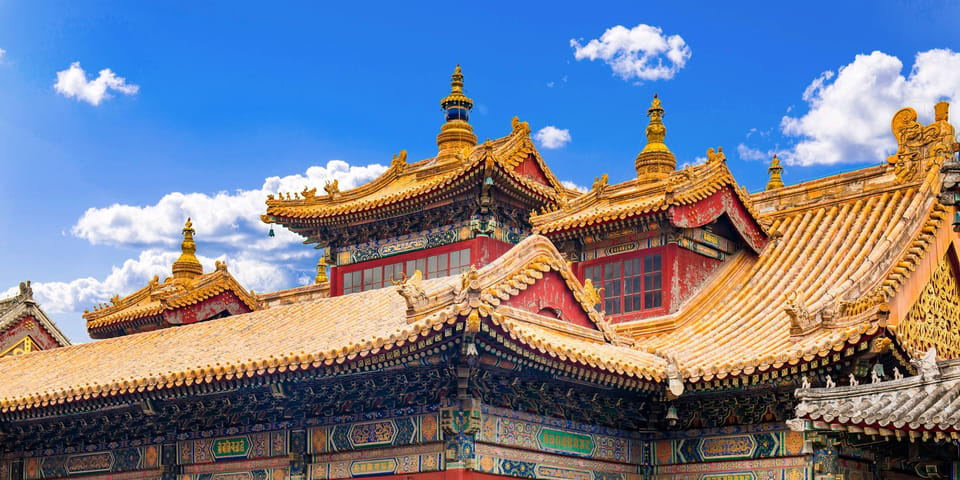
The architectural layout follows a system described as aligned with the Brahma Gyalan. In plain terms, it’s organized, not random. The complex is mainly made up of three exquisite pagodas and five grand halls. Once you clock that, your visit becomes easier: you move between anchor buildings rather than wandering.
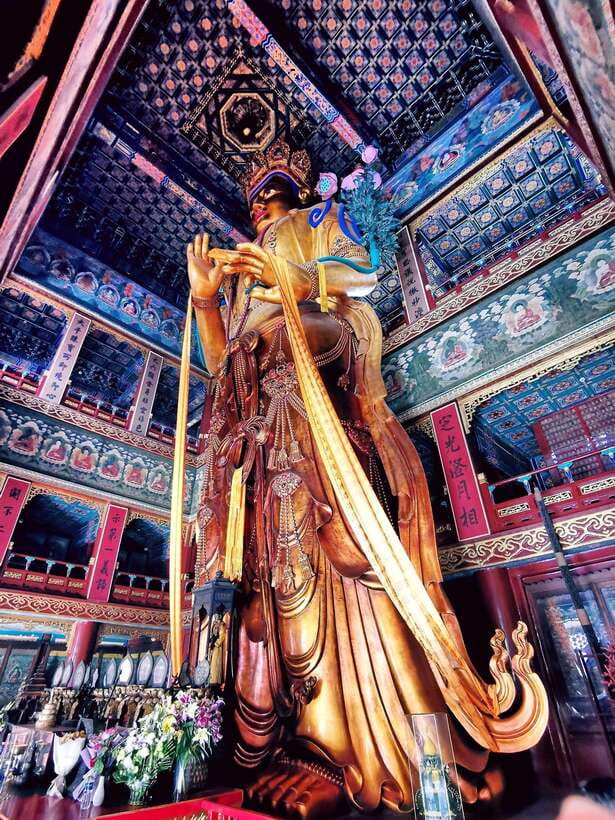
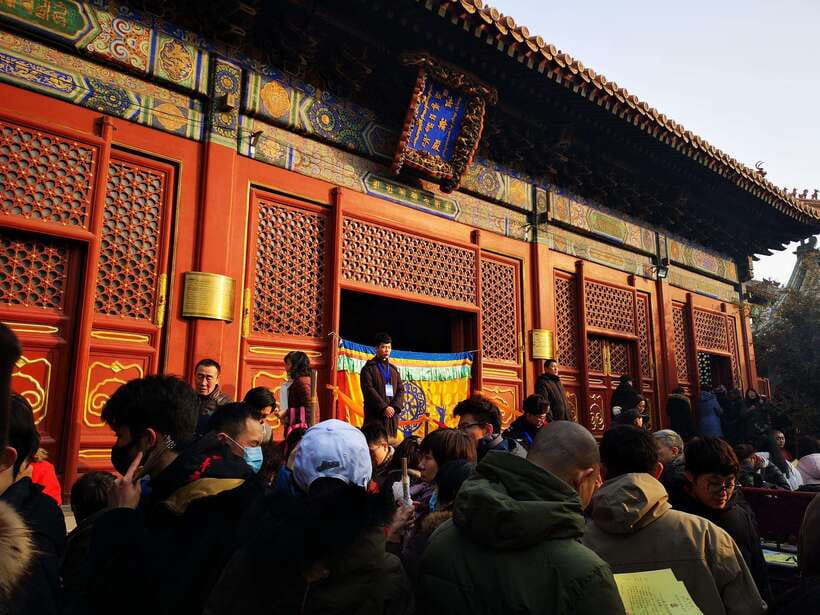
The main hall is the star for symbolism. It enshrines the statue of the Three Buddhas, representing the past, present, and future. Even if you don’t know the names and details of every figure, the idea is easy to grasp: this is a place built for continuity across time.
One reason I’d call Lama Temple a top pick is the mix of architectural styles. The complex is described as showing styles linked to the Han, Manchu, and Mongolian nationalities. That blend is part of why it feels distinct in Beijing: you’re not seeing one single uniform look. You’re seeing a layered identity in buildings and forms.
Confucius Temple After Lama: Central Axis, Yellow Glazed Tiles, Exam Legacy
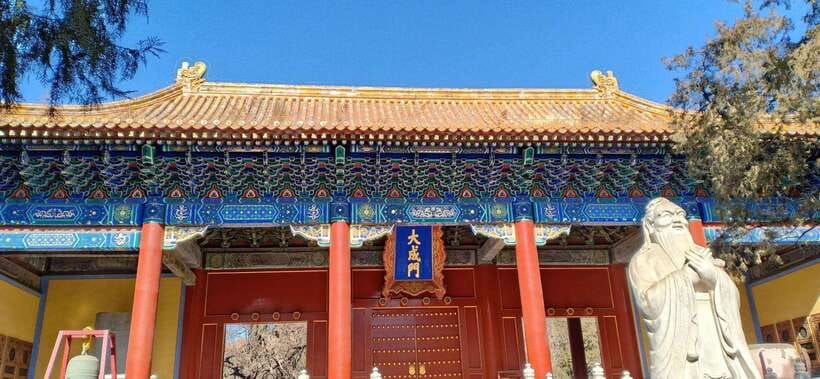
The best part of pairing these two temples is that you can change your focus without changing your day too much. Lama Temple leans spiritual and symbolic. Confucius Temple leans education, rituals, and state tradition.
Confucius Temple uses a traditional Chinese layout with buildings arranged along a central axis, symmetrical on the left and right, and designed around three courtyards. This is the kind of architecture where the plan matters. If you walk it casually, you might notice it looks orderly. If you pause and pay attention, you’ll feel the structure guiding you from south to north.
The buildings on the central axis are listed as:
- Sifu Gate
- Dacheng Gate
- Dacheng Hall
- Chongsheng Gate
- Chongsheng Shrine
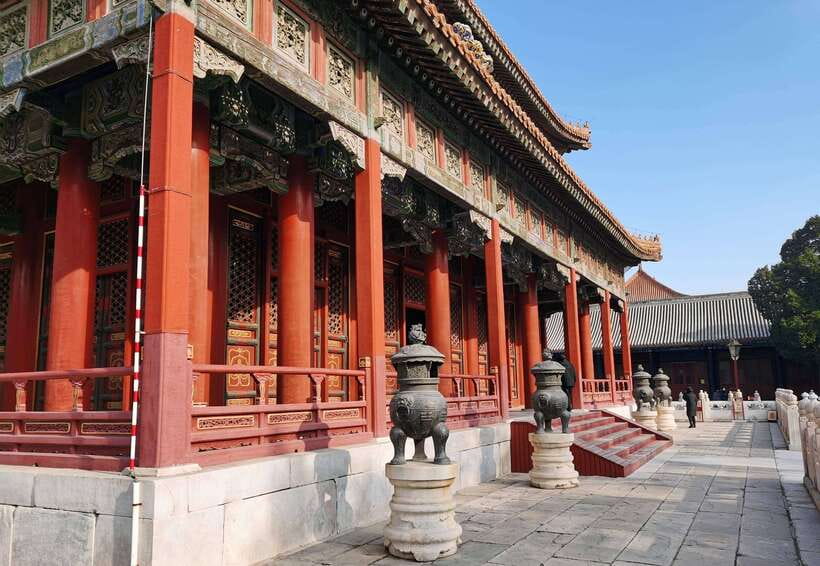
A very visible cue: many main buildings are covered with yellow glazed tiles. That color choice isn’t just decorative. It visually marks the importance of the halls and the ceremonial character of the grounds.
Here’s the history piece that really gives Confucius Temple weight: the monument of the title of the scholar has important historical and cultural value and provides precious documents for studying the imperial examination system in ancient China. If you’ve ever wondered how education and government legitimacy were connected, this is one of the clearest ways to see the theme in stone and layout.
How the Timing Works: From 2 Hours to a Full Day
The duration range is wide: 2 to 11 hours. That’s not just a random number. It reflects how much you want to see and whether you’re adding the second temple or an optional guided experience.
If you’re doing only Lama Temple, you can treat it as a focused visit: take your time around the three pagodas and the main hall, then loop through the halls while you connect the layout to what you see. If you’re adding Confucius Temple right after Lama, you’re effectively turning it into a two-site cultural circuit.
If you choose the optional upgraded guided trip, expect the day to feel less like sightseeing and more like comprehension. That becomes especially valuable because an English speaking guide isn’t included in the base ticket service.
My rule of thumb: if you don’t plan to spend time reading about what you’ll see, give yourself extra time. Without context, you’ll still enjoy the architecture. With context, you’ll enjoy it more—and you’ll notice more details.


Price and Value: About $16, With the Right Expectations

The listed price is around $16 per person. For what you get, that can be good value if your goal is simple: enter Lama Temple smoothly.
What’s included at this price:
- Lama Temple tickets only (entry)
- A booking service charge
- The ticket includes the first entrance ticket charge
What’s not included:
- Confucius Temple ticket (unless you’ve added it to your booking)
- Lunch
- English speaking guide
- Private car transfers and hotel transfers
- Tipping (highly recommended)
- Souvenir photos (available for purchase)
So, is it worth it? For me, yes—if you mainly want access and efficiency. You’re paying for the convenience of having a QR code ready, and that can save energy when you’d rather be walking inside the halls.
If you want guided interpretation, factor that in. The cheapest option is often the one where you do your homework. The guided option is often the one where you show up ready to listen.
What If You Don’t Have a Guide? I’d Still Go, But Do This
One review advice hits hard: if you’re visiting without an English guide or audio support, you’ll enjoy it more if you prepare a bit in advance.
That doesn’t mean you need to become an expert. It means you should walk in knowing three things:
- What the Three Buddhas idea represents at Lama Temple
- That Lama Temple’s grounds are organized around three pagodas and five grand halls
- That Confucius Temple is planned along a central axis and tied to the imperial exam legacy through the scholar monument
Do that, and your photos won’t just be pretty. They’ll be anchored to meaning.
And if you do choose an upgraded guided trip, you can let the guide connect the dots while you focus on being present.
Who This Fits Best (and Who Should Skip It)
This ticket reservation style fits well if you:
- Like independent travel but want low-friction entry
- Are comfortable providing passport details and contact info ahead of time
- Want to see two major cultural sites in one logical day
It’s less ideal if you’re:
- Counting on an English guide already being included (it isn’t)
- Planning to rely on last-minute ticket purchases at the gates
- Someone who needs specific accommodations—this experience is noted as not suitable for pregnant women
If you’re traveling as a couple or solo and want a clean plan without being “handled,” this works nicely. If you prefer a fully guided narrative every step, consider the upgrade.
Should You Book This Temple Ticket Reservation?
I’d book it if your priority is easy entry and you’re comfortable taking charge of your own context. For about $16, getting the Lama Temple ticket handled through a QR code setup is practical value, especially when you want to avoid the worst crowd friction.
Skip or upgrade your expectations if you’re the type who hates reading ahead and needs someone to explain what every statue, hall, and monument means. In that case, you’ll still enjoy the temples, but the day may feel flatter than it could.
Bottom line: book this when you want the temples on your schedule, and consider a guided add-on when you want the story delivered in real time.
FAQ
What do I need to bring?
You need your passport.
Do I get the ticket QR code in advance?
Yes. The local supplier sends the QR code to your email address, mobile number, and WhatsApp number.
What info do I have to provide when booking?
You must provide your passport name, passport number, and date of birth, plus your email, mobile number, and WhatsApp number.
How do I get to Lama Temple?
You can take subway line 5 to Lama Temple station and walk about 5 minutes from exit F, or you can take a cab directly to Lama Temple.
Can I visit Confucius Temple too?
That depends on your booking. The included ticket is listed as Lama Temple only, and Confucius Temple is listed as not included.
Is lunch included?
No, lunch is not included.
Is an English speaking guide included?
No, an English speaking guide is not included.
Are pets allowed?
No, pets are not allowed.
How long does the visit take?
The duration is listed as 2 to 11 hours, depending on the option you choose and what you want to cover.