REVIEW · BEIJING
Beijing: Night Tour Of Peking Opera Show / Transfer
Book on GetYourGuide →Operated by Private China Trips · Bookable on GetYourGuide
A night of costumes and drumbeats hits different. This private Beijing transfer to Peking Opera turns a simple evening out into a real cultural crash course, with time to settle before the main show. I especially like the hotel-lobby pickup at 18:20 and the chance to see Peking Opera’s blend of dance, martial arts, and mime in one concentrated hour-plus performance.
You also get a helpful, English-capable guide who can explain what you’re watching—how Peking Opera took shape after 1790 with the four Anhui Opera troupes coming to Beijing, and how it grew under imperial patronage during the reign of Emperor Qianlong and Empress Dowager Cixi. One possible drawback: the price can feel steep if you’re expecting a long event or extra included meals, since the show itself runs roughly 19:30 to 20:40 and dinner isn’t included.
In This Review
- Key Points to Know Before You Go
- How The Night Starts: Pickup, Timing, and Getting Seated
- What You’re Actually Seeing: Peking Opera in Plain Terms
- The Music Breakdown: Orchestra and Percussion Working Like a Script
- The Theater Experience: Seats, Tables, and What to Expect Upon Arrival
- Price and Value: When $166 Makes Sense (and When It Might Not)
- Private Guide and Driver: The Real Comfort Advantage
- Who This Peking Opera Night Fits Best
- Should You Book This Peking Opera Transfer?
- FAQ
- What time does pickup happen?
- What time does the Peking Opera show start and end?
- How long is the full experience?
- Is dinner included?
- What’s included in the price?
- What languages will the live guide speak?
- Do I need to bring a passport?
- Are pets allowed?
- Is free cancellation available?
- Is this tour suitable for pregnant women?
Key Points to Know Before You Go
- Name-sign hotel pickup around 18:20 keeps it easy to find your driver at night
- A focused show window (19:30–20:40) means you’re not waiting around all evening
- Peking Opera’s 230+ years of development traces back to Anhui troupes arriving in Beijing after 1790
- Percussion vs. orchestra: battle scenes lean on drums and bells while peaceful moments are often supported by strings
- Comfort-first transfer: private vehicle with hotel drop-off after the performance
How The Night Starts: Pickup, Timing, and Getting Seated
This tour is built for stress-free timing. A Beijing private guide and driver come to your hotel lobby with a sign showing your name, with pickup happening at 18:20. The show itself runs from 19:30 to 20:40, so you’re usually in good shape to reach the theater, find your place, and avoid that last-minute scramble.
The key advantage here is that you’re not juggling transport and directions in the dark. You get a dedicated driver, and you’re not responsible for route-finding from your hotel to the venue. In one booking, the team also helped with matching you to the right place using photos when it came time to locate the hotel and theater—exactly the kind of small help that matters at night.
Plan your evening around the idea that your total time can vary. The activity is listed at 3–10 hours, which usually means the “extra” time is the ride out, a bit of waiting, and the return. If you’re trying to squeeze in other plans before 18:20, I’d leave buffer time.
You can also read our reviews of more evening experiences in Beijing


What You’re Actually Seeing: Peking Opera in Plain Terms
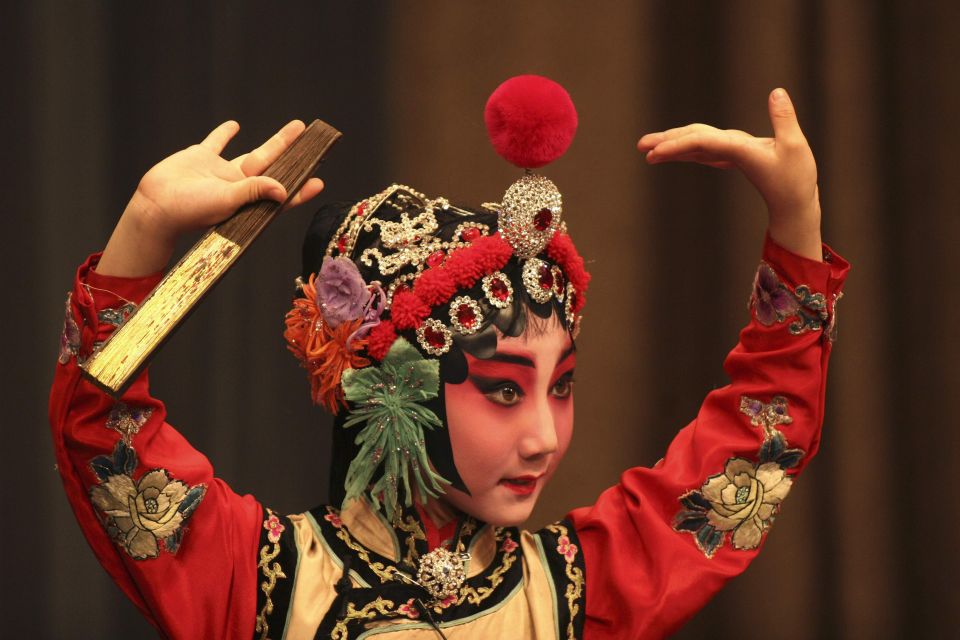
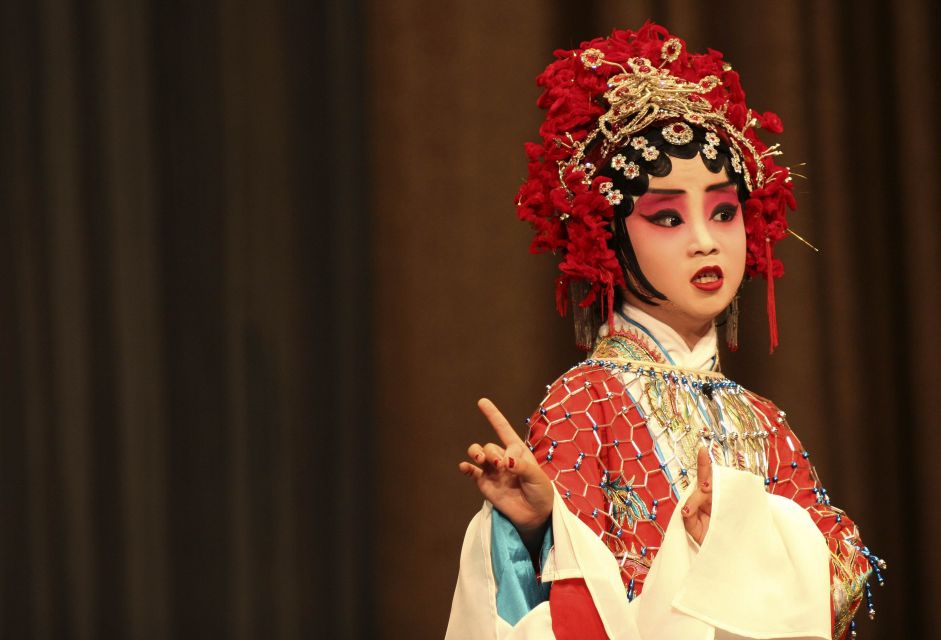
Peking Opera is the star here, and the show is worth approaching with a bit of context. It has more than 230 years of history and is closely tied to the period after 1790, when four Anhui Opera troupes came to Beijing. From there, it developed quickly with support from Emperor Qianlong and Empress Dowager Cixi, eventually becoming common enough to reach everyday audiences.
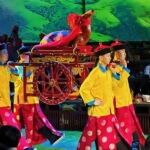
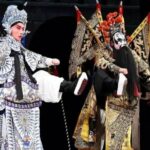
Onstage, Peking Opera isn’t just singing and acting. It’s a harmonious mix of grand opera-style performance, ballet-like movement, and acrobatics—built from dance, martial arts, and mime. The costumes were traditionally loud, with high-contrast colors designed to read clearly on a dim stage lit by oil lamps. Even if modern theater lighting looks different, the costume logic still helps you see roles and actions at a glance.
If you’re new to Peking Opera, your best strategy is to watch the whole performance as a system: movement + facial expression + vocal delivery + musical cues. Your guide can help connect those pieces, especially if you notice how the atmosphere changes when the band shifts from one style to another.
The Music Breakdown: Orchestra and Percussion Working Like a Script
One of the most practical things to learn before you sit down is how the band is organized. Peking Opera commonly uses two components: an orchestra and a percussion band. The orchestra often supports calmer scenes, while percussion helps create the tension and momentum you associate with action or battle.
You’ll hear percussion instruments such as castanets, drums, bells, and cymbals. One performer may play castanets and drums simultaneously, and that rhythmic “engine” helps drive the rest of the band. The orchestral side includes instruments like the Erhu, Huqin, Yueqin, Sheng, and Pipa, and it’s typical for the band to sit on the left side of the stage.
Why this matters for you: if you pay attention to when percussion ramps up, you’ll understand the show’s emotional pacing even if you don’t catch every lyric or spoken line. It’s like reading subtitles made of rhythm. And once you notice it, the performance becomes easier to follow—your brain stops treating it like random noise and starts treating it like choreography.
The Theater Experience: Seats, Tables, and What to Expect Upon Arrival
The show is scheduled to start at 19:30, so you’re not walking in during a peak rush. You should use that time to get comfortable and settle before the performance begins, because Peking Opera rewards full attention. If you’re lucky with seating, the experience can feel extra close and immediate.
One booking specifically mentioned a front row seat, with the viewer able to sit back and watch comfortably. Another mentioned a table setup that was central, though it was shared. That shared-table detail doesn’t have to be a problem, but it’s worth keeping in mind if you prefer personal space.
Here’s a small practical note: there are souvenir photos available for purchase, so if you’re someone who likes collecting a theater memory, keep a bit of cash or card readiness. If you’re not interested, you can simply ignore it and stay focused on the performance.
Also note the guide and driver are part of the evening flow—your guide is there to help you make sense of what you’re seeing, in Chinese and English. That’s a big deal for Peking Opera, where the style is highly coded and meaning can be carried by movement and music just as much as by dialogue.
Price and Value: When $166 Makes Sense (and When It Might Not)
At $166 per person, this is a paid, private-transfer experience that includes the show ticket, a local guide, and hotel pickup and drop-off by private vehicle. Dinner isn’t included, so you’ll either eat on your own or you may find snacks or tea service depending on the evening’s setup.
One review thought the offer was too expensive, especially given that they felt the show time was only about an hour and translation didn’t justify the cost for them. That’s a fair concern, and it comes down to your expectations.
Here’s how I’d judge the value for you:
- If you want the simplest logistics (pickup at 18:20, direct drive, return afterward), and you’re happy paying for convenience, this can feel fair because it bundles transportation + tickets + guided context.
- If you mainly want the show itself and you already plan to handle transport and ticketing locally, the private portion might feel like extra spending.
- If your ideal evening includes food as part of the package, you’ll need to budget for that, since only the opera show ticket is listed as included and dinner fees aren’t.
My practical bottom line: this is best when you see the guide-and-transfer part as part of the experience, not just a delivery service to a theater.
You can also read our reviews of more tours and experiences in Beijing
Private Guide and Driver: The Real Comfort Advantage
Most people come to Beijing for big sights, but night logistics can be where plans go sideways. This setup fixes that. You get both a guide and a driver, and the driver handles the private vehicle from your hotel lobby to the theater and back again.
In one booking, the driver and team were described as very punctual and professional, and it also sounded like coordination with the hotel and theater location was handled carefully. That matters because it’s easy to waste time when you’re trying to figure out where to meet at night—especially when signage and entrances can be confusing.
Also, the guide language matters. You’ll have a live guide who can work in English and Chinese, which helps if you want to understand the themes, the performance structure, and the musical cues instead of treating it like a black box.
One more practical note: gratuities are recommended. It’s not listed as required, but if you want the best service experience, plan to tip appropriately.
Who This Peking Opera Night Fits Best
This is a strong fit for you if:
- You want one focused evening activity rather than a half-day sprint.
- You like cultural experiences where the details improve understanding (music cues, performance style, historical origins).
- You’d rather sit with a guide’s context than try to interpret everything on your own.
- You value an evening that runs on schedule, with private pickup and return.
It’s likely a less ideal match if:
- You’re sensitive to long waits in an evening plan (the total duration is flexible, listed up to 10 hours).
- You expect a meal to be included as part of the ticket.
One explicit limitation: it’s not suitable for pregnant women. If that applies to you, skip this option and look for an alternative format that fits your needs better.
Should You Book This Peking Opera Transfer?
Yes, if you want the easiest, guided way to experience Peking Opera with minimal stress. The combination of hotel pickup at 18:20, a clear show window 19:30–20:40, and a guide who can explain what you’re seeing is the real win—especially if it’s your first time with this art form.
Book with extra care if you’re price-sensitive and mainly want the performance itself. Ask yourself whether you’re paying for convenience and interpretation, or whether you’d rather do transport and tickets independently.
FAQ
What time does pickup happen?
Pickup is scheduled from your hotel lobby at 18:20.
What time does the Peking Opera show start and end?
The show time is from 19:30 to 20:40.
How long is the full experience?
The duration is listed as 3–10 hours, depending on timing and logistics.
Is dinner included?
No. A dinner fee is not included.
What’s included in the price?
Included are a local guide, driver/guide, hotel pick-up and drop-off, transport by private vehicle, and the charge for Peking opera show tickets.
What languages will the live guide speak?
The live tour guide works in Chinese and English.
Do I need to bring a passport?
Yes. You should bring your passport.
Are pets allowed?
No, pets are not allowed.
Is free cancellation available?
Yes. You can cancel up to 24 hours in advance for a full refund.
Is this tour suitable for pregnant women?
No, it is not suitable for pregnant women.