REVIEW · BEIJING
Beijing:Drum and Bell Towers Entry Ticket- Cultural Treasure
Book on GetYourGuide →Operated by Hua Hua Explore China · Bookable on GetYourGuide
Timekeeping in stone still hits hard. These Drum and Bell Towers capture how Beijing once ran on sound and ceremony, not screens, and you get to read the story as you walk.
I love the scale and engineering. The Yongle-era bell alone is famous: cast between 1403 and 1424, it weighs 63 tons and is known as the King of Ancient Bells of China. I also like that the layout makes sense of the theme—Bell Tower sits slightly north of Drum Tower, so you can walk the complex and feel the “morning bell, dusk drum” idea click into place.
One thing to plan for: the towers involve steep, long stairs, and that can be a dealbreaker if you have mobility limits.
In This Review
- Key Points to Know Before You Go
- Why Beijing Placed the Drum and Bell Towers on the Central Axis
- Bell Tower vs Drum Tower: What You’ll Actually See on Arrival
- The Big Numbers: 63 Tons of Bell Power and 25 Drums of Timing
- Enter Smoothly With E-Tickets (and Save Time for Looking Closely)
- The English Textual and Visual Guide Turns Sightseeing Into Understanding
- Price and Value: When $13 Feels Like a Deal vs a Stretch
- A Practical 2-Hour Game Plan That Fits the Towers
- Who This Fits Best (and Who Should Rethink It)
- Should You Book the Drum and Bell Towers Ticket?
- FAQ
- FAQ
- Do I need to provide passport details to reserve tickets?
- When are tickets reserved?
- How do I receive my tickets?
- Can I enter the Bell Tower and Drum Tower directly with e-tickets?
- Are tickets for both the Bell Tower and the Drum Tower included?
- Is there a live tour guide included?
- Is an audio guide included?
- How long does the visit take?
- What should I bring with me at the site?
- Can I cancel if my plans change?
Key Points to Know Before You Go
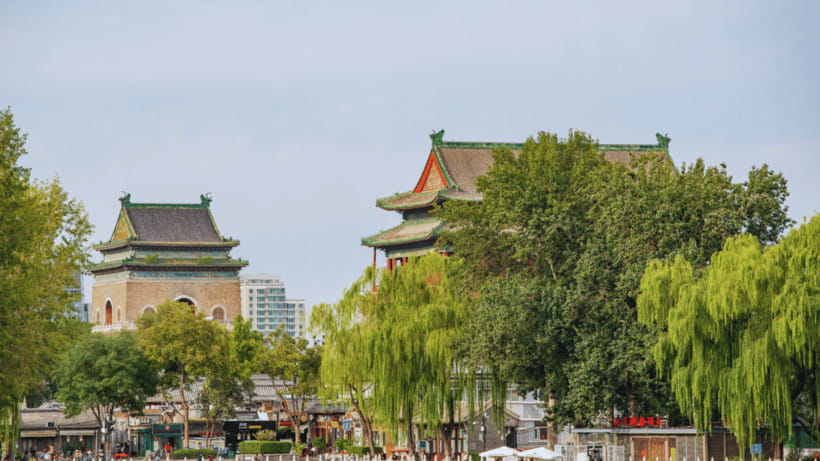
- Two towers, one cultural center: They were Beijing’s time-telling hub through Yuan, Ming, and Qing dynasties.
- A real centerpiece bell: The bell cast during the Yongle era weighs 63 tons.
- Simple entry with e-tickets: You use the e-tickets provided to enter directly and skip the ticket line.
- English text plus visual guide: You’re not stuck guessing what you’re looking at.
- Great add-on for hutong wandering: The English guide materials include nearby hutong context and restaurant suggestions.
- Stairs are no joke: Expect steep and extended stair climbs.
Why Beijing Placed the Drum and Bell Towers on the Central Axis

Beijing’s Drum and Bell Towers live at the northern end of the central axis. That positioning matters. It tells you this wasn’t a random landmark—it was part of how the city’s order was structured, like a public clock designed for everyone to understand.
Historically, these towers started in the Yuan Dynasty (1206–1368) and stayed important through the Ming (1368–1644) and Qing (1644–1911). In other words, the buildings weren’t just ceremonial decorations. They were the practical “time office” for the city, where the rhythm of daily life was set.
The site is also officially protected as a historic complex at the state level, covering 12,597 square meters. That scale is why the visit feels more like stepping into an operating system than popping into one photo spot.
You can also read our reviews of more tours and experiences in Beijing



Bell Tower vs Drum Tower: What You’ll Actually See on Arrival

You’re visiting both buildings, and the best way to enjoy them is to treat them like two halves of one story. If you start at the Bell Tower (slightly north) and then work your way toward the Drum Tower, the geography supports the theme without you having to force it.
At the Bell Tower, you’re looking at the “morning bell” side of the tradition. The tower connects you to the huge Yongle-era bell that helped mark time with a sound meant to carry. The guide materials help you follow what that means in a visual, simple way instead of turning it into an academic lecture.
At the Drum Tower, you’re on the “dusk drum” side. The tradition here involved drums—historically, there used to be 25 drums in the Drum Tower. Even if the drums you see today aren’t the full original set, the idea is clear: multiple instruments, staged in one place, to create a repeatable time signal.
Expect your whole visit to take about 2 hours. That’s enough time to enter, read, look closely, and still enjoy the feeling of walking through a functioning historic complex.
The Big Numbers: 63 Tons of Bell Power and 25 Drums of Timing

This is one of those sites where the details make the architecture click. The standout figure is the bell. The bell cast during the Yongle era (1403–1424) is reported as weighing 63 tons. It’s not just impressive because it’s huge. It’s impressive because it tells you how much effort went into making timekeeping audible over distance.
Then there’s the Drum Tower detail: there used to be 25 drums there. That gives you a concrete sense of how elaborate the timing system could be. Time wasn’t a silent personal thing. It was communal and mechanical, built for the city’s schedule.
If you enjoy history through tangible facts, this place rewards you. You can look at the towers and immediately understand why ancient Beijing would invest here for centuries—because sound works, and because the city needed something everyone could hear.
Enter Smoothly With E-Tickets (and Save Time for Looking Closely)

This experience is built around skipping the ticket line. After you order, you’ll need to provide the passport name, passport number, and date of birth. The tickets are reserved 3 days before your visit, and once the reservation is successful, you receive e-tickets by email or WhatsApp.
When you arrive, you can enter the Bell Tower and Drum Tower directly using the e-tickets you were given. For a place like this—where you’ll want time to slow down and read—that “no waiting” piece matters more than it sounds.
Bring your passport or ID card. That’s listed as required, and it’s the kind of detail that prevents last-minute stress.
The English Textual and Visual Guide Turns Sightseeing Into Understanding

You’re not just handed tickets and left alone. The package includes an English textual and visual guide for Bell and Drum Towers. That helps you connect what you see to what it meant in daily life.
Here’s where it gets extra useful: the guide materials can include a PDF brochure with context about the surrounding hutongs and recommendations for local restaurants nearby. Even if your main plan is the towers, this kind of added information makes your visit feel connected to real Beijing neighborhoods instead of ending at the ticket gate.
The hutong proximity is a big deal. The towers sit within an area where traditional lanes are nearby, so you can keep the cultural thread going after you finish looking up at the towers. If you like wandering on foot after a key site, this is the kind of extra that changes your whole afternoon.






Price and Value: When $13 Feels Like a Deal vs a Stretch

The listed price is $13 per person, and the value depends on what you hate most about travel logistics.
If you want to reduce friction—especially during busy periods—this can be worth it. You’re paying for pre-reserved access, e-tickets, and line-skipping entry, plus an English guide. For a 2-hour visit, that’s a pretty efficient setup.
That said, one caution is fair to mention: some people feel the price is high compared with what they might pay on the spot. If you’re the type who enjoys handling tickets locally and you’re comfortable with crowds, you might be tempted to compare prices. I still think the combined convenience plus guide materials can justify the cost, but it’s worth deciding based on your own comfort level with queues and planning.
A Practical 2-Hour Game Plan That Fits the Towers
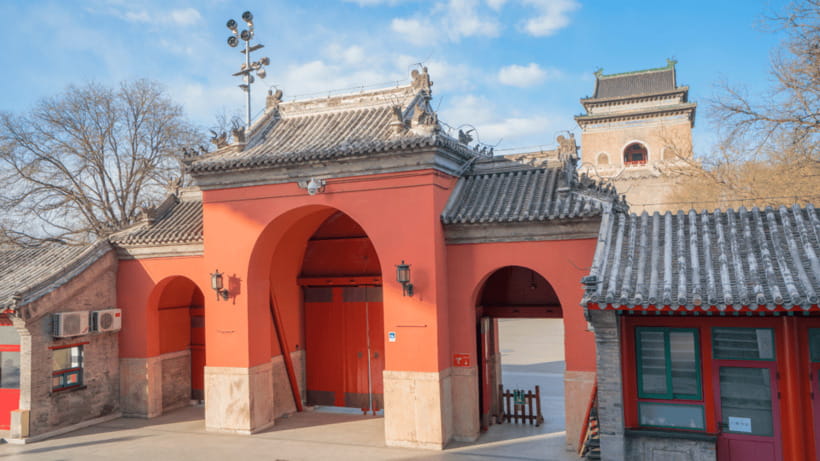
I’d plan your visit like this: arrive, use your e-tickets for direct entry, then spend the first part getting oriented with the guide materials.
Start with the Bell Tower. It sits slightly north of the Drum Tower, so it’s natural to begin where the complex starts and then walk through the theme. As you move, keep the historical framing in mind: timekeeping here followed the idea of a dusk drum and a morning bell.
Then shift to the Drum Tower. Look for how the building reinforces the “drums mark time” concept. Remember the historical reference to 25 drums. Even if you’re only seeing a portion of what existed in earlier times, that fact helps you interpret why the Drum Tower is built the way it is.
After both towers, if your guide includes hutong suggestions and restaurant notes, use that to continue your route. This is one of those areas where the best memories often come after the main photo stops.
Who This Fits Best (and Who Should Rethink It)
This works especially well for you if:
- You want a short, high-impact cultural stop that fits into a day.
- You prefer self-guided sightseeing with English support instead of waiting for a live tour.
- You like practical planning tools like e-tickets and QR-style access.
- You’d like help finding nearby hutong context and local meals.
You might rethink it if:
- You need an accessible route. The towers involve steep, long stair climbs, and that can make the experience difficult for reduced mobility.
- You’re only looking for a quick exterior photo. The real payoff here comes from reading the guide and spending time understanding the timekeeping theme.
Should You Book the Drum and Bell Towers Ticket?
Yes—if you want an easy, time-efficient way into two major Beijing landmarks with clear English support. The line-skipping entry and e-ticket delivery reduce friction, and the included English guide helps you understand what you’re seeing instead of just scanning for photos.
Book it if you like historic architecture with specific details: the central-axis placement, the Yuan-to-Qing continuity, and the big-ticket facts like the 63-ton Yongle bell. Also book it if you plan to wander afterward, because the hutong and restaurant suggestions can turn a 2-hour visit into a fuller cultural block.
Skip it only if stairs are a real problem for you, or if you strongly prefer handling tickets on your own and can’t justify paying extra for pre-reserved convenience.
FAQ
FAQ
Do I need to provide passport details to reserve tickets?
Yes. You’ll be asked for your passport name, passport number, and date of birth.
When are tickets reserved?
Tickets are reserved 3 days prior to your visit.
How do I receive my tickets?
You’ll receive e-tickets by email or WhatsApp after the reservation is successful.
Can I enter the Bell Tower and Drum Tower directly with e-tickets?
Yes. You can enter both directly using the e-tickets provided.
Are tickets for both the Bell Tower and the Drum Tower included?
Yes. The ticket package includes entry for both towers.
Is there a live tour guide included?
No. A live tour guide is not included.
Is an audio guide included?
No. An audio guide is not included.
How long does the visit take?
The duration is listed as 2 hours.
What should I bring with me at the site?
Bring your passport or ID card.
Can I cancel if my plans change?
Yes. You can cancel up to 24 hours in advance for a full refund.