REVIEW · BEIJING
Private Beijing Day Trip: Peking Man Site, Stone Flower Cave, Marco Polo Bridge
Book on Viator →Operated by Lily's Tour Company · Bookable on Viator
Peking Man and wartime history, in one day. This private full-day route strings together three big-hitters that most people cram badly on their own: UNESCO archaeology, glowing karst caves, and Marco Polo Bridge—tied to the 1937 start of the Second Sino-Japanese War.
I like that you go with a licensed English-speaking guide and a private driver, so the day has less waiting and more real explanations. You also get a local lunch and admission tickets built into the plan, which saves you from time-wasting logistics. In at least one guide-led experience, the UNESCO stops felt almost empty, so it’s easier to take photos and actually hear the story without crowds barging in.
The main thing to consider is the pace. It’s about an 8-hour day with morning pickup and walking at two very different sites—museum areas plus a boardwalk through the caves. Bring comfortable walking shoes and dress for changing weather.
In This Review
- Key points
- Why this private Beijing route beats piecing it together
- Zhoukoudian Peking Man Site: where 1929 discovery meets 700,000-year time
- Stone Flower Cave (Shihua Karst): the boardwalk, the lighting, and the wow-factor geology
- Lugou Bridge (Marco Polo Bridge): an 800-year-old landmark with 1937 consequences
- Price and logistics: what $193 buys you (and what you should check)
- Timing, walking, and what to pack for this 8-hour mix
- Who should book this private day trip—and who might skip it
- Should you book this private Beijing history day trip?
- FAQ
- What sites are included on this day trip?
- How long is the tour?
- Do you get hotel pickup and drop-off?
- Is lunch included, and is there a vegetarian option?
- Are entrance tickets included?
- How does the tour handle age requirements for kids?
Key points
- A private guide and driver means fewer stops to figure out and better context at each landmark
- Zhoukoudian Peking Man Site covers discoveries reaching back as far as 700,000 years
- Stone Flower Cave uses boardwalk paths and colorful lighting to highlight stalactites and stalagmites
- Lugou (Marco Polo) Bridge connects architecture to the 1937 Marco Polo Bridge Incident
- Local lunch and entrance tickets included, with a vegetarian option if you need it
Why this private Beijing route beats piecing it together
If you like history, you’ll appreciate that this day is built like a storyline—not three random errands. You start with early human origins at Zhoukoudian, then shift into deep-time geology underground at the Stone Flower Cave, and end with an iconic bridge that helped spark a major war era. It’s a smart mix of archaeology, natural history, and modern history, all without you constantly checking maps.
Going private also changes the experience in a practical way. A guide can help you read what you’re seeing—why Zhoukoudian matters, what the cave formations look like up close, and how the bridge’s history connects to the 1937 incident. When you don’t have to hunt for directions, you gain time for questions and a slower look at details.
There’s also a comfort factor: the tour includes hotel pickup and drop-off, plus transport by private vehicle. That matters in Beijing, where long distances and traffic can chew up a day fast if you’re doing it on your own. You’re paying for convenience, but you’re also paying for interpretation—two things that make a day feel worthwhile instead of merely busy.
You can also read our reviews of more private tours in Beijing
Zhoukoudian Peking Man Site: where 1929 discovery meets 700,000-year time
The first stop is the Zhoukoudian Peking Man Site (often tied to Peking Man). This UNESCO site matters because it connects a specific discovery moment to a very long story of human evolution. The tour info highlights that the first complete Peking Man skull was discovered in 1929. After that, the fossils were thought to date back as far as 700,000 years—so you’re standing in a place where one find helped reshape how the world talks about early humans.
What you’ll do here is mostly museum-style learning and site viewing: you’ll have time to look around the museum and other attractions at the site. That’s a good approach, because Peking Man is one of those topics where context makes the displays click. With a guide, you’re less likely to just see artifacts as objects and more likely to understand why scientists care about them.
A small but important advantage: this stop can be surprisingly calm on the right schedule. In one high-rated experience, the UNESCO sites felt almost empty during the visit. Even if your timing differs, private timing can help. Lower crowd levels mean you can spend extra minutes reading signage, and your photos come out without constant background interruptions.
Practical watch-outs: you’ll be on your feet for a while, including walking around museum and outdoor areas. If you’re sensitive to long indoor museum aisles followed by outdoor light, plan for breaks. Also, mornings can start cool, then warm up later—bring layers you can adjust.
Stone Flower Cave (Shihua Karst): the boardwalk, the lighting, and the wow-factor geology
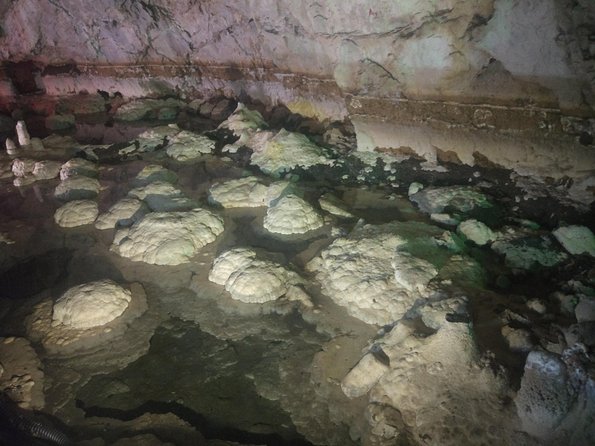
Next comes the Stone Flower Cave, also known through its older names such as Qianzhen Cave or Shifo Cave. This is one of the largest caves in China, and the tour route is designed to make it approachable without feeling rushed.
The cave system was first discovered in 1446 by a Buddhist monk during the Ming Dynasty. That’s a fascinating anchor: while the formations are far older than any human story, the “finding” of the cave became part of local history. So you’re not only learning geology—you’re also seeing how people in different eras engaged with the natural world.
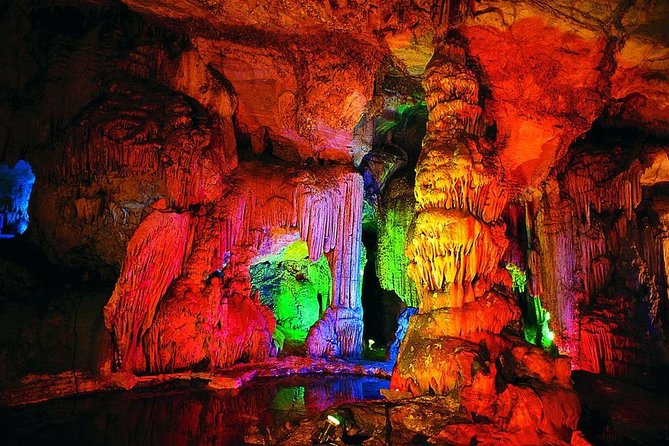
Inside, you’ll explore using a boardwalk that winds through the chambers. Boardwalk paths are a big deal in caves: they reduce slippery improvisation and help you focus on what’s around you. The tour info also notes colorful lighting used to show rock features—stalactites, stalagmites, and other formations. This can make a huge difference, because cave darkness can flatten details. Lighting helps you see structure instead of just darkness and stone.
The cave experience is also a nice contrast to Zhoukoudian. Where the first stop is about human time and fossils, Stone Flower Cave is about geological time and shapes—long, slow processes you can’t experience by speed-walking your way through. If you take a moment at each chamber, you’ll likely spot how the formations change as the path curves.
Potential consideration: caves can feel cooler and damp. Wear shoes that grip well, and don’t wear anything you’ll regret if it gets a bit dusty. Also, this stop involves walking the boardwalk, so if you have limited mobility, you’ll want to think about your comfort with steady, uneven cave footing.
Lugou Bridge (Marco Polo Bridge): an 800-year-old landmark with 1937 consequences
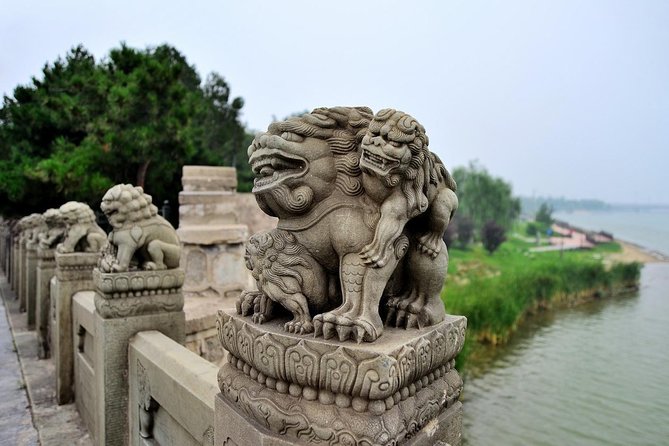
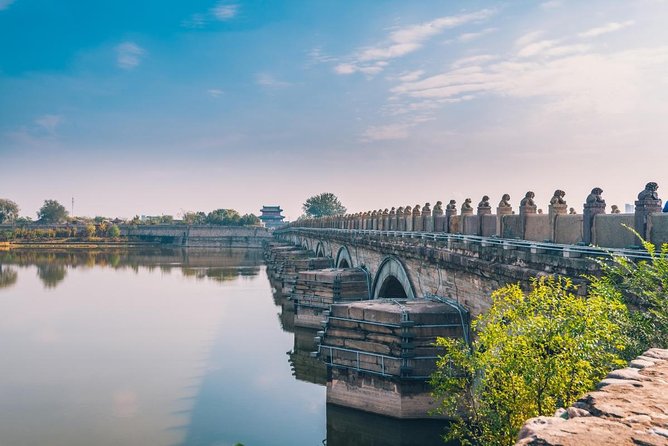
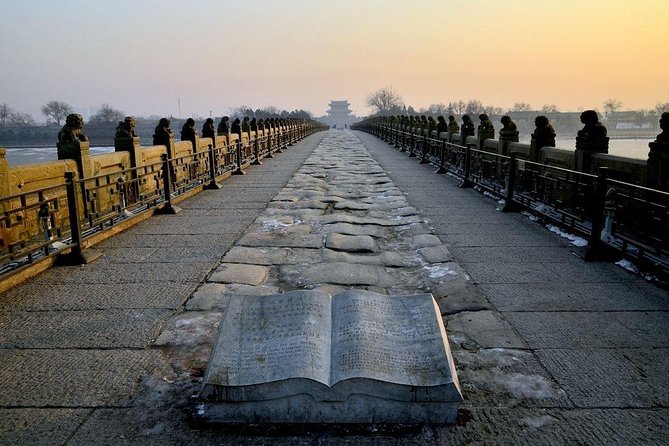
Your final stop is Lugou Bridge, also known as Lugouqiao or Marco Polo Bridge. The tour description emphasizes that it was built more than 800 years ago in the Jin Dynasty, and today it’s considered the oldest bridge in Beijing. That alone gives it weight as an architectural landmark—but the real reason it shows up in history lessons is what happened here in 1937.
The Marco Polo Bridge Incident is tied to the start of the Second Sino-Japanese War (1937–1945). So when you stand at Lugou Bridge, you’re not just looking at old stone and arches. You’re standing at a specific place where a conflict escalated, with consequences that rippled through the region and the world.
The tour keeps this stop efficient—about an hour—so it won’t feel like a long lecture. You’ll have time to see the bridge as a scenic spot and understand the significance behind it. With a private guide, this is where the day can “click” as more than a collection of sites. You’ve moved from early human origins (Zhoukoudian) to ancient cave formations (Stone Flower Cave), and now you end in a place where history became a turning point in the modern era.
One consideration here: bridge areas can be windy and exposed. If it’s cold, you’ll feel it more than you expect. Plan for layers, and if you’re prone to motion discomfort, know that the day’s earlier walking and transport can add up.
Price and logistics: what $193 buys you (and what you should check)
At $193 per person for an approximately 8-hour private tour, you’re paying for more than admission. You’re buying a package that includes hotel pickup and drop-off, private transport, a licensed English-speaking guide, entrance tickets, and a local lunch.
That bundle matters for value. Beijing day trips can turn expensive when you start adding guide costs, taxi or car services, and separate ticket lines. Here, those pieces are grouped together, and the schedule is built to get you from one key site to the next without you managing every handoff.
Lunch inclusion is also worth a line of its own. When a tour includes food, it usually means you’re not scrounging for something between sites. The tour data also says vegetarian option is available if you advise in advance, so you’re not stuck with a guess.
One more practical detail: the tour offers a mobile ticket, plus group discounts. If you’re traveling with others, it can be a good setup to ask how those discounts apply to your specific situation.
My takeaway on value: if you’re doing this route the DIY way, you’ll likely spend time and energy coordinating transport and timing. This plan saves that energy and replaces it with explanation. If you care about understanding what you’re seeing—especially at Zhoukoudian and Lugou Bridge—that’s where the price starts to feel justified.
You can also read our reviews of more tours and experiences in Beijing
Timing, walking, and what to pack for this 8-hour mix
This is built as a full-day outing, starting around 8:00am with hotel pickup. You’ll travel from central Beijing to Zhoukoudian first, then move on to the Stone Flower Cave, and finish at Lugou Bridge. That order makes sense because it gives you the morning for the archaeology stop and the middle of the day for the cave path.
Plan for a steady day of walking. Even though each stop is roughly an hour, you’ll still move between museums, walkways, and the boardwalk inside the cave. The tour info notes a moderate physical fitness level is recommended—so you don’t need athlete legs, but you do need comfort with sustained foot time.
What to pack:
- Comfortable walking shoes with grip (especially for cave boardwalk areas)
- Layers (mornings and caves can feel cooler)
- Weather-ready clothing since it operates in all weather conditions
- Any dietary notes in advance if you want vegetarian lunch
Also, don’t underestimate the psychological effect of travel time. You’ll spend part of the day in the vehicle, and that’s normal. The upside is that you’re not navigating; the tradeoff is you’ll want to stay hydrated and not cram too much extra around the tour day.
If you’re traveling with kids, remember the age rule: children must be accompanied by an adult, and ages under 3 are free to join. For younger kids, the cave and bridge walking may be the real test, not the history content.
Who should book this private day trip—and who might skip it
This works best if you want a day that feels like more than sightseeing. If you’re interested in archaeology, early human evolution, and how places become tied to later conflicts, this combination is unusually coherent. The day’s structure lets you connect three very different categories—fossils, caves, and war-era history—without spending extra hours planning.
You’ll also like it if you prefer quieter site time. The high rating you’re seeing lines up with the idea that the visit can feel calm, with time to absorb explanations at UNESCO sites that sometimes attract bigger crowds on their own.
It might be less ideal if you’re only interested in one type of attraction. If you want purely modern landmarks, this isn’t that day. And if you strongly dislike cave environments or limited walking surfaces, Stone Flower Cave could feel like the harder segment.
For couples and solo visitors, private guiding is a huge upgrade because it gives you control over the pace. You can ask questions at Zhoukoudian when something catches your attention, and then use the guide to keep your cave visit focused instead of aimless.
Should you book this private Beijing history day trip?
I’d book it if you want a focused day that mixes big UNESCO storytelling with a concrete tie to 1937 history, and you value having a guide explain what you’re looking at. The inclusion of lunch, entrance tickets, and hotel pickup helps keep it from turning into a logistics headache.
I’d think twice if you’re looking for a relaxed, minimal-walking outing or if cave boardwalk time sounds unpleasant. Also, if you’re the kind of visitor who just wants to snap photos and leave, you might not use the guide-driven context enough to justify the private price.
If you fit the “I want to understand, not just see” crowd, this is a strong value way to connect Peking Man, karst caves, and Lugou Bridge into one memorable day.
FAQ
What sites are included on this day trip?
The tour includes the Zhoukoudian Peking Man Site, the Stone Flower Cave (Shihua Karst Cave), and Lugou Bridge (Marco Polo Bridge).
How long is the tour?
It runs about 8 hours (approximately).
Do you get hotel pickup and drop-off?
Yes. Hotel pickup and drop-off are included.
Is lunch included, and is there a vegetarian option?
Lunch is included, and a vegetarian option is available if you advise in advance.
Are entrance tickets included?
Yes. Entrance tickets are included.
How does the tour handle age requirements for kids?
Children must be accompanied by an adult, and age under 3 is free to join.