REVIEW · BEIJING
Beijing 2-Day Tours: Great Wall, Forbidden City & Top Highlights
Book on Viator →Operated by Travel China Guide · Bookable on Viator
Beijing packs a lot into two days. This small-group tour is built around easy logistics and big-ticket sites: Tiananmen Square and the Forbidden City on Day 1, then the Great Wall at Mutianyu, plus Temple of Heaven, a Hutong rickshaw ride, Lama Temple, and the Summer Palace on Day 2. I especially like that you get hotel pickup within the Third Ring Road and a headset to hear your English-speaking guide clearly. One thing to consider: it’s a tight schedule, so you won’t see every palace room in deep detail, and the day can feel like a steady walking marathon.
The value is also in the “less planning, more seeing” approach. You’re not juggling separate ticket lines or transit puzzles, and the tour rolls transport and entrance fees into one plan. Just keep in mind the Forbidden City uses real-name reservations and can sell out, so you’ll want to book early and make sure your passport details match what you submit.
In This Review
- Key Highlights You’ll Feel Immediately
- Two Days in Beijing: The Smart Way to Hit the Big Names
- Day 1: Tiananmen Square Timing and the Fast-Security Tip
- The Forbidden City (Palace Museum): Outer Court to Imperial Garden
- Mutianyu Great Wall: Cable Car Comfort and Real Rampart Walking
- Day 2 at a Glance: Temple, Hutongs, Lama Temple, Summer Palace
- Temple of Heaven: The Sacred Geometry Stop
- Hutong Tour by Rickshaw: Seeing Old Beijing Streets at a Human Pace
- Lama Temple: A Visual Change of Mood
- Summer Palace: The Last Stop You’ll Remember
- Price and Value: What You Get for About $99
- Practical Tips Before You Go (So the Day Feels Easy)
- Should You Book This Beijing 2-Day Highlights Tour?
- FAQ
- What’s the tour start time?
- Does the tour include hotel pickup?
- Are entrance fees included?
- Do I need a real-name reservation for the Forbidden City?
- Is lunch included?
- How big is the group?
- Is there an English-speaking guide?
- What kind of transport is used?
- Is the Great Wall ride by cable car included?
- Can I get a refund if I cancel?
- Is the tour wheelchair-friendly or suitable for seniors?
Key Highlights You’ll Feel Immediately
- Hotel pickup inside the Third Ring Road: less time hauling yourself across town early in the morning
- Real explanation time with headsets: you can actually follow what’s happening, not just look around
- Forbidden City access with included core stops: Gate of Heavenly Peace to Meridian Gate, plus key halls and garden areas
- Mutianyu Great Wall via cable car/chairlift: you still get the views without overpaying in sweat
- Day 2 swaps in Beijing’s living neighborhoods: a Hutong rickshaw ride plus a traditional courtyard visit
- Strong finish at the Summer Palace: you end where the royal garden vibe is strongest
Two Days in Beijing: The Smart Way to Hit the Big Names
If your Beijing wish list includes Tiananmen Square, the Forbidden City, and the Great Wall, you’re already thinking the right way. These places are far apart and tickets take planning, especially for the Forbidden City. This tour is designed to reduce that friction with pickup, a pre-planned route, and an English-speaking guide who keeps the story straight while you move through crowds.
Group size matters here. This is set up for about 12 people max, with a note that sometimes groups can run about 10% larger and they’ll adjust. That size is big enough for a real group atmosphere, but small enough that you’re not just one face in a crowd bus.
Start time is early: 7:00 am. The first morning includes Tiananmen and the Forbidden City, so you’ll be up and out when the city is still working out its hair. This is also why the tour’s “less time planning” pitch holds water: you’re not spending your best morning trying to figure out where to stand for tickets.
You can also read our reviews of more city tours in Beijing
Day 1: Tiananmen Square Timing and the Fast-Security Tip
Day 1 kicks off with pickup at your hotel lobby (within the Third Ring Road) and a drive to Tiananmen Square. Then you get a focused block of time—about an hour—to walk the square, take photos of the major landmarks, and get your bearings.
Here’s a practical tip built into the tour guidance: for smoother entry during security checks, especially around busy holidays, it can help to leave your bag in the car. It’s the kind of detail that sounds small until you’ve watched lines crawl.
You’ll then spend time at key historic/political sites around the square area, including the Chairman Mao Memorial Hall and the Monument of the People’s Heroes. These are all marked as free admission in the schedule, which matters if you’re trying to keep the overall trip budget predictable.
What I like about this part of Day 1 is that it gives context before you step into imperial Beijing. Tiananmen Square sets the stage, then the Forbidden City tells the next chapter—rule, ceremony, power, and palace design.
Potential drawback? You should be ready for a long day overall. Even if the stops feel “short” on paper, the movement plus crowd energy plus security checks adds up. If you’re the type who gets tired from standing still and people-watching, plan on bringing water and wearing shoes that don’t punish you after hours of walking.
The Forbidden City (Palace Museum): Outer Court to Imperial Garden
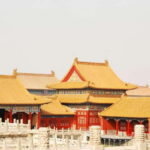
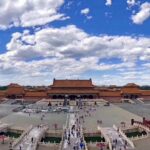
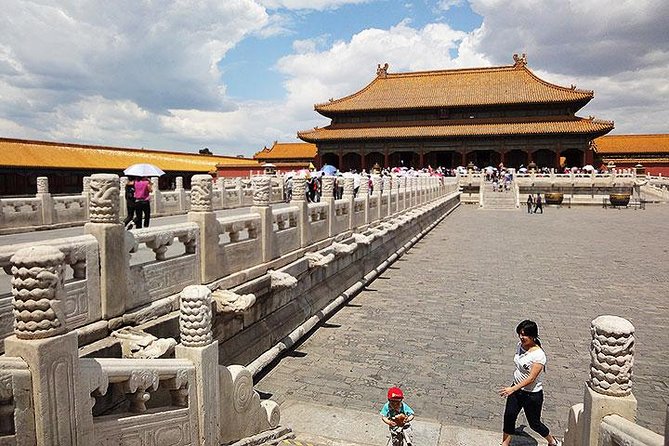
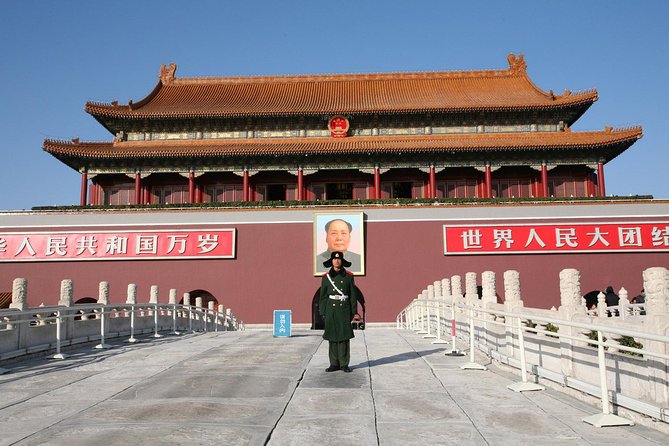
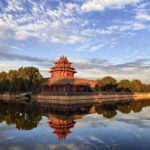
Next comes one of the biggest payoffs of the entire trip: the Palace Museum, also known as the Forbidden City. Your schedule focuses on the essential areas without pretending you can cover the entire complex in one go.
You’ll enter through the Gate of Heavenly Peace, then the tour route hits the central-axis highlights and the core palace spaces that most visitors look for. The schedule includes time at:
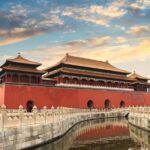
- Meridian Gate (Wu Men)
- Hall of Great Harmony (Taihe Dian), where state ceremonies were held
- Palace of Heavenly Purity, tied to the emperor’s inner responsibilities
- Imperial Garden, where the emperor and the imperial setting leaned toward leisure and private court life
What makes this format valuable is that it’s organized like a guided walk through the Forbidden City’s power structure. Outer Court spaces link to public ceremony; Inner Court spaces shift toward governance and private life. That contrast helps you understand why the palace design feels intentional rather than random.
You’ll also be inside the Forbidden City for about 3 hours total, with additional time at the surrounding stops. That’s enough to appreciate major architecture, courtyard space, and key halls, but not enough to study every carved detail. If you love museums and can lose a whole day to rooms, you might want a separate extra day in Beijing for a deeper revisit.
Mutianyu Great Wall: Cable Car Comfort and Real Rampart Walking
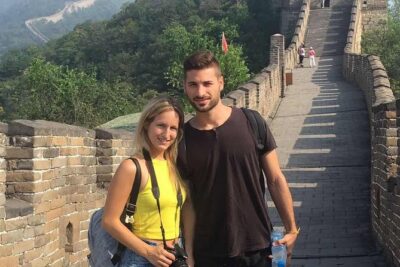
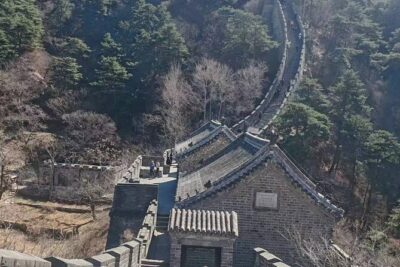
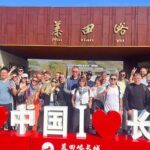
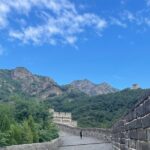
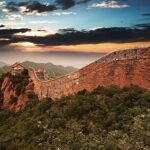
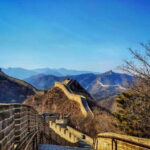
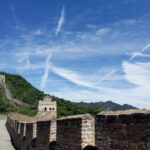
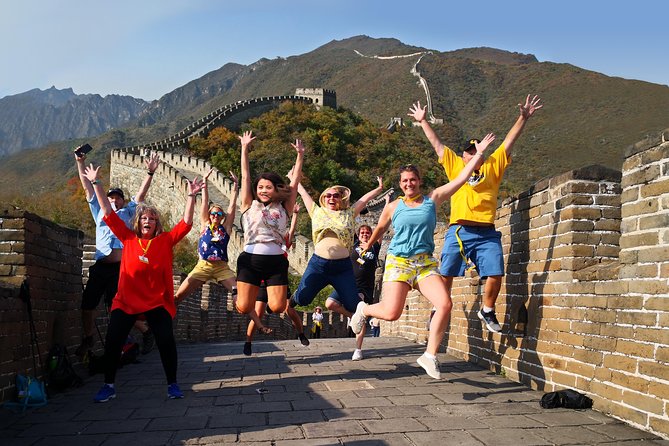
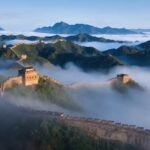
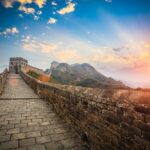
After about 1.5 hours driving, you reach Mutianyu Great Wall, one of the best-preserved and also one of the most popular sections. The schedule gives you around 4 hours total for this part of Day 1, which is a good balance: you get enough wall time to feel the Great Wall effect without feeling like you were dragged on a forced hike that never ends.
This tour is set up to reduce strain at the start. You get round-way cable car or chairlift (listed as included), and you’ll have a route over the ramparts. That’s a smart choice for most first-timers because it lets you spend your effort on the views and walking rather than saving energy for the steepest uphill.
There’s also a toboggan option noted as costing USD 20 per person. The schedule lists it in the included section alongside the cable car/chairlift, but it explicitly calls out the price, so treat it as a ride you’ll likely pay for as part of the wall experience.
Lunch happens here too: you’ll have a Chinese buffet lunch with soft drinks at the Great Wall area before the afternoon ramparts time. Important note: the tour indicates Halal food and baby food are not available, so if those matter for you, plan ahead.
My take: Mutianyu works best when you approach it as a mix of big-world scale and manageable logistics. The wall is naturally demanding, but the tour helps you avoid adding extra friction with long transfers or difficult entry decisions.
Day 2 at a Glance: Temple, Hutongs, Lama Temple, Summer Palace
Day 2 is more “Beijing texture” and less “only mega-sites.” You still get major landmarks, but the route is more layered: spiritual architecture, a look at old neighborhood life, then an imperial garden finish.
The rhythm is: Temple of Heaven in the morning, Hutong in the middle, Lama Temple later, then Summer Palace to close. If you want a Beijing trip that feels like more than a highlight reel, this sequence helps.
You’ll keep the same overall structure: pickup from your hotel, driven transfers in an air-conditioned vehicle, and a guided route with headset support.
You can also read our reviews of more tours and experiences in Beijing

Temple of Heaven: The Sacred Geometry Stop
You start at the Temple of Heaven for about 1.5 hours, with two main follow-ups:
- Hall of Prayer for Good Harvest (about 20 minutes)
- Yuanqiutan (open-air altar) (about 20 minutes)
The tour context here is the key. Emperors visited this place to worship the God of Heaven for good harvests in ancient times. That matters because it changes how you look at the buildings and layouts—you’re not just seeing impressive roofs and circles. You’re seeing a space designed for specific ceremony and symbolism.
If you’re the type who likes explanations while you look, the headset system helps a lot. These sites can otherwise feel like “nice architecture” without the reason behind it.
Hutong Tour by Rickshaw: Seeing Old Beijing Streets at a Human Pace
After the temple, you move to the Beijing Hutong area and the tour includes two big pieces:
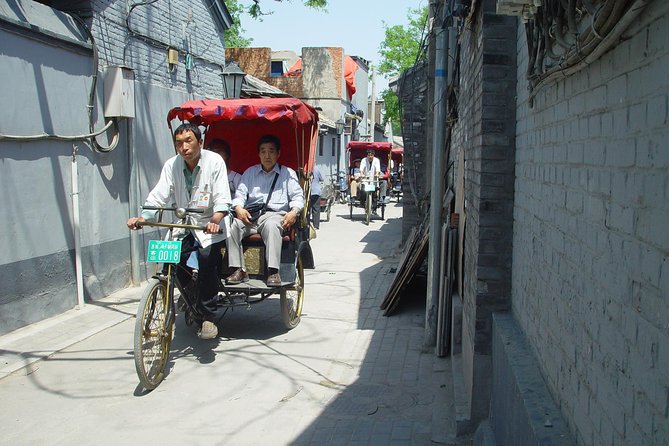
- a rickshaw ride through the old alleys
- a visit to a traditional courtyard to see how old Beijingers lived
This is one of the most memorable parts for first-timers because it’s not just monumental history. It’s everyday scale: narrow lanes, local rhythm, and the sense that Beijing had a different street life before modern expansion.
A caution that’s more about expectation than risk: you’re on a schedule, so this doesn’t turn into a full deep dive into Hutong life. It’s a taste—one hour on the plan—meant to balance the heavy hitters from Day 1.
Lama Temple: A Visual Change of Mood
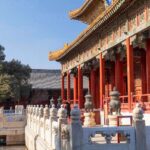
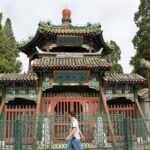
Next comes the Lama Temple, described as the largest and most perfectly-preserved lamasery in Beijing, with about 1 hour allocated.
This stop is a good palette cleanser between neighborhood streets and the final royal garden stop. Visually and spiritually, it shifts gears. You get architecture that feels built for devotion, not just state power or imperial ceremony.
If you’re sensitive to crowds, mornings can still be busy. But the schedule time block is reasonable, and having a guide helps you move between the most important areas efficiently.
Summer Palace: The Last Stop You’ll Remember
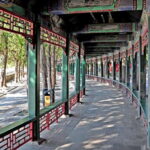
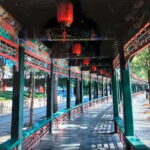
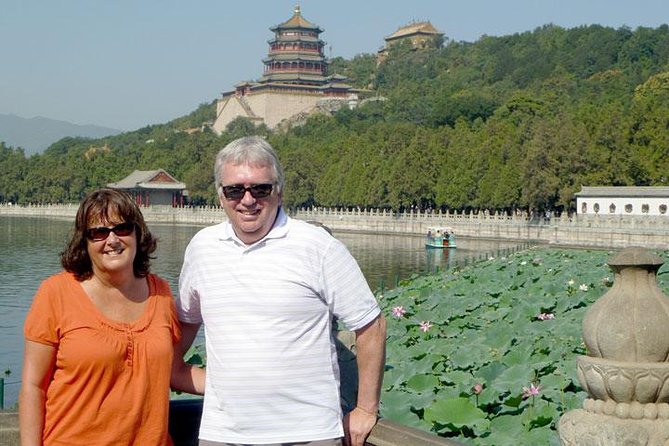
You end at the Summer Palace for about 2 hours. The focus is on Longevity Hill and Kunming Lake, and the tour describes it as a royal garden space often called a museum of ancient Chinese royal gardens.
This is a strong final choice because the Summer Palace is where Beijing’s “palace” story stops feeling like a single straight line. It becomes scenery—water, hills, and designed viewpoints—so you’re not only walking from one throne-room style building to another.
If Day 1 left you a little palace-fatigued, the Summer Palace gives your brain a break without losing the historic thread.
Price and Value: What You Get for About $99
At $99 per person, this tour competes well with the cost of piecing together logistics yourself—especially if you value guided interpretation and want entrance fees handled.
Here’s what’s included, based on the plan:
- Hotel pickup and drop-off within the Third Ring Road
- Air-conditioned vehicle transport
- Entrance fees to the Forbidden City and Mutianyu Great Wall
- Entrance fees to Temple of Heaven, Lama Temple, and Summer Palace (when that day is part of your option)
- Buffet lunch with soft drinks on Day 1
- Professional English-speaking guide and experienced driver
- Headset so you can hear explanations
- Unlimited bottled water
- Baby seats for free
Then there are the items you should factor mentally:
- The Great Wall ramparts experience includes round-way cable car or chairlift, and the toboggan option is noted at USD 20 per person
- Forbidden City requires real-name reservations at least 7 days in advance, and it can sell out, meaning ticket access may be harder if you book late
For my money, the biggest value driver is this: you’re paying for a clean itinerary that strings together the hardest-to-plan parts of Beijing into two efficient days.
Practical Tips Before You Go (So the Day Feels Easy)
A few things can make your experience smoother without any extra stress.
1) Book early for the Forbidden City.
The tour warns that real-name tickets for the Forbidden City need to be reserved 7 days in advance and are easily sold out. Do your part: submit passport information correctly, and carry the same ID you used in booking.
2) Use the pickup area wisely.
Pickup is free within the Third Ring Road. If you’re staying beyond that zone, there’s an extra charge. If you can choose, central downtown hotels help you keep the trip simple.
3) Pack for walking, not museum hopping.
You’ll be on your feet across Tiananmen, the Forbidden City, and the Great Wall on Day 1, then Temple of Heaven, Hutongs, Lama Temple, and Summer Palace on Day 2. Comfortable shoes aren’t optional.
4) Expect a guided pace, not a slow stroll.
One review highlights that the guide moved fast but would wait for the group. That’s a good sign: it means you’ll likely keep moving, but you’re not being left behind.
Should You Book This Beijing 2-Day Highlights Tour?
You should book if you want an organized first Beijing visit and you care about hitting the big names without spending your time planning transit and tickets. It’s especially good for people who like structure, appreciate guided context, and want a mix of imperial sites plus a real taste of Hutong life.
You might skip it if you’re the kind of traveler who wants to linger for hours in one place with no pressure, or you know you need very slow pacing to enjoy museums and courtyards. This itinerary is designed to move.
If you book, do two things that matter most: reserve early for the Forbidden City using accurate real-name passport details, and wear shoes you trust for long days. Then let the tour handle the rest, from air-conditioned drives to entrance timing and headsets that keep the story in your ear.
FAQ
What’s the tour start time?
The tour start time is 7:00 am.
Does the tour include hotel pickup?
Yes. Pickup and drop-off are offered for hotels within Beijing’s Third Ring Road.
Are entrance fees included?
Entrance fees for the Forbidden City and Mutianyu Great Wall are included, and entrance fees for Temple of Heaven, Lama Temple, and Summer Palace are included if you select that option.
Do I need a real-name reservation for the Forbidden City?
Yes. Tickets for the Forbidden City require real-name reservation at least 7 days in advance, and they can sell out.
Is lunch included?
Yes. Day 1 includes a buffet lunch with soft drinks. Halal food and baby food are not available.
How big is the group?
The group size is about 12 people, with a maximum of 12 travelers, though some groups may run about 10% larger with arrangements.
Is there an English-speaking guide?
Yes. The tour includes a professional English-speaking guide.
What kind of transport is used?
You travel in an air-conditioned vehicle with an experienced driver, and the tour uses hotel pickup/drop-off within the Third Ring Road.
Is the Great Wall ride by cable car included?
The schedule lists round-way cable car or chairlift to Mutianyu as included, and it also mentions a toboggan ride that costs USD 20 per person.
Can I get a refund if I cancel?
Yes. You can cancel for free up to 24 hours in advance for a full refund.
Is the tour wheelchair-friendly or suitable for seniors?
The tour is not suitable for people over 85 years old and it’s not suitable for wheelchair users.