REVIEW · BEIJING
Beijing: Confucius Temple and the Impercial College E-ticket
Book on GetYourGuide →Operated by PidanTravelAgency · Bookable on GetYourGuide
A quiet place to understand how China tested talent. This one-day e-ticket combo pairs Yuan Dynasty architecture with museum-style exhibitions you can follow without stress. What I like most is the stone tablet exhibit tied to the imperial examinations, and the way the grounds are laid out like a story: temple on the left, college on the right. A small catch: you’ll need your original passport (or ID) plus your electronic ticket/QR code ready to enter.
This site also rewards slow walking. Confucius Temple focuses on ritual space and long dynastic continuity, while Guozijian (Imperial College) shows how education was run at the state level. I especially like that you get both the cultural meaning of Confucius and the practical machinery of the exam system in the same visit. If you hate walking between multiple courtyards, you might want to plan extra time.
In This Review
- Key Points at a Glance
- Entering Confucius Temple: QR Code, Passport, and a Smooth Start
- Confucius Temple (Yuan Dynasty, 1306): The “Teacher Gate” to Dacheng Hall
- The Imperial Examination Names: Why 51,624 Jinshi Matter
- Exhibitions Inside Confucius Temple: Make the Site Easier to Read
- Guozijian (Imperial College): The State’s Elite Education Machine
- Temple and College Together: The “Two Sides” Story You’ll Feel
- How to Spend Your One Day Here Without Getting Tired
- Price and Value: Is $7 Worth It?
- Who Should Book This E-ticket (and Who Should Think Twice)
- Should You Book This Confucius Temple and Imperial College E-ticket?
- FAQ
- What do I need to bring to enter?
- How long is this experience?
- What’s the main focus at Confucius Temple?
- What can I see at Guozijian (Imperial College)?
- Are there exhibitions included?
- Is there an audio guide option?
Key Points at a Glance
- QR code + passport/ID gets you in, with a no-fuss entry setup
- Temple-left, College-right layout helps you follow the big picture fast
- 198 stone tablets include 51,624 Jinshi names, birthplaces, and ranks
- Three Confucius Temple exhibitions make the site easier to read
- Guozijian’s central-axis plan shows how elite education was organized
- $7 price is a strong value for a major historic complex with museum exhibits
Entering Confucius Temple: QR Code, Passport, and a Smooth Start
If you want an easy entry day in Beijing, this is the kind of ticket that makes you feel prepared instead of stuck. Bring your passport or ID card and use the QR code tied to your electronic ticket. The key detail here is simple: you enter with your original passport and the e-ticket QR—no printed drama required.
What’s also nice is the promise to skip the ticket line. Even if the site isn’t packed, saving time means you can spend it where it matters: reading the stonework, walking the courtyards, and taking your time with the exhibitions. This is a full historic complex, not a quick stop.
One more practical note: this experience is set up as a private group. That doesn’t automatically mean you’ll have a guide telling stories turn-by-turn, but it does usually mean less logistical chaos than a standard open group format. You can keep your pace and focus on the places that catch your eye.
You can also read our reviews of more tours and experiences in Beijing

Confucius Temple (Yuan Dynasty, 1306): The “Teacher Gate” to Dacheng Hall
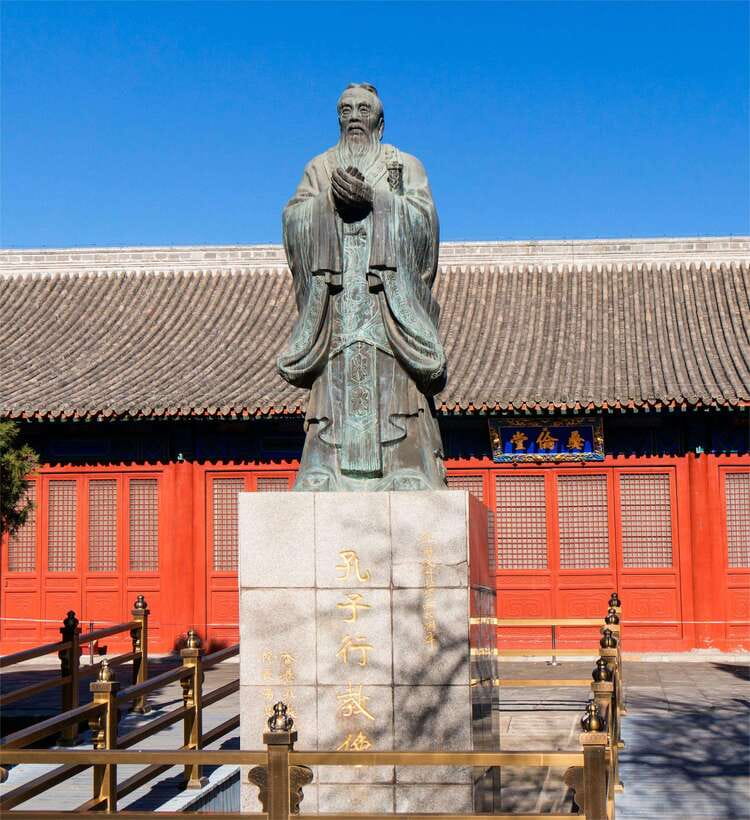
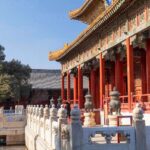
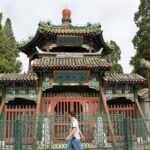
Confucius Temple dates to the Yuan Dynasty, built in 1306. It’s the place where memorial ceremonies for Confucius were held across the Yuan, Ming, and Qing dynasties. In other words, you’re not only seeing an old site—you’re seeing a location that stayed important for centuries.
The grounds cover over 22,000 square meters, with about 7,400 square meters of construction, arranged around three courtyards. The architecture follows a strong central axis running south to north, and once you get used to that rhythm, the place starts to feel readable.
On that axis, you can look for the sequence of key points:
- Teacher Gate
- Dacheng Gate
- Dacheng Hall
- Chong Sheng Temple
What I like here is how the buildings feel connected rather than random. The axis guides your attention the way a well-edited script guides a movie scene. You’ll likely notice that the design isn’t meant for “just photos.” It’s meant for ceremony and order.
Also, don’t miss the stone tables in the front courtyard. There are 198 stone tablets arranged into four groups, positioned on either side. These are not background decoration. They connect the temple world to the exam world—especially once you learn what’s carved into them.
The Imperial Examination Names: Why 51,624 Jinshi Matter
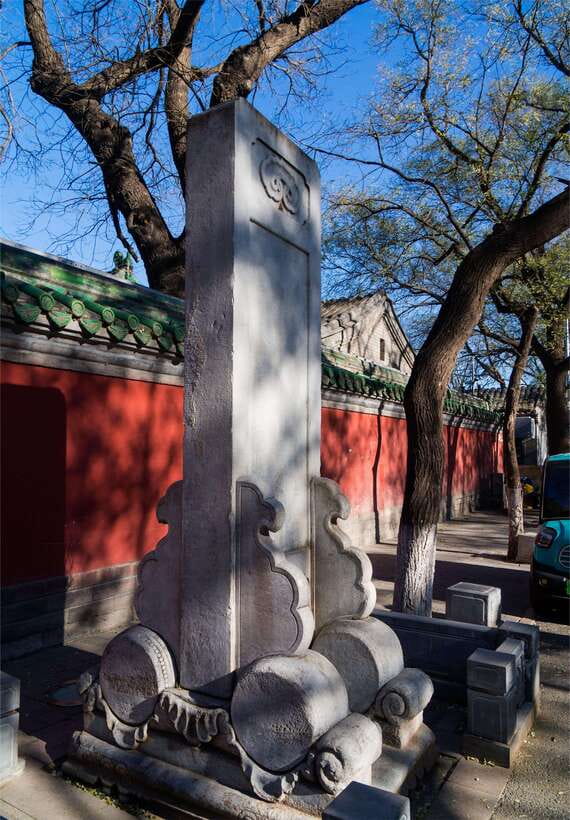
The most eye-opening part of Confucius Temple is the stone tablet collection tied to the imperial examinations. The tablets include 51,624 names—along with birthplaces and ranks of Jinshi—carved as lasting records.
This matters because it turns a mythic-sounding topic into something tangible. The imperial exam system often gets discussed in big, abstract terms. Here, it becomes concrete: real people, organized ranks, and an official record meant to last.
If you care about history that feels “real,” this is where you’ll slow down. The stone tablets are precious materials for research on the imperial examination system. Even if you’re not a researcher, you can still use them to understand the scale of the system and how seriously the state documented achievement.
Practical tip: when you stand near a tablet group, take a moment to look at the layout. The fact that there are four groups isn’t random. It helps you mentally chunk the information so you don’t feel overwhelmed by sheer volume.
Exhibitions Inside Confucius Temple: Make the Site Easier to Read
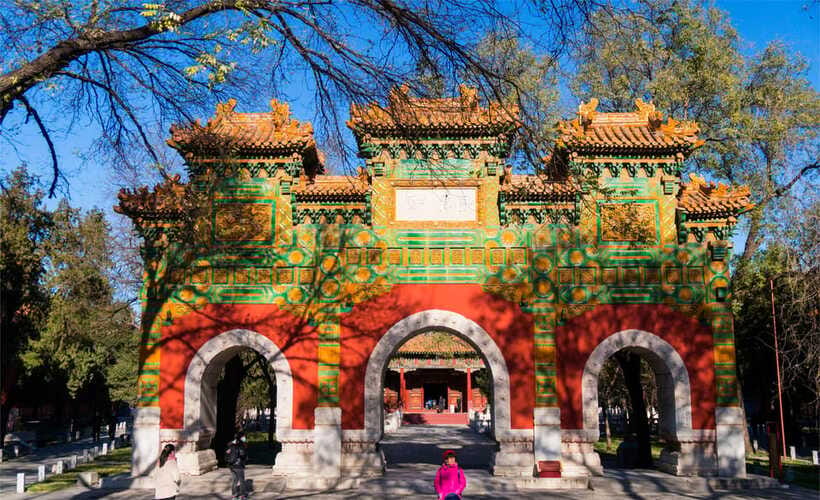
Confucius Temple has three exhibitions. This is valuable because it helps you connect what you’re seeing—courtyards, gates, ceremonial halls—to the bigger story without needing a deep background in Chinese history.
Here are the exhibition topics you can expect:
- Exhibition of the Restored Dacheng Hall
- Exhibition of the Great Confucius
- Exhibition of the History of Beijing Confucius Temple
If you’re the type who likes to understand what you’re looking at before your feet get tired, these exhibitions are a smart use of time. They also prevent the common problem of historic sites feeling like a series of pretty buildings you can’t fully interpret.
And there’s a practical perk from on-the-ground experience: you can buy an audio guide at the entrance. That’s helpful if you want extra context while you’re walking. If you don’t use audio, you can still rely on the exhibitions themselves to orient you.
My advice: don’t try to “cover everything.” Pick one or two exhibition areas that match your interests most—either Confucius as a figure, the temple’s own history, or the Dacheng Hall restoration story—and then let the courtyards do the rest.
Guozijian (Imperial College): The State’s Elite Education Machine
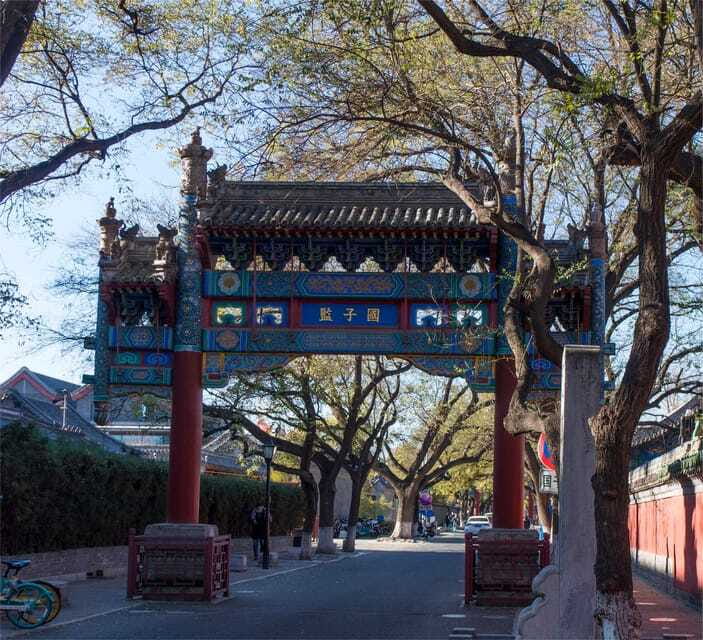
After Confucius Temple, you shift to Guozijian—the Imperial College. This complex was the highest educational institution and an administering organ of education set up by the state during the Yuan, Ming, and Qing dynasties.
It was built in the first year of the Zhida reign in the Yuan Dynasty, which is 1308. So you’re still in Yuan-era territory, just looking at a different function: less memorial ceremony, more formal education and institutional power.
Guozijian covers about 28,000 square meters and includes three courtyards as well. Like the temple, it follows a disciplined central-axis plan—again, the kind of layout that makes the site easier to navigate if you let it guide you.
On the central axis, key places include:
- Jixian Gate
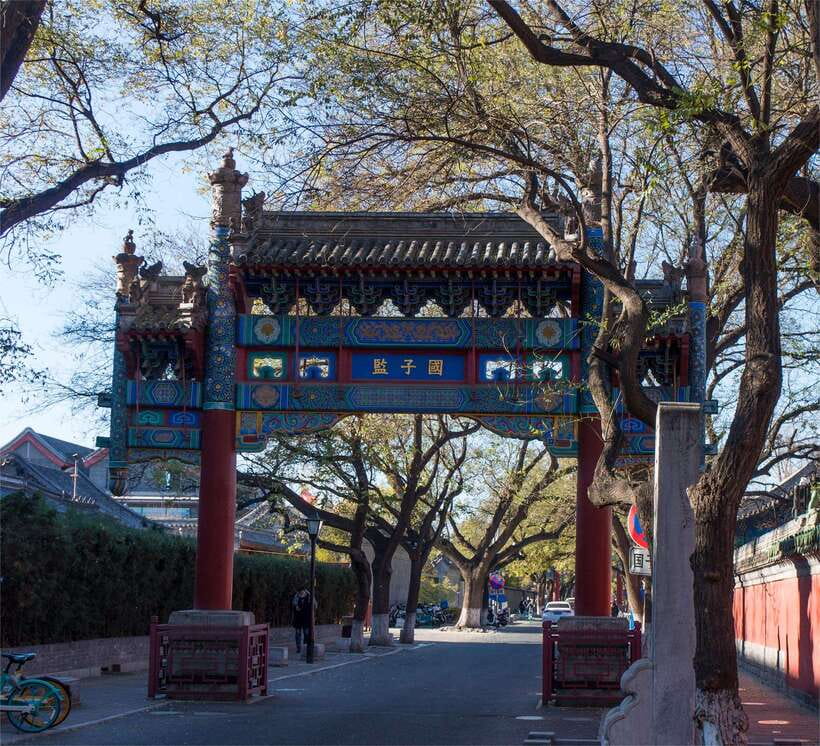
- Taixue (Imperial College) Gate
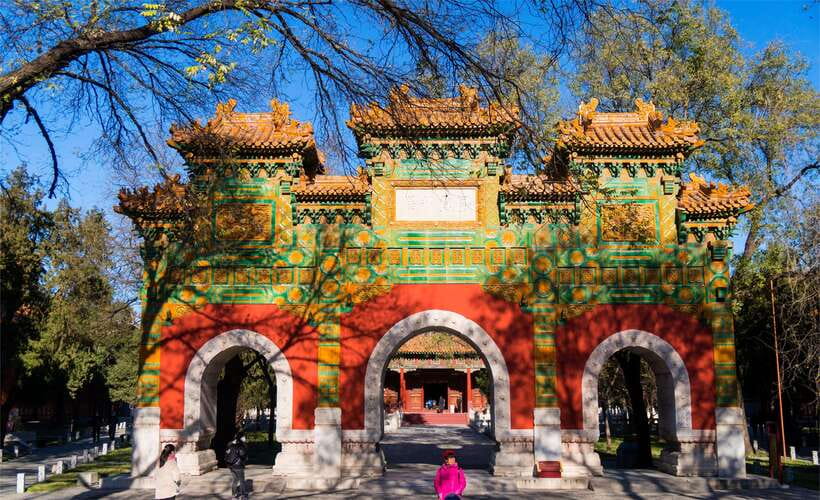
- Glazed memorial Arch
- Biyong Hall
- Yilun Hall
- Jingyi Hall
Along that axis, you also have two halls and six main rooms, including the Imperial tablet Pavilion and the Bell and Drum Pavilion, lined traditionally and symmetrically beside the central axes.
Here’s the big value: you get to see how Confucian culture and education connect to state systems. The exam tablets at the temple show the results and records. Guozijian shows the institutional side—where the education machine was organized at the top level.
If you enjoy architecture with purpose, this is worth your time. The symmetry and structure aren’t just aesthetic. They reflect how the institution wanted order in learning and evaluation.



Temple and College Together: The “Two Sides” Story You’ll Feel
One of the reasons this combo works is that it’s built around a clear rule: the buildings form two groups—temple on the left and college on the right. That matters because you’re not just visiting two separate attractions. You’re reading one larger concept.
Confucius Temple helps you understand the moral and ritual foundation. The Imperial College helps you understand the system that trained people within that cultural framework. Put together, it looks like a full pipeline: values, education, testing, and record-keeping.
This makes the experience ideal for travelers who want more than a photo stop. If you like making connections—between institutions, ideas, and how people lived inside official systems—this pair of sites can really click.
How to Spend Your One Day Here Without Getting Tired
With a one-day duration, you’ll want a pace plan that protects your attention. You’re dealing with multiple courtyards and lots of stone details, so rushing can flatten the experience.
Here’s a practical approach that keeps it enjoyable:
- Start at Confucius Temple and let the central axis lead you from gate to hall.
- Spend your “deep focus” time at the stone tablet area, since it’s the signature feature tied to the imperial examinations.
- Move to the three Confucius Temple exhibitions with the mindset of choosing meaning over volume.
- Finish at Guozijian, walking its central-axis sequence and paying attention to how the institution is structured.
If you’re using the audio guide option, don’t turn it on everywhere. Turn it on for the moments you care about most—like when you reach the temple hall sequence or near the education-focused parts—then switch it off to let the space speak.
Also, if you’re traveling in hot weather, build in small breaks. Courtyards look open, and your legs will do a lot of work even if you’re not running around.
Price and Value: Is $7 Worth It?
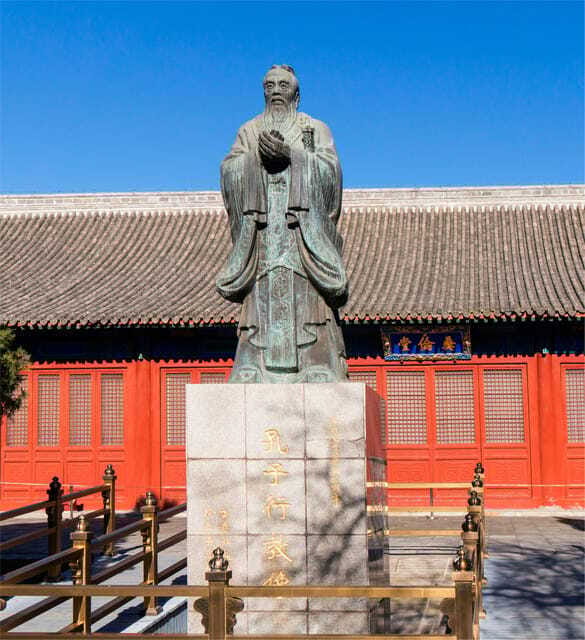
At about $7 per person, this ticket feels like strong value for what you get. You’re not just buying access to a single building. You’re buying access to a major Yuan-era historic complex with exhibitions and a signature element—the imperial examination stone tablet records.
You can think of the value in two layers:
- Historic substance: Yuan-era architecture, ceremonial layout, and Guozijian’s state education role
- Interpretation support: built-in exhibitions plus the option to pick up an audio guide
So even if you’re not a hardcore “imperial exams” person, you’ll still have ways to understand what you’re seeing. And if you are that person, the stone tablet material makes the site feel like a primary-source experience.
This is also the kind of ticket that’s easier to use because you can enter with your QR code and passport/ID, and it’s designed to help you skip the ticket line. That saves energy for the parts you’ll remember.
Who Should Book This E-ticket (and Who Should Think Twice)
This experience is a good fit if:
- you like architecture with a clear layout and purpose
- you want to connect Confucius traditions to the imperial exam system
- you want museum-style context without needing a full-day guided tour
You might think twice if:
- you’re hoping for a highly spoken, guided storytelling style (the data emphasizes access and exhibitions more than a narrated tour)
- you dislike walking through multiple courtyards and reading lots of details
That said, even casual visitors can enjoy it because the site’s design does a lot of the explaining for you.
Should You Book This Confucius Temple and Imperial College E-ticket?
If your goal is a meaningful, affordable one-day stop that doesn’t waste time, I’d book it. The value is strong: Yuan-era structures, a clear left-right temple-and-college concept, and the standout imperial examination stone tablets with 51,624 Jinshi records.
I’d also choose it if you like planning with options. You can rely on the exhibitions, or add an audio guide at the entrance, and you can move at your own pace through the central-axis layout.
Just make sure you’re ready for the entry requirement: bring your original passport or ID and have your QR code/e-ticket accessible. Do that, and you’ll spend your day looking instead of figuring things out.
FAQ
What do I need to bring to enter?
You should bring your original passport or your ID card, plus your electronic ticket/QR code.
How long is this experience?
It’s valid for 1 day.
What’s the main focus at Confucius Temple?
You’ll find Yuan-era ceremonial architecture and exhibitions, along with the stone tablet collection tied to the imperial examinations.
What can I see at Guozijian (Imperial College)?
Guozijian includes the highest educational institution and state education administration from the Yuan, Ming, and Qing periods, laid out along a central axis with major halls and rooms.
Are there exhibitions included?
Yes. Confucius Temple has three exhibitions: Restored Dacheng Hall, Great Confucius, and the History of Beijing Confucius Temple.
Is there an audio guide option?
An audio guide can be purchased at the entrance of the temple.