REVIEW · BEIJING
Beijing: Imperial Cuisine Experience & Cultural Performance
Book on GetYourGuide →Operated by PidanTravelAgency · Bookable on GetYourGuide
Royal food feels less like history and more like theatre. At Yuxiandu Imperial Cuisine Museum, you trace Chinese royal dishes from ancient times through the Qing Dynasty, using artifacts and context as your guide. I love that the museum doesn’t just show objects—it connects them to the role food played in court life.
The second big win for me is the palace-style meal that recreates what imperial guests ate. You get a multi-course banquet with standouts like roast duck, braised sea cucumber with fish maw, and longevity noodles, followed by a cultural performance. One thing to consider: it is pricey, and extra experience extras like traditional costume or makeup transformation are not included.
In This Review
- Key things to know before you go
- Yuxiandu in Haidian: what you’re walking into
- Imperial cuisine through five millennia: the museum portion that actually helps
- Time slots that matter: lunch vs dinner planning
- The palace-feast meal: how the courses are structured
- What you should expect from the meal setup
- Menu highlights: what’s on the table (and what to look for)
- Appetizer platter includes
- Main course-style item
- Dessert/bread-and-sweet components
- The cultural performance: what the show adds
- Value check: is $137 a good deal for food plus a show?
- Who this fits (and who should skip)
- Practical tips so you get the best experience
- Should you book this Beijing imperial cuisine experience?
- FAQ
- Where is the Yuxiandu Imperial Cuisine Museum located?
- How long does the experience last?
- What’s included in the ticket price?
- Are traditional costumes or makeup transformation included?
- What time does the lunch performance start?
- What time does the dinner performance start?
- How do I get my entry ticket?
- Is it wheelchair accessible and is it suitable for young children?
Key things to know before you go
- Museum + dinner in one ticket: you’re not bouncing between venues for two different activities
- Five-millennia story: the museum traces the development of Chinese royal cuisine over 5,000 years
- Royal-feast menu: you’ll be served multiple courses, not just a single tasting plate
- Performance after your meal: music and dance-style entertainment comes as part of the program
- Plan for fixed time slots: lunch and dinner have specific ticket-check and show start times
Yuxiandu in Haidian: what you’re walking into
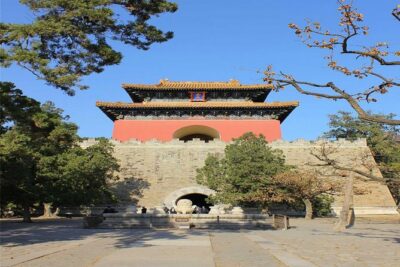
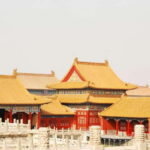
This experience centers on the Yuxiandu Imperial Cuisine Museum, in Beijing’s Haidian District near Sijiqing Bridge. It’s designed as two things at once: a museum and a restaurant. That matters, because instead of learning about imperial food first and eating later somewhere unrelated, you experience the story with your fork in hand.
The museum is recognized as a national AAA-level tourist attraction, which usually signals solid facilities and service. In plain terms, you’re more likely to have a smooth flow: check in, get seated, eat, then watch the show, all without the usual logistical headaches.
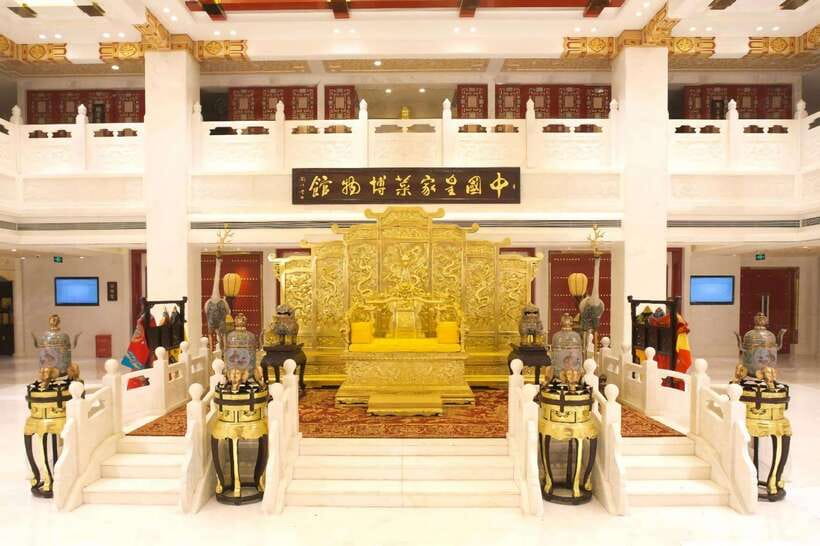
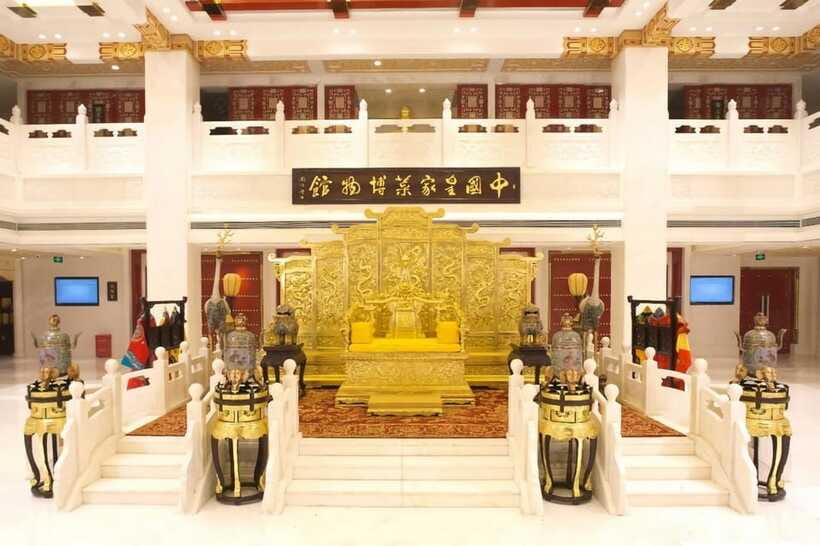
The setting has a palace-like feel. You’ll see how the space and the dining presentation help you understand why court meals were so formal. Royal dining wasn’t only about flavor—it was about ceremony, status, and precision.
You can also read our reviews of more tours and experiences in Beijing.


Imperial cuisine through five millennia: the museum portion that actually helps
The museum is built to show the evolution of Chinese imperial cuisine over five millennia, with a focus running through key eras up to the Qing Dynasty. What I like most is the breadth: you’re not just seeing one famous dish or one dynasty’s style. You get a bigger picture of how royal food changed over time.
The collection includes over a thousand precious historical artifacts, including dining utensils and valuable documents. Those details are useful because they turn food culture into something concrete. You can stand in front of the kinds of items a court would have used, then see why certain dishes and methods mattered.
You also get introductions to renowned royal dishes and chefs from different periods in Chinese history. Even without being a deep academic, you can usually pick up the logic: ingredients, preparation, and presentation weren’t random. They matched what the court valued—craft, refinement, and consistency.
The museum also frames the cultural significance of food at court. That’s the kind of context that makes the later meal land better, because you’re eating something presented as a recreation, not just ordering dinner.
Time slots that matter: lunch vs dinner planning
This isn’t a loose drop-in experience. Timing is part of the program, so you’ll want to arrive with a little cushion.
For the lunch option:
- Ticket checking starts at 11:38 AM
- The performance starts at 12:10 PM
For the dinner option:
- Ticket checking starts at 6:28 PM
- The show begins at 6:50 PM
Your job is simple: show up early enough to get seated before your meal and performance begin. The safest move is arriving a few minutes before ticket checking, because that helps you avoid getting stuck in any queues and ensures you don’t miss the start.
One more practical note that can save stress: the QR code generated after you order is not your real ticket. Your actual ticket is sent to you by email. Check your inbox so you don’t show up with the wrong paper.
The palace-feast meal: how the courses are structured
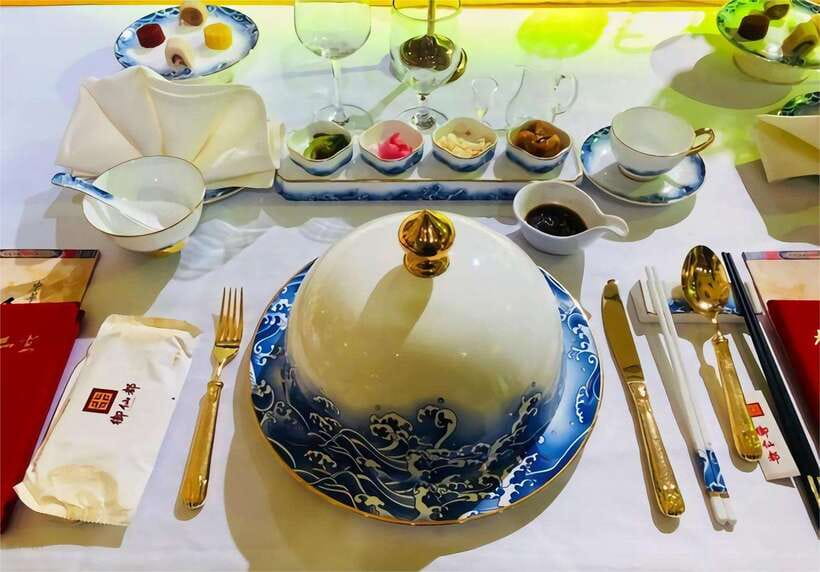
The program includes the meal, and it’s a multi-course banquet rather than a snack-and-sip situation. You’ll be served snacks, followed by an appetizer platter, then several additional courses that feel like a full royal meal.
The big advantage here is pacing. In about 3–4 hours, you get:
1) the museum experience
2) your multi-course meal
3) the cultural performance
That kind of bundled format is often great value on a trip like Beijing, where travel time can quietly eat your day.
What you should expect from the meal setup
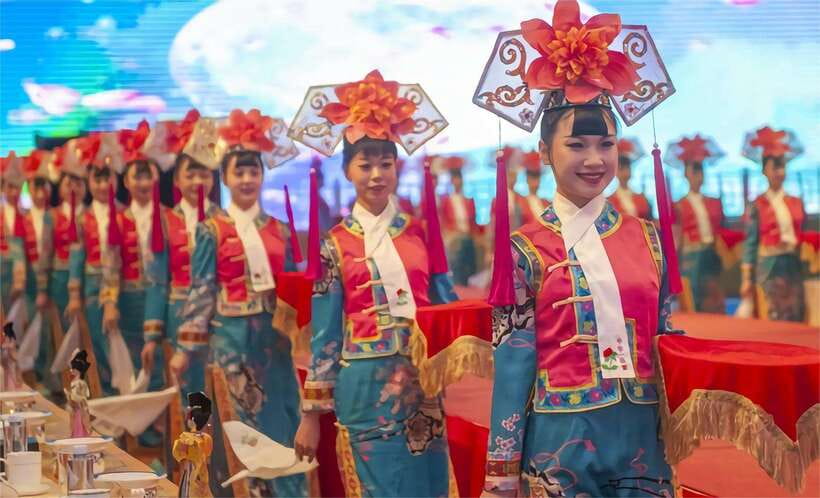
The restaurant design mirrors an ancient palace setting. That means you’re eating in a space built to reinforce the theme—ceremony, formality, and a sense of stepping into another time. I wouldn’t call it a costume party. It’s more about atmosphere and presentation.
Also, note the limitations: the experience does not include traditional costume or a makeup transformation. So you’re watching the court theme happen through the setting and the food, not through your own styling.

Menu highlights: what’s on the table (and what to look for)
Here’s the menu rundown you should expect, broken into the course items provided:
Appetizer platter includes
- Braised Sea Cucumber with Fish Maw in casserole
- Marinated Tofu and Bamboo Shoots
- Roast Duck with Jujube Wood
- Chinese Cabbage in soup
- Roasted Lamb
Main course-style item
- Longevity noodles with poached eggs
Dessert/bread-and-sweet components
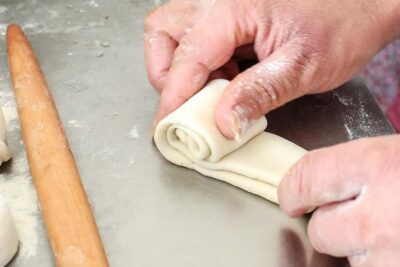
- Deep-Fried Dough Sticks (youtiao) with milk
- Yoghurt filled with honey
A few thoughts to help you decide if this menu fits your tastes:
- If you love duck, you’ll likely enjoy the roast duck course since it’s clearly a star item.
- If you’re curious about more unusual textures, the sea cucumber and fish maw dish is the headliner—rich, savory, and very much in the imperial tradition.
- If you prefer comfort-style flavors, the longevity noodles and the youtiao with milk tend to feel more familiar.
Also, the menu makes a clear point: imperial cuisine wasn’t just one type of food. You get a mix—soups, braised dishes, roasted meats, noodles, and sweet elements.
The cultural performance: what the show adds
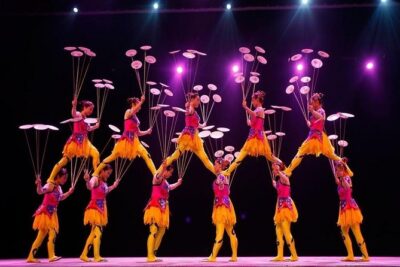
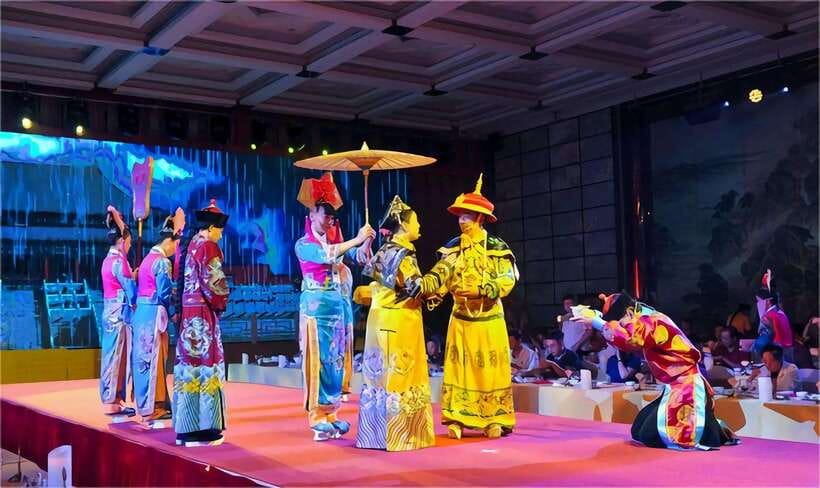
After your meal, you’ll watch a performance included with the ticket. You’re not only there to eat. You’re there for the cultural storytelling that comes with the dining theme.
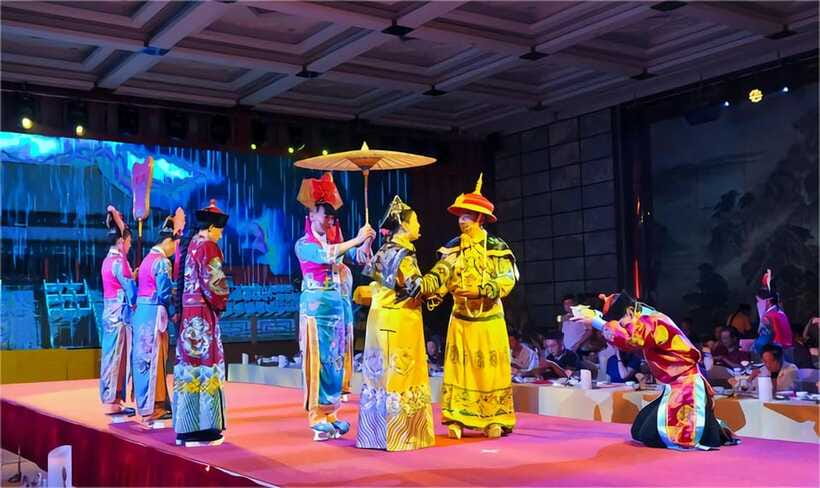
What stands out most from the show, based on the descriptions you’ll hear around the program, is the style: historical-themed presentation with traditional costumes, plus music and dance. That’s exactly what makes the performance feel connected to imperial cuisine instead of being random entertainment appended at the end.
One helpful detail for your planning: aim to be in the hall in time for your meal. The performance begins after ticket checking windows, so late arrival can mean missing the flow.
If you like performances that feel like a cultural snapshot—music, movement, costume—this part is usually the payoff.
Value check: is $137 a good deal for food plus a show?
At $137 per person, you’re paying for more than a meal. You’re paying for a full package: museum access, a multi-course banquet, and a cultural performance within a controlled time window.
So what makes it feel worth it?
- You get both education and entertainment in one block of time
- The meal includes multiple courses with specific items like roast duck and longevity noodles
- The performance is tied to the theme with traditional-costume-style presentation
What makes it possibly frustrating?
- If you’re sensitive to ticket pricing, you may want to shop around rather than assume every platform price is the same. One review noted that performance is the favorite part while ticket pricing on that platform can feel expensive, suggesting looking for alternatives or buying direct.
My take: if you’re the kind of traveler who likes structured experiences with food, story, and a show in one sitting, this is a fair match. If you’re mainly hungry for a specific dish and don’t care about the performance or museum context, you might find cheaper meals elsewhere.
Who this fits (and who should skip)
This works best if you:
- want a planned 3–4 hour block that combines food and culture
- enjoy learning through objects and themed presentation
- like banquet-style dining with multiple courses
- don’t mind a menu that includes less common ingredients like sea cucumber and fish maw
It’s not suitable for children under 2, as noted by the activity rules. If you’re traveling with very young kids, double-check whether the schedule and meal format will work for them.
Wheelchair accessibility is listed as available, which is a big practical plus. If mobility is part of your planning, you should be able to handle the visit without needing a workaround.
Practical tips so you get the best experience
A few small moves can make a real difference:
- Arrive a few minutes before ticket checking. It reduces stress and helps you get seated before the meal and show begin.
- Check your email for the real ticket and not just the QR code from your booking page.
- Pick lunch or dinner based on your energy, not just the clock. Dinner shifts later, and you’ll likely feel more relaxed for the show once you’ve had time to settle into the evening.
And for the food: go in with curiosity. This isn’t street-food sampling. It’s royal-food style dining—meant to be tasted slowly and followed by performance.
Should you book this Beijing imperial cuisine experience?
Book it if you want a single-ticket experience that turns imperial cuisine into something you can see, eat, and watch. The museum portion gives context through artifacts and the five-millennia arc. The meal gives you the court-style menu with standouts like roast duck and longevity noodles. Then the cultural performance adds the extra layer that makes the whole package feel like more than dinner.
Skip or look elsewhere if $137 feels steep for you and you mainly want food, not museum context or a show. Also consider the fixed timing and the fact that costume/makeup transformation is not included—this is about dining and watching, not dressing up yourself.
If you’re doing Beijing for the first time and you like experiences that feel structured and themed, I’d treat this as a high-value, cultural evening—one that’s built around royal food rather than generic entertainment.
FAQ
Where is the Yuxiandu Imperial Cuisine Museum located?
It’s in Beijing’s Haidian District near Sijiqing Bridge.
How long does the experience last?
Plan on about 3 to 4 hours.
What’s included in the ticket price?
The ticket includes the meal and the performance.
Are traditional costumes or makeup transformation included?
No. Traditional costume and makeup transformation are not included.
What time does the lunch performance start?
Lunch ticket checking is at 11:38 AM, and the performance starts at 12:10 PM.
What time does the dinner performance start?
Dinner ticket checking is at 6:28 PM, and the show begins at 6:50 PM.
How do I get my entry ticket?
The QR code from the GetYourGuide platform is not the actual ticket. Your real ticket is emailed to you, so check your email inbox for details.
Is it wheelchair accessible and is it suitable for young children?
Wheelchair accessibility is listed. Children under 2 years are not suitable.