REVIEW · BEIJING
Beijing liulichang : Learn Calligraphy orCarving from Master
Book on GetYourGuide →Operated by Sino-Voyages · Bookable on GetYourGuide
A quiet craft lesson in a historic Beijing district is hard to beat. This hands-on workshop in Liulichang is built around you making something yourself, choosing from calligraphy, fan painting, or seal carving, with guidance in a traditional studio. I especially like the small-group feel that makes it easier to ask questions, and the fact that you leave with an artwork you actually made. The only real catch is you’ll pick just one art form for the session, so choosing your craft matters.
What makes this experience feel more meaningful than a standard sightseeing stop is the order of things: you start with a short walk in Liulichang for cultural context, then you step into a calm workshop setting to practice and create. I also like how the instructions are tailored to beginners, with expert teaching plus support in English and Chinese so you’re not stuck guessing. If you’re hoping for a long art-meets-museum day, the 2 to 2.5 hours may feel short.
There’s also a practical consideration: transportation to the venue isn’t included, so you’ll want to plan how you’ll get there on time. Still, for people who want Beijing beyond big-name landmarks, this is a strong value move because you’re paying for an expert-led, take-home result—not just a photo stop.
In This Review
- Key things that make this workshop worth your time
- Liulichang East Street: the setting that turns craft into culture
- Meeting Bruce Gao and the Sino-Voyages team at the square entrance
- Choose your craft: calligraphy, silk fan painting, or seal carving
- The Meditation of Ink: calligraphy on rice paper
- The Elegance of the Fan: painting a silk round fan
- The Seal of Identity: carving your name chop
- Inside the master-led studio: how the teaching actually helps
- What support looks like for non-Chinese speakers
- Practice before the final work (especially for seals)
- Your take-home souvenir: what you’ll leave holding
- Price and value: why $75 can be fair (or not) for your style of travel
- Who should book this workshop in Beijing (and who should skip)
- Practical tips so you get the most from the 2 to 2.5 hours
- Should you book Beijing Liulichang Learn Calligraphy or Carving from Master?
- FAQ
- FAQ
- Where is the meeting point for this workshop?
- How long does the experience last?
- How much does it cost?
- What art can I choose to learn?
- Do I need any prior experience?
- What languages are used for instruction?
- Are materials included?
- What do I take home?
- Is transportation to the venue included?
- Is it wheelchair accessible, and is it suitable for young children?
- FAQ
- Can I get a refund if my plans change?
- Is there an option to pay later?
Key things that make this workshop worth your time
- Three classics, one focused session: choose calligraphy, a silk fan painting, or a personal seal chop
- Beginner-friendly teaching: no prior experience needed, with guided practice before the final work
- Liulichang context first: a short orientation walk in the cultural district helps the art make sense
- Small groups for real interaction: you get more one-on-one attention than in a crowd
- Take-home quality materials: you create on the traditional surfaces used for each art form
Liulichang East Street: the setting that turns craft into culture
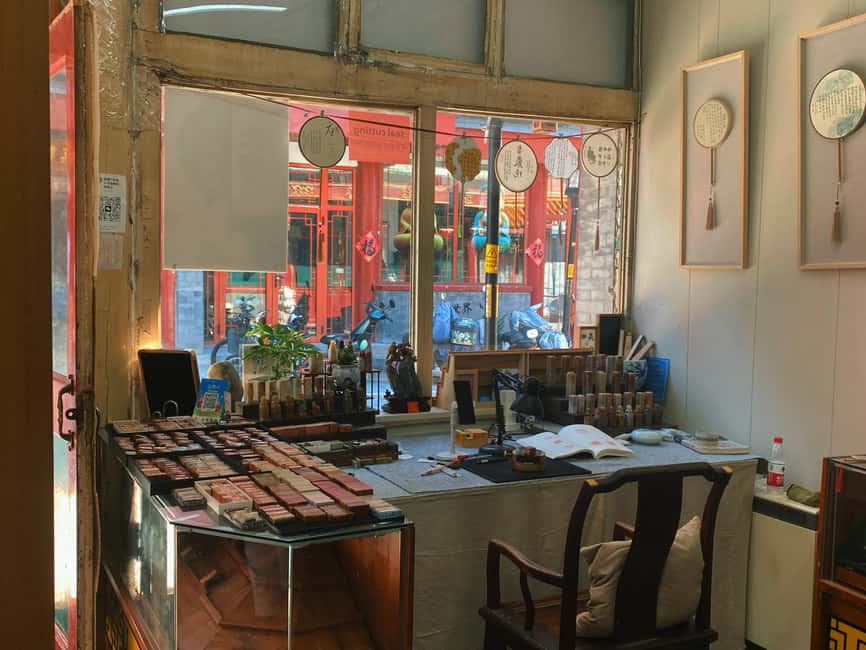
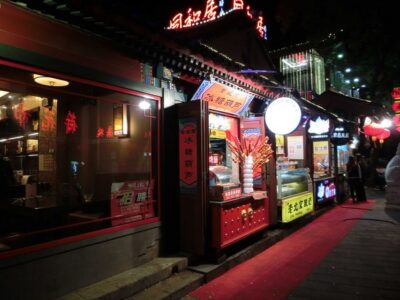
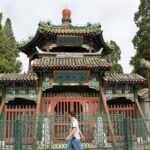
Liulichang is one of those Beijing areas where the atmosphere does part of the work for you. The workshop starts at the small square entrance of Liulichang East Street, a place known for traditional arts and the kind of craft culture you don’t see from a bus window. Even before you sit down at your materials, you’re meant to get your bearings in the district—enough to understand why these arts matter here.
This matters for value. When you learn calligraphy or carving without any context, it can turn into a generic “try it once” activity. Here, the experience is designed so the art feels connected to daily life and to a longer Chinese tradition. You’re not just copying shapes; you’re learning a cultural language.
The best part is the pacing. You’re not trying to cram in ten stops. You get a short look around, then you switch gears into a quieter studio rhythm—more like a workshop than a performance.
You can also read our reviews of more tours and experiences in Beijing.


Meeting Bruce Gao and the Sino-Voyages team at the square entrance
You gather at the small square entrance of Liulichang East Street, and your guide shows up holding a sign that says Sino-Voyages. It’s a small detail, but it reduces stress. Beijing is big, and a clear meeting spot helps you stay relaxed.
From there, you take a brief tour of Liulichang to absorb the cultural atmosphere. The experience also includes local storytellers who share hidden histories and personal anecdotes. That’s not filler. If you’re learning something as symbolic as Chinese characters—whether you write a proverb or carve a name into a seal—background helps your brain feel what your hands are doing.
A helpful point from past participants: the teaching setup often includes translation support. One review specifically called out Bruce and a friend, with patience and encouragement from interpreters when needed. If you don’t speak Chinese well, that support is a key reason this workshop works for foreigners.
Choose your craft: calligraphy, silk fan painting, or seal carving
Here’s the heart of it: you pick one hands-on workshop. Calligraphy, fan painting, or seal carving. You’ll spend the session learning the basics, practicing under guidance, and then creating a final piece to take home.
The Meditation of Ink: calligraphy on rice paper
If you want focus, patience, and a calming rhythm, calligraphy is the obvious choice. You learn brushstrokes as an art of control—how to hold the brush, how to guide ink, how to pace yourself. The workshop then pushes you to create something personal.
You can write a meaningful Chinese proverb or your own name. That last part is practical for travelers: your keepsake becomes unmistakably yours, even if you can’t read every character perfectly. The result is made on rice paper, using materials provided for the class.
The Elegance of the Fan: painting a silk round fan
Fan painting is a fun choice if you like something visual and slightly decorative. You paint your own masterpiece on a delicate silk round fan, choosing a classic motif such as bamboo or orchids. Those themes are traditional and easy to recognize, which helps you feel confident about the “why” behind what you’re painting.
This option also tends to feel more like design. You’re working with composition—where lines and color land on a curved surface—rather than the strict stroke-by-stroke structure of calligraphy.

The Seal of Identity: carving your name chop
Seal carving is for people who want a hands-on, satisfying physical process. You craft your Chinese name chop, a stamp used for centuries as a personal signature. You’ll learn how to carve the characters and then leave with your unique seal.
One detail that matters: there’s typically practice before the final engraving. A participant mentioned doing lots of practice on other stones before working on the real piece, and that’s exactly what you want as a beginner. It reduces mistakes and saves the “real work” from getting rushed.
Inside the master-led studio: how the teaching actually helps
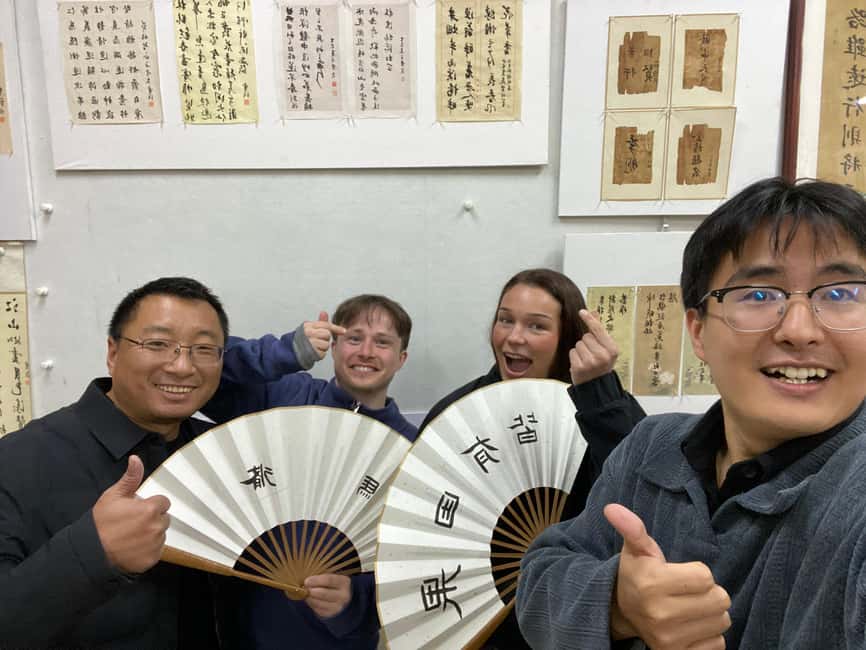
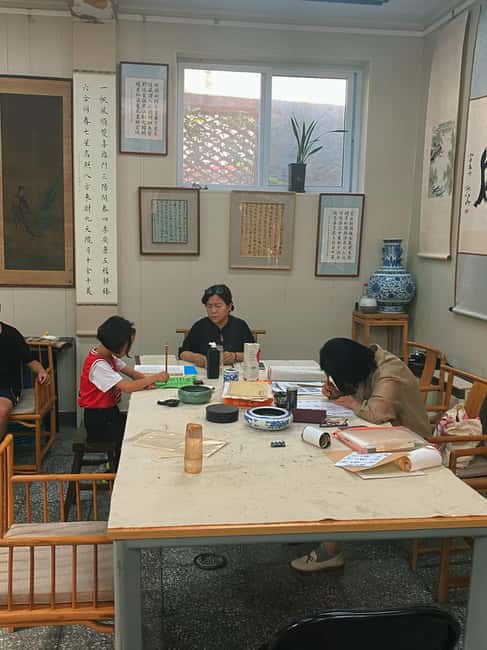
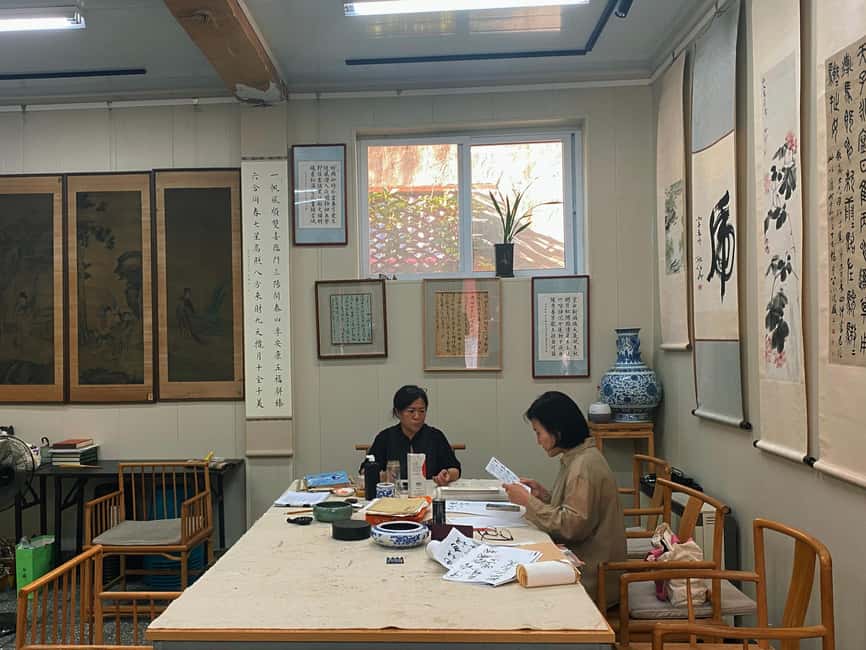
The workshop happens in a serene studio environment in Beijing’s Liulichang cultural district. The atmosphere is described as tranquil and intentionally away from crowds, which makes a big difference when you’re learning fine-motor skills like brushwork or carving.
You’re guided by an expert artisan in a traditional studio setting. If you’re worried you’ll feel awkward as a beginner, you shouldn’t. The activity is explicitly built for people with no prior experience, and curiosity is encouraged.
What support looks like for non-Chinese speakers
This is one of the more important strengths of the experience. The instructor support includes English and Chinese, and in real-world practice you may also have interpreters who help you communicate with the master artisan. Past participants described a patient setup with interpreters helping bridge language gaps, including during seal carving.
That means you’re not just being handed tools and left alone. You get correction. And for calligraphy or carving, correction is everything.
Practice before the final work (especially for seals)
If you choose seal carving, expect instruction to include rehearsal. One review highlighted that you get to practice on other stones before you start the proper carving. That structure is how you get a better final seal without feeling like you’re wasting your only chance.
For calligraphy and fan painting, the same idea applies even if the materials differ: you start with fundamentals, then you build toward your final piece.
Your take-home souvenir: what you’ll leave holding
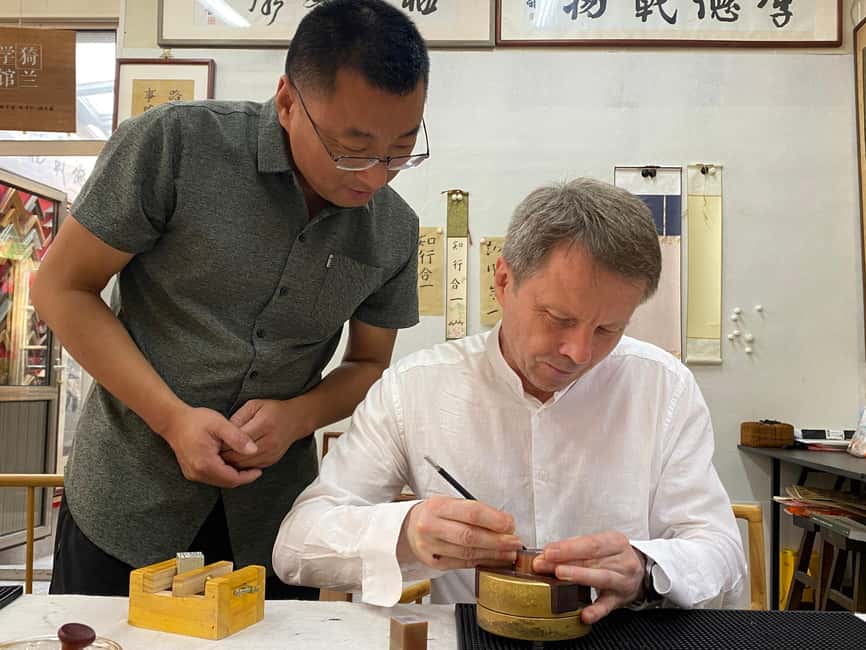
This isn’t a class where you watch something happen and then receive a finished product. The experience includes your personalized handmade artwork to take home, with high-quality materials provided for your selected activity.
What you specifically take home depends on your choice:
- Calligraphy: a piece written on rice paper, such as a proverb or your name
- Fan painting: a silk round fan painted with a motif you select, like bamboo or orchids
- Seal carving: your carved Chinese name chop, a functional stamp and a personal signature piece
In practical terms, these are souvenirs you’ll actually use or display. A fan works as an object with a purpose and beauty. Rice paper calligraphy becomes wall art. A seal chop can become a meaningful keepsake even if you never stamp documents with it again.
And there’s an emotional payoff that’s hard to fake: when you leave with a physical result you made with your own hands, the memory sticks.
Price and value: why $75 can be fair (or not) for your style of travel
The price is listed at $75 per person and the session runs about 2 to 2.5 hours. On the surface, workshops can look expensive compared with a street market purchase. But you’re not buying a mass-made trinket. You’re paying for instruction, time, and materials—and for the privilege of doing it with a master artisan.
Here’s the value math I’d use:
- You get one art form, taught by an expert, with guidance during creation
- Materials are provided for the activity
- The group is intentionally set up as private or small groups, which usually improves attention
- You leave with a finished, personalized object rather than a certificate
The biggest reason this can be worth it: it replaces the “what did I do today?” feeling. Instead of a checklist of sights, you get a skill-based outcome and a souvenir that’s connected to your own choice—your name in ink or carved into stone, your motif on a silk fan.
Possible value mismatch: if you only want casual photos and zero learning, you might find the time spent at the studio less satisfying. If you’re even a little curious, though, it’s money spent for a real experience.
Who should book this workshop in Beijing (and who should skip)
This is a strong fit if you:
- Want Beijing culture beyond the usual tourist magnets
- Like hands-on activities that produce a take-home item
- Enjoy crafts and are okay with a short, focused session
- Prefer small-group interaction over large crowds
It may be less ideal if you:
- Want a full-day sightseeing itinerary (this is shorter by design)
- Expect a workshop that feels like a museum tour (this is creation-focused)
- Are traveling with very young children, since it’s not suitable for children under 5
On the good-to-know practical side, the workshop is wheelchair accessible, and instruction is available in English and Chinese.
Practical tips so you get the most from the 2 to 2.5 hours
Because your time is limited, small choices matter. I’d do these before you show up:
- Decide which craft you actually want: calligraphy for ink focus, fan painting for a visual motif, seal carving for hands-on stamping identity
- If you choose calligraphy, think about the proverb or the name you want written
- If you choose fan painting, pick a motif you’ll recognize and like—bamboo or orchids are classic options
- If you choose seal carving, be ready for practice steps and then the final carve on the real piece
Also, plan your arrival so you don’t feel rushed. The meeting point is specific (Liulichang East Street square entrance), and the workshop includes a brief cultural orientation before you get to the studio.
And one last practical note: transportation to the venue is not included, so build travel time into your schedule. Liulichang is easy to get lost around if you’re not careful, so give yourself a buffer.
Should you book Beijing Liulichang Learn Calligraphy or Carving from Master?
I’d book it if you want an authentic cultural activity that’s not just sightseeing, and if you’re open to learning something with your hands. The strongest reasons are practical: the small-group setting, the master-guided process, and the fact that you leave with a personalized artwork you created during the session.
I’d skip or rethink it if you’re primarily after a long list of major attractions, or if you already know you hate quiet, focused activities. Also, if your budget is extremely tight, remember you’re paying for instruction and materials—this isn’t a low-cost “try it” workshop. But for $75, the structure (one craft, expert help, take-home result) is a reasonable deal for many travelers.
If you like the idea of making your name in Chinese ink or turning your identity into a seal chop, this workshop is exactly the kind of Beijing day that sticks with you.
FAQ
FAQ
Where is the meeting point for this workshop?
You meet at the small square entrance of Liulichang East Street.
How long does the experience last?
The workshop lasts about 2 to 2.5 hours.
How much does it cost?
The price is listed as $75 per person.
What art can I choose to learn?
You choose one of three options: calligraphy, fan painting, or seal carving.
Do I need any prior experience?
No prior experience is needed.
What languages are used for instruction?
The instructor can teach in English and Chinese.
Are materials included?
Yes. All high-quality materials for your selected activity are provided.
What do I take home?
You take home your personalized handmade artwork from the workshop.
Is transportation to the venue included?
No. Transportation to the venue is not included.
Is it wheelchair accessible, and is it suitable for young children?
It is wheelchair accessible. It is not suitable for children under 5 years.
FAQ
Can I get a refund if my plans change?
Free cancellation is available up to 24 hours in advance for a full refund.
Is there an option to pay later?
Yes. You can reserve now and pay later.