REVIEW · BEIJING
Beijing: Highlights of Forbidden City+Options Tour
Book on Viator →Operated by beijingtourcompany · Bookable on Viator
Four hours inside Beijing history. This tour is interesting because it handles the Forbidden City ticket headaches for you, while you focus on the sights and the story. I especially like the guaranteed entry and the English-speaking guide approach that keeps things clear and doable.
Next, I like the way the route moves through the Palace Museum like a real timeline. You’ll pass the big ceremonial gates and halls, then shift to the quieter palaces tied to court life—like the Palace of Heavenly Purity and the Imperial Garden. If you’re with kids, the guide style can matter a lot, and guides like Linda, Amber, Angel, Melodie, and Harper are praised for explaining history in an easy, engaging way.
One possible drawback: the whole experience is about 4 hours total, so you won’t have forever in every room. Some parts (like the Imperial Garden) are given time, but you should expect a highlights pace rather than a slow walk.
In This Review
- Key takeaways
- A ticket-stress shortcut to the Forbidden City
- Meridian Gate and the ceremonial start: what you’re really walking into
- Three Harmony Halls: the center of power and ceremony
- Palace of Heavenly Purity and the logic of court life
- The Imperial Garden: a slower beat inside the palace machine
- Leaving through the Gate of Divine Prowess
- Tiananmen Square: iconic, close, and time-limited
- Price and logistics: why this tour feels like value
- What makes the guides matter (and what to look for)
- Itinerary breakdown: what to expect at each stop
- Who this tour suits best
- Should you book this Forbidden City highlights tour?
- FAQ
- How long is the Forbidden City highlights tour?
- Is the Forbidden City admission ticket included?
- Do I need to print a ticket?
- Will I be picked up from my hotel?
- What English support do I get?
- What parts of the complex are included?
- Is Tiananmen Square included?
- Do I pay tips, and what about other museum tickets?
Key takeaways
- Guaranteed Forbidden City admission means less stress at the gate.
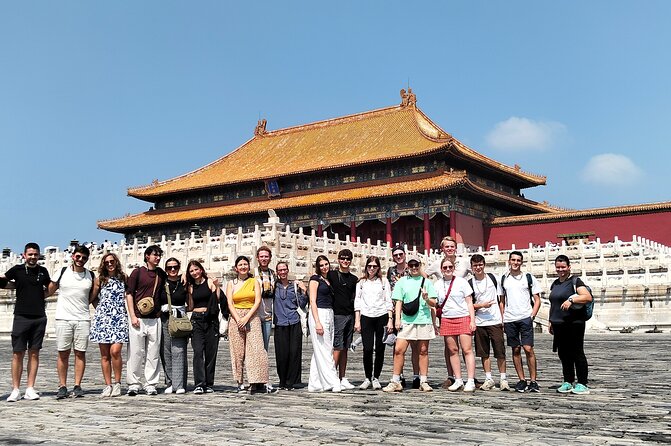
- Small group size (up to 12) helps you move without feeling lost.
- A logical route from Meridian Gate through the key Harmony Halls.
- Court life details at places like Palace of Heavenly Purity and the harem-related areas.
- Imperial Garden time plus a quick finish at the Gate of Divine Prowess.
- Tiananmen Square included at the end, with a short stop so you get your bearings fast.
A ticket-stress shortcut to the Forbidden City
The Forbidden City is one of those places that sounds simple until you try to plan it in real life. Pre-booking rules and entry timing can be a headache, especially if you’re juggling jet lag, local transport, or a tight schedule. This tour’s main practical advantage is that it takes those complexities off your plate.
You’re not just buying a spot and hoping for the best. The tour includes entrance ticket cost with guaranteed entries, and you follow a professional guide through the main sights in about four hours. That matters because the Forbidden City is huge, and wandering on your own often turns into wasted time and wrong turns.
The other thing I like is the pacing that’s built into the itinerary. Instead of treating everything as equally important, it focuses on the areas that explain how the system worked—ceremony, hierarchy, power, and daily court life. That gives you a clearer mental map than you’d get from photos alone.
You can also read our reviews of more city tours in Beijing

Meridian Gate and the ceremonial start: what you’re really walking into
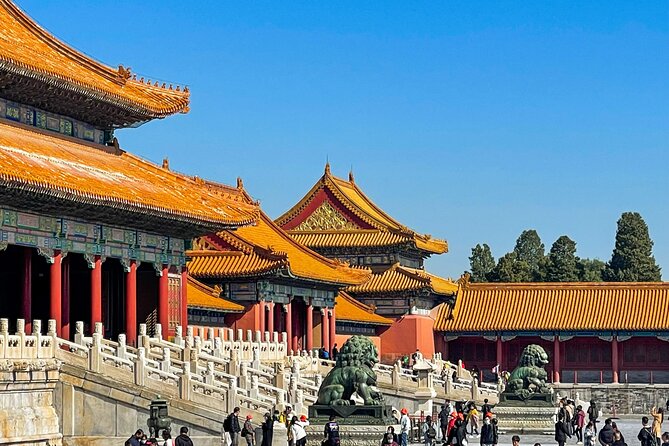
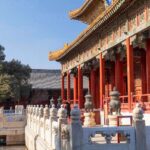
Every good Forbidden City visit begins at the symbolic edge of power. Your tour starts at the Meridian Gate (Wu Men), the main entrance area that frames the entire complex. This is where you get oriented and start understanding the scale: this was built in the Ming Dynasty era (1406 to 1420) and functioned as a top-level seat of government.
It’s not just a pretty opening frame. When your guide points out the layout and why it’s designed this way, the Forbidden City starts to feel like an organized machine, not a random pile of palaces. I find that “why” makes the architecture easier to remember, even when you’re standing under big gates with lots of other people around.
Expect about an hour here, including entry time and guide explanations. That’s a smart chunk for a first stop because it sets the tone for what you’ll see next.
Three Harmony Halls: the center of power and ceremony
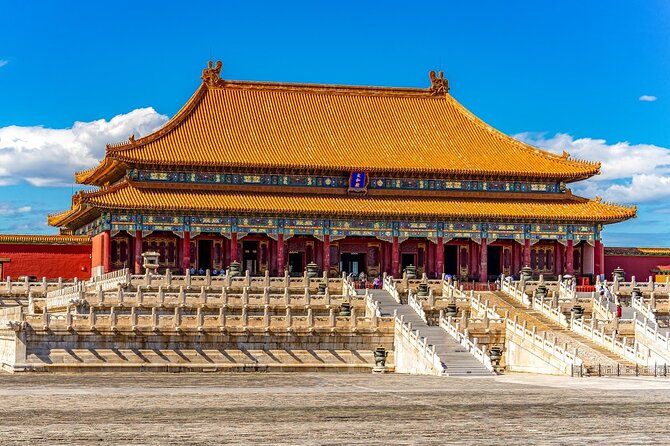
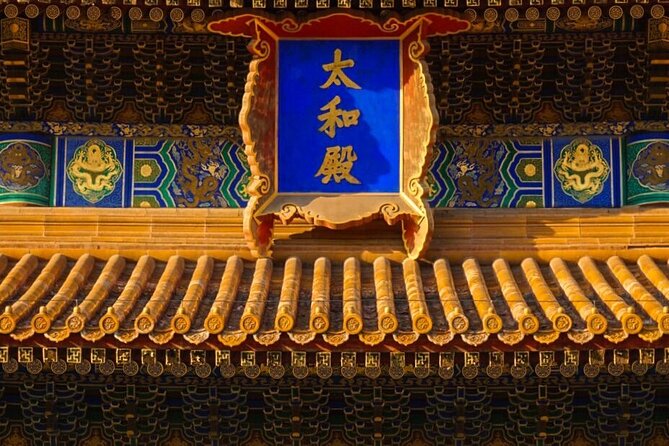
After Meridian Gate, you move into the heart of the ceremonial axis. You’ll visit the Hall of Great Harmony (Taihe Dian) and then the Hall of Middle Harmony (Zhonghe Dian) and Hall of Preserving Harmony (Baohedian).
The Hall of Great Harmony is the big one, and it earns the attention. Your guide explains the idea of “three harmonies halls” and connects them to an emperor’s duties and holy role during feudal dynasties. You’ll also learn how ancient architecture used a ranking system, which helps you read the building rather than just admire it.
Here’s why I think this section is valuable: it turns a trip into a lesson about how authority was performed. These halls weren’t neutral spaces. They were designed for ritual, public presence, and the idea that the ruler’s role was more than political. Even if you know only a little history going in, the guide’s walkthrough helps you understand what these spaces were meant to communicate.
The Hall of Middle Harmony gets shorter time (about 10 minutes), but it still matters. It was tied to emperor rehearsals, and that little detail changes how you see the room. Then the Hall of Preserving Harmony connects to imperial exams, reminding you that the court wasn’t only about spectacle—it also fed the bureaucracy that ran the empire.
Palace of Heavenly Purity and the logic of court life
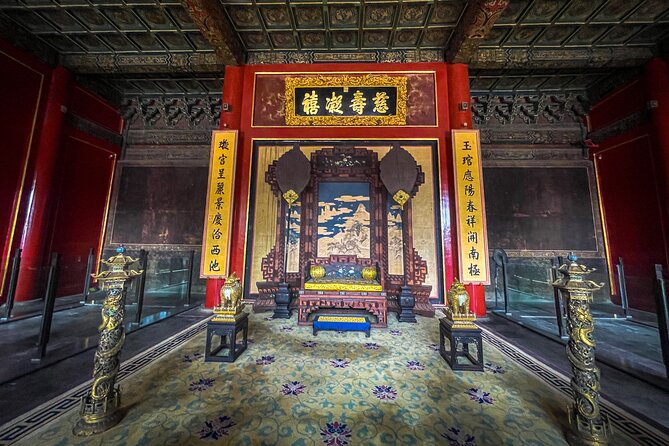
Once you move away from the highest ceremonial halls, the Forbidden City shifts to a different kind of interest. The tour includes the Palace of Heavenly Purity, plus related spaces like the Hall of Union and areas linked with the Imperial Harem of the Qing Dynasty.
This is the part I’d highlight for anyone who likes “how people actually lived” stories. The tour time here is longer than the big-halls sections (about 30 minutes), and the focus is on details tucked into corners and connections between rooms. That kind of guided attention can save you from missing the subtle stuff while you’re trying to keep up with crowds.
Your itinerary also includes the Hall of Union, where the emperor and empress meet each other. It’s brief (around 10 minutes), but it’s a key stop because it ties together the palace hierarchy with the social structure of the court.
Then you’ll go to the Palace of Earthly Tranquility, where the empress lived and where there’s mention of a honeymoon-room style setup for the late Qing dynasty period. It’s about 15 minutes, and the guide’s explanations help you connect the space to the people and roles linked to it. Even with limited time, the tour gives you enough context that the palace layout stops feeling random.
The Imperial Garden: a slower beat inside the palace machine
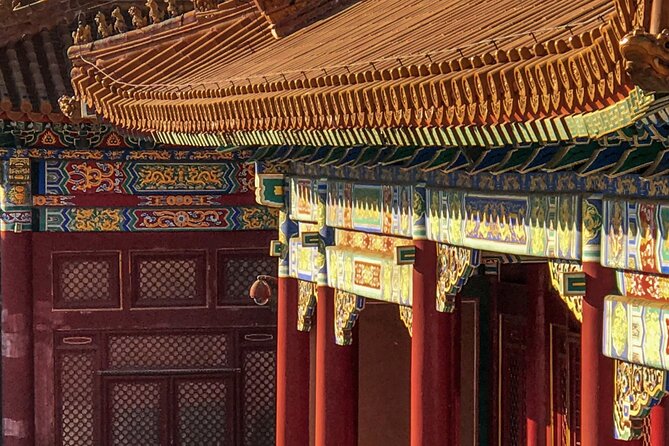
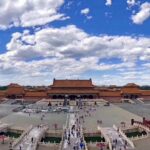
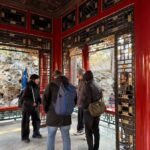
After the main palace buildings, the tour moves to the Imperial Garden of the Palace Museum. This stop is about 20 minutes, and it’s one of the best places to take a breath—literally and visually.
I like gardens in palace settings because they show another side of power: controlled nature. The tour frames the garden as combining ancient garden art ideas, so you’re not just looking at greenery. You’re watching a designed environment meant to create calm, status, and taste within an imperial world.
If you’re the type who likes photos, this is also where you’ll get better variety. You’ll find shapes, angles, and softer textures compared with the heavy ceremonial architecture. Just don’t expect a full garden wander; this is still a guided highlights tour.

Leaving through the Gate of Divine Prowess
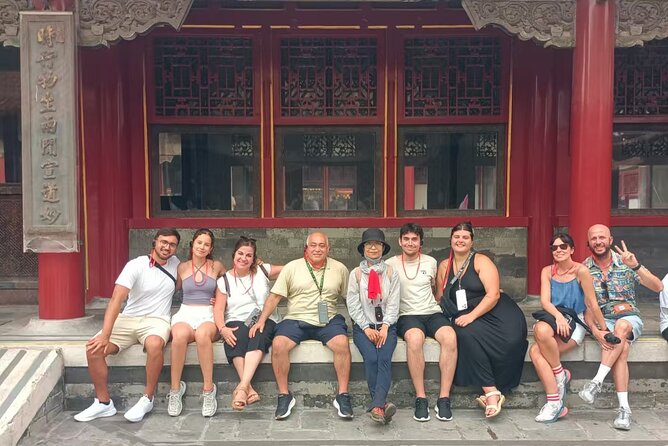
The tour ends its Forbidden City route at the Gate of Divine Prowess, listed as the exit point. This is a short stop (about 5 minutes), but it’s useful because guides help you get your bearings for the next leg of your day.
That sounds small, but it matters in Beijing. You don’t want to spend your last minutes lost after the main “wow” factor is done. With the guide’s advice on how to get your next stop, you can keep momentum without guessing.
Also, you’ll want to think about what you want next before you reach the exit. If you’re hungry, planning a museum detour, or heading toward shopping, decide your direction while you still have a guide’s local sense.
Tiananmen Square: iconic, close, and time-limited
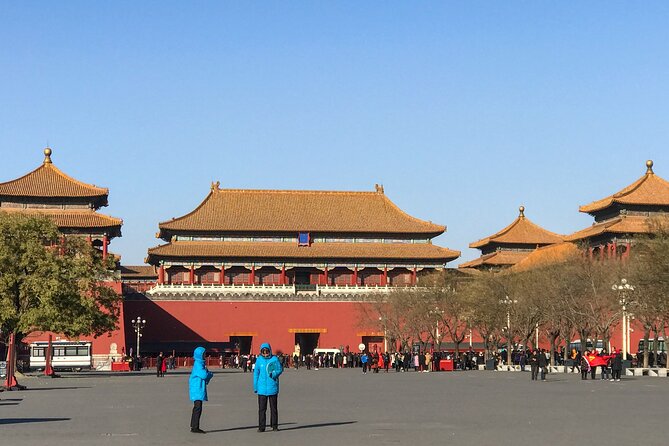
After the palace complex, you’ll step into Tiananmen Square for about 30 minutes. The tour frames it as iconic and central to Beijing, from the Ming dynasty era (around 1420) to today.
This part works best if you treat it as a quick orientation. Thirty minutes gives you time to take in the scale and location in the city, but it doesn’t promise a deep look at every element. Still, it’s a strong pairing because Tiananmen Square and the Forbidden City are connected by the idea of imperial center stage.
If you’re arriving expecting a long sit-down experience, you may feel rushed. But if you want the “big Beijing” view and the feeling of arriving at the political heart of the city, this stop hits the mark.
Price and logistics: why this tour feels like value
At $30 per person, this tour prices itself like an affordable “big sights” deal. The reason it can be good value is that your ticket for the Forbidden City is included with guaranteed entries, and the time is structured around major stops.
You’re also getting:
- Pickup from a fixed meeting point
- Professional English-speaking guiding service
- A route that stays focused instead of wasting time
A few things aren’t included. You’ll need to plan for tips, and tickets to the Jewelry and Clock museums are not included. Hotel pick-up and drop-off aren’t offered, so you’ll want to be comfortable starting from the meeting point and using nearby public transportation.
Also worth noting: the tour has a maximum of 12 travelers. That’s not huge, and it usually helps with pace and questions. When you’re moving through crowded palace gates, smaller groups often feel calmer even if the schedule is tight.
What makes the guides matter (and what to look for)
The strongest praise from the experience isn’t about the buildings alone. It’s about how the guide makes the architecture and history understandable.
Guides mentioned by name include Linda, Amber, Melodie, Angel, and Harper. The common thread in their described style is clear English and a careful approach, with story-based explanations that connect facts across long timelines. One guide is especially noted for care with families and kids, which is a big deal for anyone visiting with younger travelers.
When choosing how to enjoy this tour, look for a guide who does three things well:
- Explains what you’re seeing right now, not just a list of dates.
- Links rooms to roles—ceremony, hierarchy, daily life, and court systems.
- Points out details you’d miss if you were only scanning for photos.
This tour format is built for that kind of guidance. The stops include both major halls and more specific palace spaces, which gives a good chance to hear explanations rather than just walking from one landmark sign to the next.
Itinerary breakdown: what to expect at each stop
Here’s how the day flows in plain language, plus how each stop tends to land:
- Meridian Gate (Wu Men): About 1 hour to start strong. You get orientation and the symbolic beginning of the palace complex.
- Hall of Great Harmony (Taihe Dian): About 15 minutes focused on the three-harmony idea and the ranking system of ancient architecture.
- Hall of Middle Harmony (Zhonghe Dian): About 10 minutes, tied to emperor rehearsals.
- Hall of Preserving Harmony (Baohedian): About 10 minutes, tied to imperial exams.
- Palace of Heavenly Purity: About 30 minutes, plus related rooms like the Hall of Union and areas connected with the Qing imperial harem system. You’ll look for smaller details in the corners.
- Hall of Union: About 10 minutes, described as where emperor and empress meet.
- Palace of Earthly Tranquility: About 15 minutes, where the empress lived, with mention of a late Qing-era honeymoon-room-style setup.
- Imperial Garden: About 20 minutes, a chance to slow down and appreciate design within the palace world.
- Gate of Divine Prowess: About 5 minutes, the exit with guide advice for your next move.
- Tiananmen Square: About 30 minutes, a time-limited but iconic city center stop.
If you want the Forbidden City’s main story beats without getting lost in the palace maze, this itinerary is built to deliver that. If you want a full museum-level exploration, you might feel like you’re moving too fast.
Who this tour suits best
This works well for:
- First-time visitors to Beijing who want a clear plan
- People who don’t want ticket stress
- Families who need a guide to keep kids engaged while covering big highlights
- Travelers who like history explained through spaces and roles, not just facts on paper
It may be less ideal if you:
- Plan to spend hours photographing every corner
- Want optional museum add-ons like the Jewelry and Clock museums
- Expect hotel pickup and drop-off
Think of it as a smart “great hits” route. You’ll get a lot of context for the time you spend, which is exactly what most people need the first time they face this scale.
Should you book this Forbidden City highlights tour?
If you’re short on time, this is a good choice. The mix of guaranteed entry, English guidance, and a route that hits the key ceremonial halls plus palace life areas is hard to beat for the money. The Tiananmen Square add-on also helps you connect the Forbidden City to the wider Beijing city center feel.
I’d book it if your priority is clarity and momentum: you want to understand what you’re seeing as you go, without turning your day into logistics. I’d skip it only if you’re planning a very slow, museum-style day and you’d rather build your own route than follow a highlights sequence.
FAQ
How long is the Forbidden City highlights tour?
It runs about 4 hours in total, and that total includes travel time.
Is the Forbidden City admission ticket included?
Yes. Entrance ticket cost with guaranteed entries is included.
Do I need to print a ticket?
No. The tour uses a mobile ticket.
Will I be picked up from my hotel?
No. Pickup is from a fixed meeting point, and hotel pick up/drop off is not included.
What English support do I get?
The tour includes a professional English-speaking guiding service.
What parts of the complex are included?
You’ll visit major highlights such as Meridian Gate, the Harmony Halls (Great, Middle, and Preserving), Palace of Heavenly Purity and related areas, the Imperial Garden, and then the Gate of Divine Prowess.
Is Tiananmen Square included?
Yes. Tiananmen Square is included for about 30 minutes, after you finish the Forbidden City route.
Do I pay tips, and what about other museum tickets?
Tips to the guide are not included. Tickets to the Jewelry and Clock museums are also not included.