
REVIEW · BEIJING
China eSIM (3-30 days. Up to 60GB)
Book on Viator →Operated by Xplori · Bookable on Viator
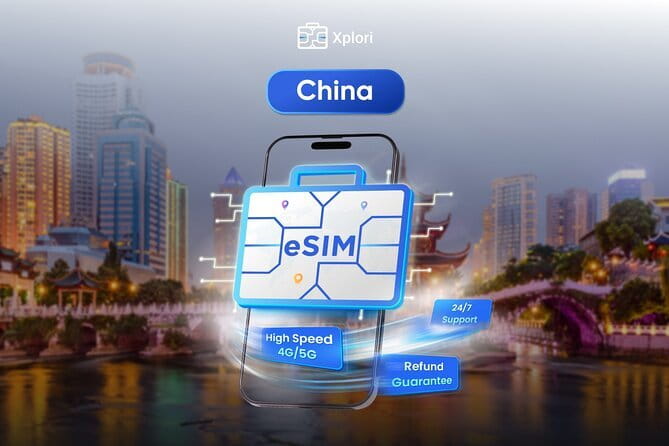
One QR code can save your first day in China. This China eSIM plan is built for fast connection in Beijing, with 4G/5G data (where available) so you can plan, navigate, and message without hunting for a physical SIM. I love the setup flow: you get the eSIM by email, scan the QR code, and you can be online within minutes. I also like the flexibility of choosing 3 to 30 days (with up to 60GB total data) so you’re not paying for time you won’t use. The main drawback to consider is the obvious one: you must have a phone that supports eSIM, and once your high-speed allowance is used, data speed switches to 3G.
What makes this useful in real life is how it fits the way you actually travel. You can install the eSIM before you land, then turn it on when you arrive, which cuts down the usual airport SIM hassle. You’re paying for convenience as much as megabytes, so it can feel like great value if you hate running around with paperwork at arrival time.
In This Review
- Key Things I’d Watch Before You Buy
- What This Beijing eSIM Actually Gives You
- The Step-by-Step “Activation Route” (Think of It Like Your Travel Itinerary)
- 1) Purchase and get your eSIM by email
- 2) Install and prep with the QR code
- 3) Turn on the eSIM when you’re in China
- 4) Use 4G/5G where available, then expect a speed drop
- Coverage You Can Rely On: Beijing, Plus Beyond
- Speed and Performance: What “Smooth” Means for a Real Trip
- Price: Why This Can Beat Airport SIMs
- Who This eSIM Fits Best (And Who Should Rethink It)
- Practical Tips for a Smoother China Connection
- Quick Notes on Booking, Delivery, and Support
- Should You Book This China eSIM for Beijing?
- FAQ
- How do I get the eSIM after booking?
- How quickly can I get connected after activation?
- What phones are compatible with this eSIM?
- How long is the China eSIM plan valid?
- Is there a data limit?
- Does it include 4G or 5G?
- Where can I use the eSIM?
- Is this a physical SIM card I need to pick up?
- What support is available if something goes wrong?
Key Things I’d Watch Before You Buy
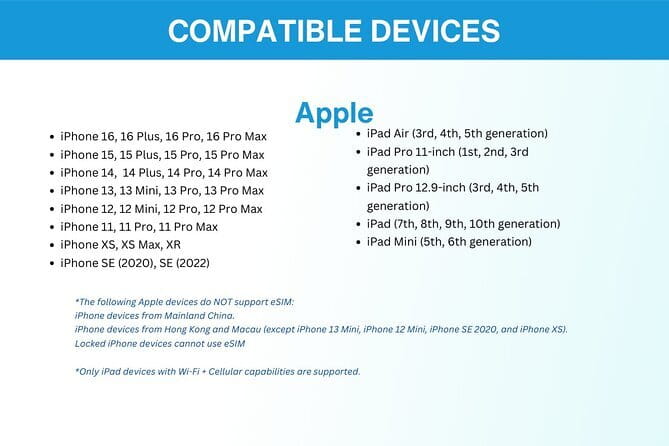
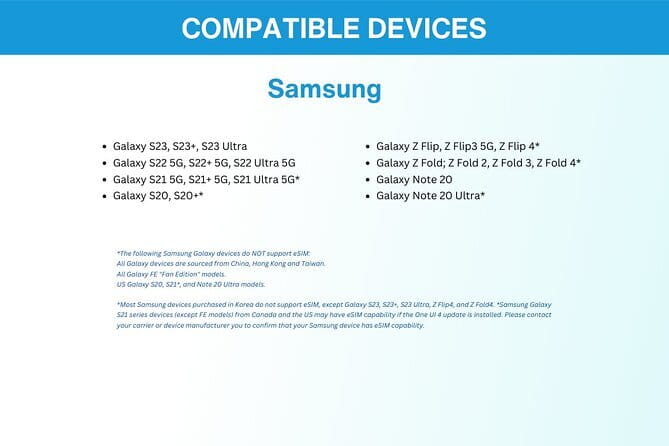
- Phone eSIM support is mandatory: iPhone XS+ (and newer), Pixel 3+, and Samsung S20/S21/Fold are listed.
- You’re getting mobile data, not a physical card: this is a purely digital product with no pickup.
- 4G/5G where available: you get modern speeds when the network supports it.
- High-speed data is capped: after the allowance, speed drops to 3G for the rest of your plan.
- You can activate via QR code: eSIM profile activation is designed to take minutes after scanning.
What This Beijing eSIM Actually Gives You
This is a digital data add-on for travelers in Beijing, China, with coverage intended to keep you connected throughout your trip. The core idea is simple: you buy the plan, receive the eSIM setup information by email, scan a QR code, and connect quickly so you can use apps, maps, and messaging.
You choose a duration from 3 to 30 days, and the plan comes with mobile data for that exact window. The data offer is described as up to 60GB, which matters because your use will change a lot between a short city break and a longer stay. For shorter trips, you’ll likely use the connection for maps, restaurant research, and quick uploads. For longer trips, you’ll want to be a bit more mindful of streaming and large downloads so you don’t burn through the high-speed portion too fast.
Another practical element is how the package is meant to work alongside your existing travel rhythm. You can receive it in advance by email, which helps you set up before you arrive. Then when you land, you’re not stuck trying to translate signage, interpret SIM plans, or stand in line while jet-lagged. It’s not glamorous, but it can remove a major stress point.
You can also read our reviews of more tours and experiences in Beijing.



The Step-by-Step “Activation Route” (Think of It Like Your Travel Itinerary)
Because there’s no physical tour and no meetup, the “itinerary” here is the process you follow from purchase to on-the-go use. If you do these steps in the right order, you avoid 90% of the usual connectivity headaches.
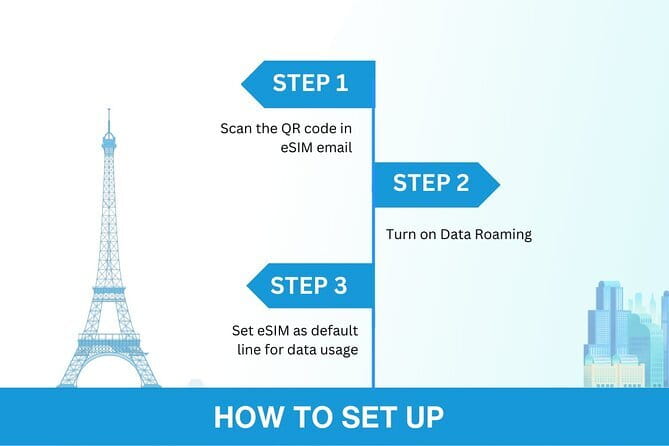
1) Purchase and get your eSIM by email
After you book, you receive confirmation at the time of booking, and then the eSIM details are delivered by email. This is the first real win: you can take care of everything before your flight. That means less chaos right when you arrive, and more time to focus on getting your bearings.
If you ever feel uncertain about whether your phone can handle eSIM, the provider explicitly asks you to contact them in advance. There’s also remote customer service via email, which is helpful if you hit a snag with activation.
2) Install and prep with the QR code
You scan the QR code to activate the eSIM profile. The instructions are clear that you can be connected within minutes after scanning. The smoother you make this step, the less you’ll worry later about whether your phone is reading the profile correctly.
This is also the step where you should double-check settings. Make sure you’re using the correct line for data and that the eSIM is enabled. If you tend to fiddle with phone settings during travel, do this part at home or in a calm moment at the airport before you step outside.
3) Turn on the eSIM when you’re in China
The plan is designed for use during your trip. Once you’re in China, turning on the eSIM is what starts your mobile data connection. One smart strategy is to have the eSIM already added before you land, so you’re not relying on airport Wi-Fi while you scramble through settings.
This approach is especially valuable if you plan to use maps immediately after landing, or if you’re trying to coordinate rides, tickets, or hotel check-in messages.




4) Use 4G/5G where available, then expect a speed drop
The plan includes 4G/5G data where available, with an emphasis on staying connected so you can navigate and plan. But it’s not “unlimited everything at full speed.” The document states the high-speed amount is capped, and after you use it up, speed switches to 3G.
In practical terms, 3G is often still workable for messaging, basic browsing, and checking directions. It’s usually when you try to stream video, upload lots of content, or play online games that the experience can slow down. So the best use plan is to treat high-speed data like your “smartphone power mode.”
Coverage You Can Rely On: Beijing, Plus Beyond
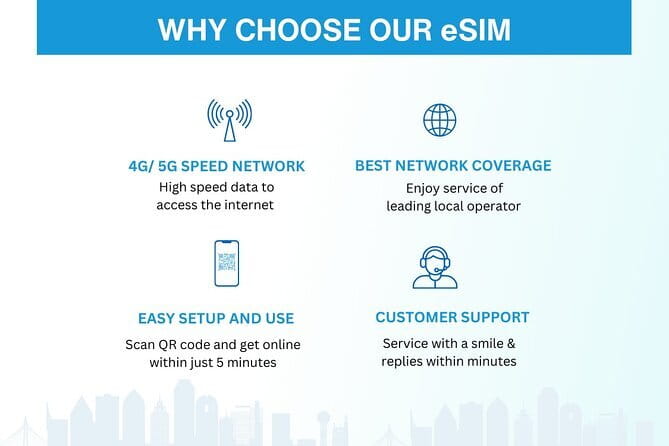
This eSIM is positioned for China travel starting in Beijing and is described as covering your trip so you can stay connected while moving around. The data is intended to help you find your way around town and keep in touch with friends and family.
One note that matters: the plan says it enjoys local rates for data. That’s a marketing phrase, but the reality for you is that you’re buying a bundle for your stay rather than paying roaming charges each time you open an app. For most travelers, that trade-off is worth it because data usage can spike quickly when you’re using maps, translation tools, ride-hailing, and social apps.
Also, the plan is described with broad usefulness, not just for one neighborhood. You should feel comfortable relying on it from central Beijing through other cities during your journey, as long as you’re still within the coverage expectations of the network.
Speed and Performance: What “Smooth” Means for a Real Trip

The headline speed promise is 4G/5G where available. In daily travel terms, fast enough data changes how you experience a city. If the connection is solid, you can keep directions running, search menus on the fly, and check transit options without waiting for Wi-Fi.
From the provided feedback, the connection is often described as strong and stable, including across time spent traveling from Beijing to other places. People also specifically call out smooth web browsing and the ability to stream videos and play games without lag on the connection while it’s active.
That said, the plan still has the built-in cap. So your experience will likely look like this:
- Early and mid-trip: fast enough for most tasks, including streaming and heavy browsing.
- Late trip or heavy usage: once you hit the cap, expect 3G speed for the remainder.
If you’re the type who uploads tons of photos or streams a lot, you’ll want to plan your data use so you don’t hit the cap on your most photo-heavy days.
Price: Why This Can Beat Airport SIMs

The price listed is $5.00 per person, and the value is tied to the duration you select. Because the eSIM is delivered digitally and designed to avoid airport activation hassle, you’re paying for convenience as much as cost.
Airport SIMs can be a mixed bag. Sometimes they’re fine, but the downsides are predictable: lines, confusing kiosks, and the language barrier when you’re tired and jet-lagged. This eSIM is pitched as cheaper than buying at the airport and avoids those delays. Even if the exact savings vary by your itinerary and the specific airport options, the main benefit is time and sanity.
Here’s how I’d think about whether it’s “worth it” for you:
- If you hate dealing with SIM kiosks on arrival, this is usually worth it even at the low cost.
- If you only need data for light navigation and messages, you’ll likely finish within the high-speed window.
- If your plan includes lots of streaming, gaming, or constant social uploads, you should be realistic about the data cap and the later 3G shift.
Who This eSIM Fits Best (And Who Should Rethink It)

This is a great match if you:
- Want to stay connected fast in Beijing for maps, messaging, and planning.
- Are traveling for 3 to 30 days and want one simple data solution.
- Have an eSIM-compatible phone and don’t want to carry or swap physical SIM cards.
It may be less ideal if you:
- Don’t have an eSIM-capable phone (double-check your model first).
- Plan heavy streaming for the entire trip and don’t want to think about the high-speed cap.
- Expect full-speed data forever, no matter how much you use.
If you’re unsure, the provider invites you to contact them in advance. That’s not a sales pitch detail you should skip; eSIM issues are usually compatibility and setup, not the data itself.
Practical Tips for a Smoother China Connection

These are the small things that tend to make the biggest difference:
- Check your phone model before purchase. The plan lists iPhone XS and later, Pixel 3 and later, and Samsung S20/S21/Fold as examples.
- Install before you land if you can. It helps you avoid relying on airport Wi-Fi while setting up.
- Plan for the speed change. Treat the capped high-speed portion like your “fast” days.
- Use Wi-Fi strategically. If you’re close to the cap, download big content over Wi-Fi when possible.
- Keep the email QR info easy to find. If you’re scrambling mid-arrival, you’ll thank yourself for being organized.
And if you hit a setup snag, remember there’s remote customer service by email—so it’s not completely hands-off.
Quick Notes on Booking, Delivery, and Support
This is a purely digital product: there’s no pickup or meetup, and you don’t need to meet anyone in Beijing. After booking, you get confirmation, and the eSIM setup is delivered by email.
If you need help, support is available via email, and it’s worth reaching out before you leave if your phone’s eSIM support isn’t clear. The provider specifically asks travelers to double-check compatibility.
Cancellation is listed as free with a window for full refund, but since this is a digital product, your real decision point is your phone readiness and timing.
Should You Book This China eSIM for Beijing?
If you want a low-cost, low-stress way to get data in Beijing and you have an eSIM-compatible phone, I think this is an easy yes. It’s priced to be practical, it saves you airport SIM time, and the activation flow is built for quick setup with a QR code.
I’d pass or rethink it if you’re not sure your phone supports eSIM, or if your trip depends on nonstop high-speed streaming without any thought to data caps. In that case, the later 3G phase could be frustrating.
If you’re somewhere in the middle—typical navigation, messaging, and normal browsing—this is exactly the kind of travel tool that makes a city feel smaller and easier.
FAQ
How do I get the eSIM after booking?
You receive the eSIM by email after your order. The information includes a QR code you can scan to activate your eSIM profile.
How quickly can I get connected after activation?
After you scan the QR code to activate the eSIM profile, you can be connected within minutes.
What phones are compatible with this eSIM?
The instructions say to use a phone that supports eSIM, with examples including iPhone XS and later, Pixel 3 and later, and Samsung S20/S21/Fold.
How long is the China eSIM plan valid?
You can choose options for 3 to 30 days, depending on the length of your trip.
Is there a data limit?
Yes. High-speed data usage is capped at the amount listed for the plan you select. After that, data speed switches to 3G.
Does it include 4G or 5G?
The plan offers 4G/5G (where available) data during your journey.
Where can I use the eSIM?
The plan is described as covering Canadian provinces in the provided text, even though it is sold for China travel and starts in Beijing. If you need clarity for your exact coverage, contact the provider in advance.
Is this a physical SIM card I need to pick up?
No. This is a purely digital product with no pickup or meetup. Everything happens through the eSIM activation on your phone.
What support is available if something goes wrong?
You can contact the provider for remote customer service via email.