REVIEW · BEIJING
Peking Opera at Liyuan Theater Tickets
Book on Viator →Operated by China Fun Tours · Bookable on Viator
One hour, then you get Peking Opera. At Liyuan Theater, the show turns well-known Chinese tales into singing, dance, martial arts, and face makeup, with English help so you can follow the plot. It’s a short night out that gives you real culture in a compact format.
What I like most is the chance to catch face makeup details before you get fully swept into the performance. I also love that you get English translations/subtitles, which makes it far easier to understand what’s happening than you’d expect from a traditional stage art.
One thing to consider: Peking Opera is performance-first, not history-lecture-first. The stories can be based on legendary tales and popular accounts, so if you’re expecting strict, textbook accuracy, go in with the right mindset.
In This Review
- Key points to know before you buy
- Your one-night payoff at Liyuan Theater
- Upstairs vs downstairs seating: how to choose what fits you
- The stories on stage: emperors, ministers, and dramatic legends
- English translations and subtitles: making sense of the drama
- What you’ll notice during the show (beyond the obvious)
- Price and value: is $49 per person a fair deal?
- Timing, meeting point, and how not to lose time
- Who should book this Peking Opera show—and who might not
- Should you book Peking Opera at Liyuan Theater?
- FAQ
- How long is the Peking Opera show at Liyuan Theater?
- What time does the show start?
- Where do I redeem the ticket / meet the group?
- Are English translations provided during the performance?
- What seating options are available?
- Is dinner included with the ticket?
- Can I cancel for a full refund?
Key points to know before you buy
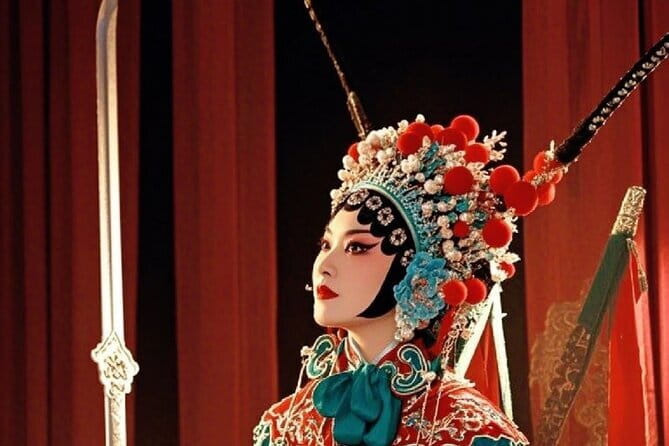
- Face makeup moments can be part of the experience, so watch for close, visual details.
- Upstairs vs downstairs seating gives you different sightlines and room vibes—choose what fits your comfort.
- English translations/subtitles help you follow even if you know little about the art form.
- Classic and newer stories both appear, including works drawn from literature during the communist era.
- Plan for a short, focused show: about one hour, no time-killer dinner included.
- Price can vary by where you buy, and some people find on-site tickets cheaper.
Your one-night payoff at Liyuan Theater
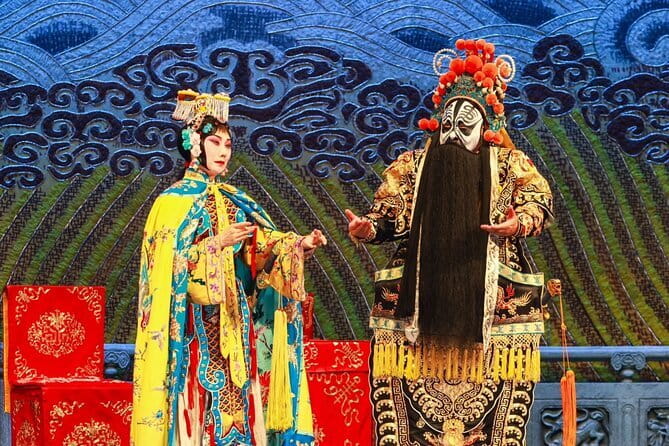
If you’re in Beijing and you want something more “alive” than a museum, Peking Opera at Liyuan Theater is one of the best bets. The show runs about one hour, which matters. You get a full cultural experience without needing to restructure your whole evening around it.
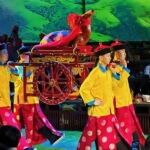
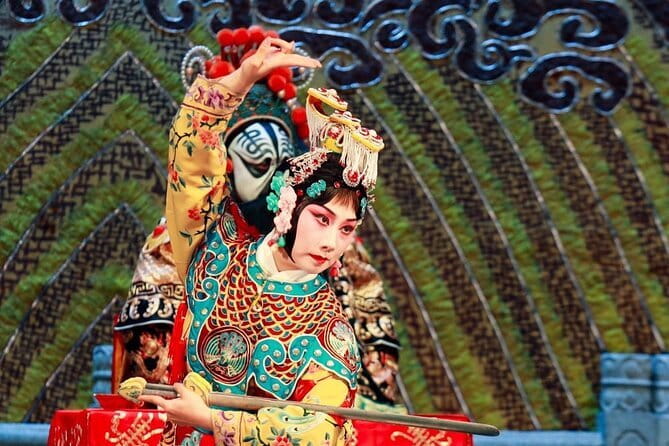
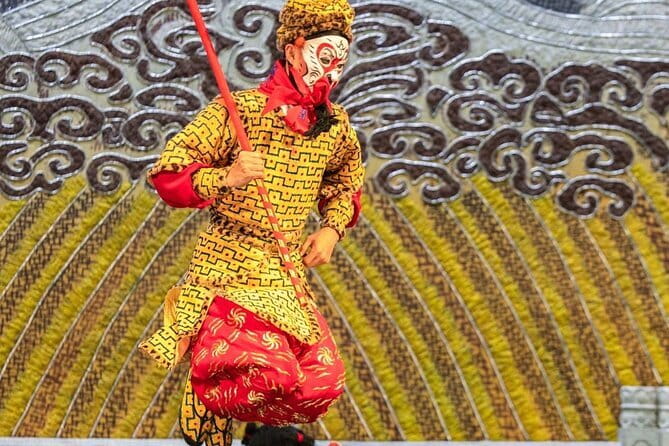
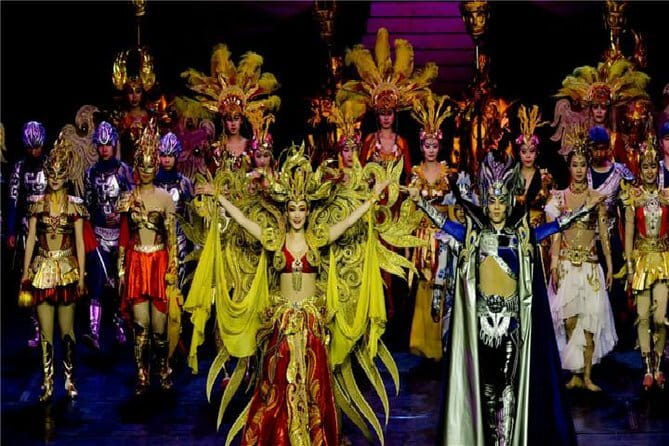
The Liyuan Theater setting is built for stage performance, so you’ll feel the difference right away: music leads, movement answers, and costumes do more than look good. In Peking Opera, the visual language is part of the story—so even if some plot points fly by, you can still read the mood through gestures, posture, and makeup styling.
Also, this is not a casual “sit and watch a few songs” thing. You’re seeing a curated evening of performing arts: singing, dancing, martial arts, and music, all tied together to tell a story.
You can also read our reviews of more tours and experiences in Beijing

Upstairs vs downstairs seating: how to choose what fits you
This ticket experience offers two seating types: upstairs and downstairs. That sounds simple, but it affects how you experience the show.
Downstairs seats usually feel better if you want a more direct stage view and a stronger sense of scale. Upstairs can be a good choice if you’d rather have a slightly wider view of the stage action and costumes, and you’re comfortable with a theater layout where you’re looking down more than across.
Here’s a practical way to decide:
- If you hate feeling far away, lean toward downstairs.
- If you prioritize seeing the whole staging and you’re okay with height, upstairs can work well.
If you’re sensitive to stairs or narrow aisles, choose the seat option that matches your comfort level, since theaters can vary in how easy they are to navigate.
The stories on stage: emperors, ministers, and dramatic legends
Peking Opera performances often draw from tales tied to earlier dynasties—think emperors, empresses, ministers, generals, and legendary figures. The effect is big-canvas storytelling: power, betrayal, loyalty, duty, and romance, all delivered through stylized performance.
What surprised me in the framing is how the repertoire also includes newer operas that were adapted from literature and classical novels during the rise of communism. That matters because it means the show isn’t only “old-school tradition.” You may see how Chinese storytelling evolved, and how popular narratives kept finding a stage.
One honest caution: these are dramatic works, not necessarily strict history. Even when the story sounds historical, it may reflect popular versions of events more than an accurate record. If you treat it like theater that uses history for mood and meaning, you’ll enjoy it more.
English translations and subtitles: making sense of the drama
One of the biggest reasons this show works for first-timers is the support built in. The experience includes English translations, and in practice that makes a clear difference. You can follow the story instead of just catching emotional beats.
Still, don’t assume translation means every line will land perfectly. Peking Opera is a performance art where tone, rhythm, and physical storytelling carry meaning. But even partial understanding helps a lot: you’ll recognize character goals, conflict shifts, and the arc of the scene.
If you’re trying to learn cultural context fast, this is a useful way to do it. You can connect costume and makeup choices to who’s who in the plot. And you’ll leave knowing the basics of what the stories are trying to say—not just that it looked impressive.
What you’ll notice during the show (beyond the obvious)
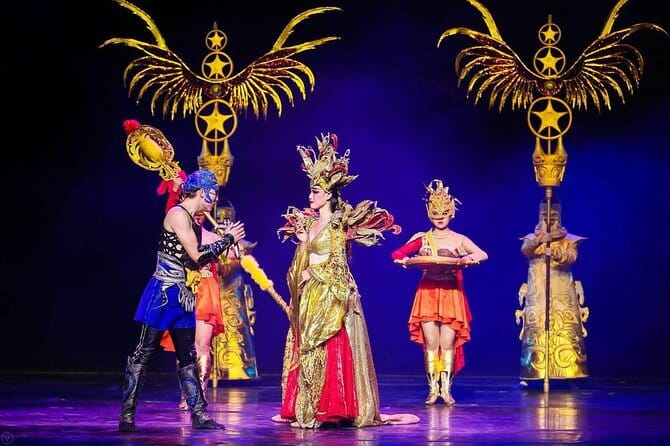
Peking Opera is theatrical in the classic sense: it wants you watching closely. Here’s what tends to make the experience feel special when you’re actually in your seat.
First, the performers use makeup and costume details to signal roles quickly. The makeup isn’t random decoration. It’s a coded visual system that helps you identify character type and personality traits at a glance.
Second, the physical performance is doing serious narrative work. When you see martial arts-style movement or highly stylized dance, it isn’t “extra.” It’s part of how the story is told—often showing conflict, status, or emotional intensity without relying on realism.
Finally, music ties everything together. Even when you don’t catch every word, the sound cues you into changes in scene and energy. That’s one reason the show works within a tight one-hour runtime: the structure is built to move you along quickly.

Price and value: is $49 per person a fair deal?
The price listed for this experience is $49.00 per person, with taxes and fees included. For a one-hour, cultural performance with English translation support, that’s not a bad value—especially if you’d otherwise have to hunt down the right tickets and then figure out language help on your own.
That said, price is one place where you should be a bit alert. One review highlighted a key tip: buying on-site can be cheaper than buying through a third-party site (they reported roughly half the price). I can’t confirm the exact difference for every date, but it’s enough of a pattern to justify this approach:
- If you’re cost-conscious, check ticket options at/near the theater once you arrive.
- If you want convenience and a smooth plan, pre-booking can save time.
If you’re comparing value, consider what’s included: you’re paying for admission to the show, not dinner. So if dinner is part of your night out, plan that separately.
Timing, meeting point, and how not to lose time
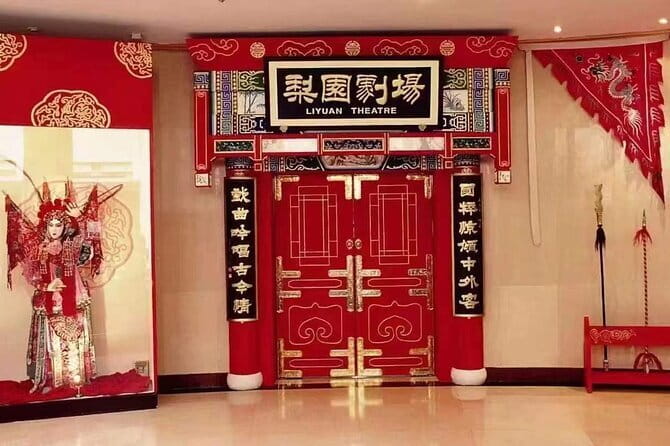
The start time is 7:30 pm, and the ticket redemption/meeting point is at the Qianmen Jianguo Hotel Liyuan Theater, 175 Yong An Lu, Xi Cheng Qu, Cheng Qu, Beijing Shi, 100052.
This location detail matters for two reasons. First, it helps you plan a smooth arrival route. Second, it makes meeting up with your group straightforward if you’re arriving from another part of Beijing that evening.
A quick mindset tip: treat this like a theater plan, not a museum plan. You don’t want to drift in late while people are already seated or the show is gathering pace. Build in buffer time to get to your entrance and find your seat, especially if you choose upstairs seating.
Also, it’s helpful to know that the experience is described as near public transportation, so you can avoid the stress of finding parking or relying on a long taxi route.
Who should book this Peking Opera show—and who might not
This is a strong match if you want:
- A short, meaningful cultural activity in Beijing
- A performance with clear guidance via English translations/subtitles
- A taste of classical Chinese theater through story, movement, and music
You might think twice if you:
- Want a strict historical lecture with verified facts
- Prefer modern-style entertainment formats with minimal acting conventions
The biggest decision point is attitude. Peking Opera works when you respect it as theater with its own rules: stylized singing, symbolic movement, and makeup-coded roles. If you come ready to watch the craft, you’ll probably have a good time.
Should you book Peking Opera at Liyuan Theater?
I’d book it if you want a high-impact cultural experience that fits into one evening, with English help and a stage show that uses music and movement to tell a story. The combination of face-makeup detail, performance variety, and the short one-hour length makes it an efficient use of time.
I’d also suggest you compare purchase options. If you’re open to a small extra step when you’re already in Beijing, on-site pricing may be better for your budget. If you’d rather skip that uncertainty and lock in a seat early, pre-booking is still a reasonable move.
If you tell me your travel dates and whether you prefer upstairs or downstairs seating (and how comfortable you are with stairs), I can help you pick the smarter option for the night.
FAQ
How long is the Peking Opera show at Liyuan Theater?
It lasts about 1 hour.
What time does the show start?
The start time is 7:30 pm.
Where do I redeem the ticket / meet the group?
The ticket redemption point is Qianmen Jianguo Hotel Liyuan Theater, 175 Yong An Lu, Xi Cheng Qu, Beijing Shi, China, 100052.
Are English translations provided during the performance?
Yes. English translations/subtitles are provided to help you understand the story.
What seating options are available?
There are two types of tickets: upstairs and downstairs.
Is dinner included with the ticket?
No, dinner is not included.
Can I cancel for a full refund?
Yes. You can cancel up to 24 hours in advance for a full refund.