REVIEW · BEIJING
Private Tour to Lama Temple, Tian’anmen Square and Forbidden City
Book on Viator →Operated by Discover Beijing Tours · Bookable on Viator
One day, three Beijing icons. I loved getting to Lama Temple first, then using fast entry so you actually see Tiananmen Square and the Forbidden City without burning time. The tradeoff is you’ll be on a tight clock, so the experience is best if you like highlights more than slow wandering.
A big plus is the storytelling. You’re not just looking at famous buildings—you’re hearing how Yongzheng-era history and Tibetan Buddhist traditions fit into modern Beijing. The other real win: having a private guide means the pacing stays calm, even when you’re moving between major sights, with Lucy as the guide I’d book again.
One consideration: some parts inside the Forbidden City complex involve additional museum admission. So if you’re the type who wants every exhibit at your own pace, you may still need to budget a bit more once you’re inside.
Key highlights worth planning for
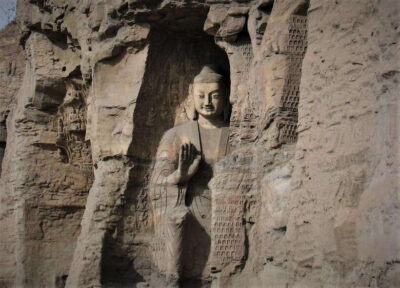
- Lama Temple treasures: the largest sandalwood Buddha, the bronze Buddhas of past/present/future, plus the 500-Arhat-Hill
- Time-saving access: fast entry for Tiananmen and special entry to the Forbidden City
- Middle-axis focus: you get the major halls like Hall of Great Harmony and related key spaces
- Inner palace sections: stops include Palace of Heavenly Purity areas tied to the emperor’s living quarters
- Private guide approach: Lucy-style commentary helps you understand what you’re seeing as you walk
In This Review
- How a 4–5 Hour Private Route Hits Beijing’s Big Three
- Meeting Up in Your Hotel and Getting a Guide Like Lucy
- Lama Temple (Yonghegong): More Than a Tibetan Buddhist Photo Stop
- The three treasures you don’t want to miss
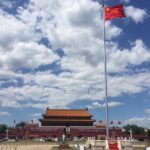
- Tiananmen Square in 30 Minutes: See the Landmarks, Get Your Bearings
- The Forbidden City (Palace Museum): Main Axis Highlights That Actually Make Sense
- Palace of Heavenly Purity: Where the Emperor’s Daily World Shows Up
- Imperial Garden and Exiting at the North Gate: Finish With Options
- What You Pay For: Value, Entrance Fees, and Likely Extras
- Timing, Walking, Weather, and How to Set Your Expectations
- Who This Tour Suits Best (and Who Might Want More Time)
- Should You Book This Private Tour?
How a 4–5 Hour Private Route Hits Beijing’s Big Three

Beijing can chew up time fast. Between transit, crowds, and the sheer size of the sights, it’s easy to end up with a half-day that feels like you merely passed by landmarks. This private route is built to solve that problem.
You’re looking at three major icons in one run: Lama Temple (Yonghegong), Tiananmen Square, and the Forbidden City (Palace Museum). In a few hours, you get a balanced mix of religious art, civic symbolism, and imperial power.
The smart move here is pacing. You’re not trying to do everything in Beijing. You’re doing the parts that most people want to understand quickly—then leaving you time to plan your next meal or stop afterward.
Meeting Up in Your Hotel and Getting a Guide Like Lucy
This tour works best when you treat it like a guided walk, not a taxi with talking points. Pickup is offered from your hotel lobby at your chosen pickup time, and you’ll head straight to the first site.
A key detail I appreciate is the private nature of the experience. It means you’re not stuck with a loud group sprinting ahead or waiting on everyone else’s pace. In the experience I’d prioritize, the guide coordination was smooth and the driver felt responsive—exactly what you want in Beijing traffic.
Lucy (the guide name that comes up again and again) is described as fun and strong at explaining what matters. When someone can connect what you see to why it exists—without turning it into a lecture—you walk away with the place in your head, not just on your camera.
You can also read our reviews of more city tours in Beijing
Lama Temple (Yonghegong): More Than a Tibetan Buddhist Photo Stop
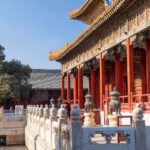
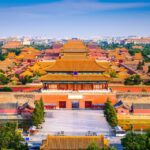
Lama Temple, or Yonghegong, is a place where Beijing history bends in interesting ways. The site wasn’t always a lamasery. It began as the residence of Yin Zhen, who became Emperor Yongzheng in 1723. After Yongzheng’s death in 1735, the buildings shifted roles and became a lamasery staffed by monks from Tibet and Mongolia.
That background changes how you view the architecture. You’re not only looking at temple life—you’re seeing an old government-and-residence framework repurposed for Buddhist worship. This is the kind of context that makes the courtyards and halls feel more alive, even if you’re short on time.
The practical part is that you get a guided stroll through key spaces—courtyards and halls—rather than a random self-guided route. You’ll also hear why the yellow sect of Tibetan Buddhism became so popular in China, plus what locals think about Buddhism in everyday terms.
The three treasures you don’t want to miss
This temple is famous for specific highlights, and this tour makes it easy to hit them in a focused way:
- The largest sandalwood Buddha in the world
- Bronze Buddhas of past, present, and future
- The 500-Arhat-Hill
If you’re imagining one statue and a few quiet halls, adjust that expectation. Lama Temple is a layered stop, and the guide helps you read it like a map.
Possible drawback: if you’re hoping for a long, slow art-and-incense experience, the time is limited. You’ll want to look closely, but not linger indefinitely. For most people, that’s a feature, not a bug.
Tiananmen Square in 30 Minutes: See the Landmarks, Get Your Bearings
Tiananmen Square is huge. Even when you only have 30 minutes, you can still get the orientation you need, especially when entry is handled quickly with a fast pass.
You’ll stand in the square long enough to absorb the scale and identify the big surrounding buildings. This is where you learn to connect names to the real geography of the area.
You’ll also get the context for major structures you might otherwise only see in photos:
- Great Hall of the People
- National Museum
- Chairman Mao’s Mausoleum
- Monument of the People’s Hero
- Tiananmen Gate
In a short window, the win is not trying to take in every detail. The win is learning what’s what. Once you’ve got the layout in your head, you can enjoy the scenery even after you move on to the Forbidden City.
Consideration: the route time is fixed. If you’re hoping to linger for extra views or photos with minimal movement, you may feel the clock. This stop is about getting oriented and understanding the place fast.
The Forbidden City (Palace Museum): Main Axis Highlights That Actually Make Sense
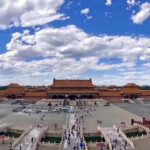
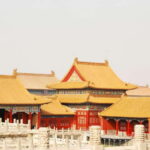
Now for the big one. The Forbidden City is a 250-acre complex of courtyards, palaces, pavilions, and gardens. It served as the imperial palace for emperors and their households for more than 500 years, and it’s centered on how power was displayed along a strict ceremonial design.
The tour plan gives you skip-the-line style access, which matters because lines and entry delays can easily wreck a half-day. Once inside, you focus on what you came for: the most important buildings along the middle axis.
You’ll explore key halls, including:
- Hall of Great Harmony
- Hall of Central Harmony
- Hall of Complete Harmony
These halls aren’t just big. They’re the visual grammar of imperial rule. With a guide, you’re more likely to notice relationships between the spaces: what’s ceremonial versus what feels functional, and how the layout supports the drama of court life.
The stop is timed at about an hour. That’s enough to get the structure, understand the purpose of the main halls, and still keep moving to the living-quarters section next.
Possible drawback: some people come expecting the Forbidden City to feel like one long wander. This route keeps you focused on the signature buildings. If you want every side hall or every special exhibit, you may need a longer second visit.
You can also read our reviews of more private tours in Beijing
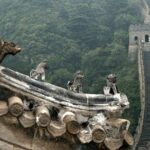


Palace of Heavenly Purity: Where the Emperor’s Daily World Shows Up
After the public-facing ceremonial spaces, the tour moves into the areas tied to the emperor’s family life. This is where the mood shifts from grand spectacle to a sense of private routine inside the palace system.
You’ll visit:
- Hall of Heavenly Purity
- Hall of Union
- Hall of Earthly Tranquility
The guide explains stories about the emperor and family who lived inside these spaces. That storytelling is the difference between seeing buildings and understanding what those buildings were meant to do—house power, maintain order, and support daily life within strict boundaries.
You get about 30 minutes here, so it’s not a deep scholarly tour. But it’s enough to make the Forbidden City feel like a full system: ceremonial on the outside, living on the inside.
Tip for your photos: don’t only frame the buildings. If you can, watch the way the halls and entrances line up. The middle-axis design becomes obvious when you pay attention to spacing.
Imperial Garden and Exiting at the North Gate: Finish With Options
The tour ends at the North Gate of the Forbidden City. That’s a practical ending point because it gives you flexibility. You can continue exploring on your own, or you can ask your guide for help getting a taxi to your next stop.
If you choose the private transfer option, you’ll be returned to your hotel in downtown Beijing. If you don’t, you’ll still have support in getting onward—just at your own cost.
This finishing approach is valuable because the Forbidden City can be tiring. You’ll likely want food, rest, or another stop nearby afterward. Having an easy exit makes the whole half-day feel smoother.
What You Pay For: Value, Entrance Fees, and Likely Extras
At $108 per person, the value depends on what you prefer: a guide-led highlights plan or a do-it-yourself slog.
What’s included:
- Professional guide
- Private tour
- Entrance fee
- Private transfer if you choose that option
What’s not included:
- Additional entrance fees to museums inside the Forbidden City
- Food and drinks
- Transportation fee if you choose the tour without transfer
Here’s the honest way to think about value. You’re paying for four things at once: a private guide, entrance coverage for the core experience, and time-saving entry support. That can easily be worth it if you want the major sights without spending your day guessing routes or waiting in long lines.
But keep an eye on this: the complex includes areas that can require extra museum admission. If you plan to see more interior museum collections beyond the standard palace halls, budget for it.
Timing, Walking, Weather, and How to Set Your Expectations
This experience runs about 4 to 5 hours. That’s enough time to see the core highlights without exhausting yourself completely, but it’s not a slow museum day. The pacing is part of the value: you get guided direction so you spend time looking at meaningful details instead of wandering.
It also operates in all weather conditions, so dress appropriately. Beijing weather can change quickly, so bring layers you can adjust without making the day harder than it needs to be.
In terms of effort, plan for some walking across large sites. You don’t need to be a fitness athlete, but you do want comfortable shoes and a calm mindset.
Who This Tour Suits Best (and Who Might Want More Time)
This private tour is best if you:
- have limited time in Beijing and want the top landmarks in one shot
- like guided explanations that help you understand what you’re looking at
- prefer a controlled pace over a free-for-all walk-through
It may be less ideal if you:
- want deep time in the Forbidden City with lots of optional museum exhibits
- prefer to linger long at each stop without a set schedule
- plan to build a full day of extra attractions on top of this half-day route
If you’re doing Beijing in a hurry, this is the kind of tour that keeps your day focused.
Should You Book This Private Tour?
If your Beijing plan is short and you want real orientation—religion at Lama Temple, the symbolism of Tiananmen Square, and the imperial layout of the Forbidden City—this is a smart pick. The private guide format, plus the time-saving access, turns a packed half-day into a coherent story instead of a checklist.
I’d book it if you want highlights explained clearly and you like having your next move handled. I’d skip or add a longer follow-up if you know you want extra museum exhibits inside the Forbidden City complex.