REVIEW · BEIJING
Beijing: Private Biking Tour Along Central Axis of Beijing
Book on GetYourGuide →Operated by JTB Travel Agency · Bookable on GetYourGuide
Beijing reads like a diagram when you bike it. This tour follows the Central Axis Fengshui line, so you see the city in a clean north-to-south order, with Tian’anmen Square and the grand imperial approach as the anchor. I like how it mixes big symbolism (the emperor’s line, the gate, the formal moat) with everyday backstreets in hutongs. One drawback to think about: the shared bikes can feel too small for some riders, so check fit early and speak up.
I also like the pacing for a 3-hour session: you cover around 20 km without turning it into a suffer-fest, and the small group size means your English guide can actually talk with you, not just manage the crowd. It’s a smart way to get oriented fast—especially with stops tied to the Drum and Bell Towers timekeeping story, plus the Jing-hang canal area. You’ll still want to plan extra spending if you want to enter ticketed sights, since tickets aren’t included.
In This Review
- Key highlights to look for
- Why the Central Axis Bike Route Feels Like Seeing Beijing in Order
- From Ci Qi Kou to Tian’anmen: Start Smart and Stay Oriented
- Tian’anmen Square and Tian’anmen Gate: The Formal Face of China
- The Forbidden City Entrance Area: Moat, Corner Turrets, and Big-Scale Craft
- Hutongs Off the Central Line: Where Ordinary Beijing Lives
- Jing-hang Canal and Old Commercial Streets: Water Trade to Modern City
- Drum and Bell Towers: The Old Time Announcer Twins
- Bikes, Pace, and the Small-Group Feel (Including the Bike-Fit Note)
- Price and Value: What $67 Buys for 3 Hours
- Should You Book This Beijing Central Axis Bike Tour?
Key highlights to look for
- A ride that follows Beijing’s “dragon’s backbone” Central Axis with major landmarks aligned in one storyline
- Tian’anmen Square and the Tian’anmen gate with Mao’s portrait, plus the surrounding landmark buildings
- The Forbidden City’s formal entrance area, including the moat and corner turret views
- Hidden side hutongs, where you see how ordinary people live away from the main roads
- Jing-hang canal scenery and old commercial streets with temples and shops nearby
- Drum and Bell Towers area, tied to the old system for announcing time
Why the Central Axis Bike Route Feels Like Seeing Beijing in Order
Beijing is one of those cities where the layout matters. This ride helps you understand that instead of just taking in monuments one by one. The backbone idea is simple: you’re traveling along the Fengshui line that runs through the old city and links the power centers from north to south.
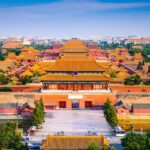
The Central Axis is described as a 7.8-kilometer axial line running from the Bell and Drum Towers in the north down to Yongdingmen Gate in the south. Along that imagined straight line are the major imperial landmarks, including the Wanning Bridge, Jingshan Hill, and the Imperial Palace. So when you bike this route, you’re not randomly hopping from one photo spot to another—you’re tracking how the city was designed to look and feel.
That makes the experience especially good for a first visit. You’re learning the city’s logic while you move. And because you’re on a bike, you get a sense of scale—how wide and ceremonial the imperial spaces are compared with the human-scale lanes branching off the main line.
You can also read our reviews of more cycling tours in Beijing

From Ci Qi Kou to Tian’anmen: Start Smart and Stay Oriented
Your meeting point is at Exit D of Ci Qi Kou station (Line 5). If you’re taking a taxi, you can set the destination to that exact exit wording, then show the Chinese station text to the driver. Your guide meets you at the meeting point, so you’re not stuck wandering outside the subway entrance trying to match a face to a photo.
From there, the tour is set up to lead you toward Beijing’s most iconic political and ceremonial zone: Tian’anmen. The practical benefit of this start is that you come in with the right frame of mind. Instead of arriving after a day of scattered sightseeing, you’re stepping into the story right when you’re still fresh and alert.
You also get a bit of real Beijing rhythm early on. The route is described as a blend of major landmarks and side connections—so you’ll likely see how busy roads and quieter lanes trade places over short distances. That contrast is a big part of why riding works here: the transitions are visible, not just theoretical.
Tian’anmen Square and Tian’anmen Gate: The Formal Face of China
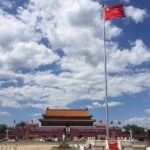
Tian’anmen Square is the kind of place that forces you to pause and look up. This tour takes you right to the square and then to the Tian’anmen gate, noted for the large portrait of Chairman Mao. Even if you’ve seen pictures before, it hits differently when you’re in the approach zone and can feel the openness around you.
Around the gate, you’ll also pass buildings tied to national symbolism—such as the parliament building and the national museum (as part of what you’ll see in the surrounding area). The value here isn’t just checking boxes. Your guide’s job is to connect what you’re seeing with what the city was designed to project: authority, order, and a sense that the state is the center of the view.
Practical tip: this area can be visually intense. If your photos start to look repetitive, slow down for a minute and switch your angles—wide shots from open ground versus tighter views that include the gate structure and nearby facades. You’ll feel like you’re photographing different places, even though you’re technically still in one zone.
The Forbidden City Entrance Area: Moat, Corner Turrets, and Big-Scale Craft
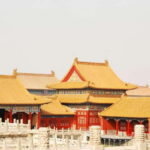
Right after Tian’anmen, you move into the formal approach to the Forbidden City. The highlights here are described as the huge formal entrance, the beautiful city moat, and the impressive corner turrets. These details matter because they show how Beijing used design to create boundaries and drama.
A moat isn’t just decoration. It’s a visual buffer that separates ordinary movement from ceremonial space. And the corner turrets give you that layered look—vertical, guarded, and built to be seen from multiple angles. On a bike, you can shift position faster than you can on foot, so you can actually appreciate why the structure was made the way it was.
One more honest point: tickets for tourist sights aren’t included. That doesn’t mean the entrance area isn’t worth seeing—it clearly is. It just means if you want to go inside ticketed sites, you should plan to pay extra and time accordingly.
If you’re trying to understand the Forbidden City as a concept rather than as a museum checklist, this “approach” view is a smart start. You get the setting and the defensive/ceremonial design cues before you ever think about the interiors.
Hutongs Off the Central Line: Where Ordinary Beijing Lives
Here’s the part I’d never skip on a first trip: the hutongs. This tour includes special side hutongs connected with the central way, where ordinary people live. That word ordinary is the point. The Central Axis can feel grand and distant, but the hutongs pull you back to everyday scale.
You don’t just ride past lanes—you’re set up to explore them as connected streets, meaning you get glimpses of how local neighborhoods thread through the grand city plan. Often, the best city memories come from these side turns: a street that looks calmer than the main road, a corner that feels like it has routines, or a small market scene where you can sense daily life without needing to understand every sign.
There’s also an optional angle to consider: the tour description includes an option that leans more into local life, including exploring local markets and even climbing the Drum Tower for a view over the city. Whether you choose that style depends on what you want more: landmark structure or local neighborhood perspectives.
Either way, your guide matters. Guides like Amber and Jacky are specifically praised for making the route feel easy to follow and more interesting than a self-guided ride. When you’re moving quickly through tight streets, it helps to have someone translate what you’re seeing into something you can actually remember.
You can also read our reviews of more private tours in Beijing



Jing-hang Canal and Old Commercial Streets: Water Trade to Modern City
Beijing isn’t only about palaces. This tour also includes the Jing-hang canal, described as the longest manmade canal in the world. You’ll ride through the canal area and see temples and stores along the water, plus ancient commercial streets.
Why this matters: canals explain how cities ate and grew. Even when you’re just looking at shopfronts and temple-adjacent scenery, the canal provides context for why this area developed the way it did—transport, trade, and services clustered where boats and people had reason to stop.
On a bike, the canal segment gives you a visual reset. It’s a chance to swap “big gate, big wall” energy for a more human-scale street and water relationship. And because you’re also passing through ancient commercial streets, you’re not only sightseeing—you’re traveling through the kinds of areas that historically served daily needs.
If you care about photos, look for the pairing shots: canal and bridge shapes in one frame, then storefront depth in the next. That’s how you’ll turn a simple stop into a memorable sequence.
Drum and Bell Towers: The Old Time Announcer Twins
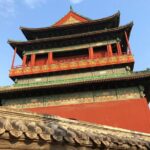
A highlight in the route is the time story carried by the twin structures: the Drum and Bell Towers. The description calls them the old time announcers—an easy concept that helps you picture how daily life worked before everyone wore watches.
This is another place where scale becomes emotional. Even if you don’t climb anything, seeing the pairing of towers helps you understand why they were so important in a planned city. They were landmarks and instruments at the same time.
There’s also mention of lakes and bridges decorated around this kind of scenery. That’s one of the nice bonuses in this part of Beijing: you can get a calmer view while still staying in the central-axis narrative. It’s a good time to pause, let the bike rest against a safe spot, and take a slower look.
And if you’re the type who likes views, the tour option that includes a Drum Tower climb is built for you. Just remember: any tower climb can slow the pace, so if you’re trying to photograph a lot, plan a lighter day after this tour rather than stacking another big attraction.
Bikes, Pace, and the Small-Group Feel (Including the Bike-Fit Note)
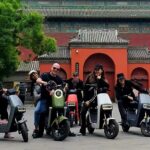
This is listed as a small group, limited to 8 participants, and it’s led by an English-speaking guide. That size is a real advantage. On a route like this—mixing broad ceremonial roads and tight hutong lanes—small groups tend to move more like a team than like a line.
You’ll also get shared bikes per person and mineral water. That’s practical for a 3-hour ride, especially when you’ll be stopping often enough to take photos and listen.
One caution based on an experience that’s worth your attention: the bikes can feel too small for some riders. If you’re tall, long-legged, or you just hate cramped biking positions, do two things right away:
- Check seat height and handle fit within the first few minutes.
- Ask your guide to adjust before you start rolling at full speed.
That quick fix can prevent a whole-tour annoyance. I’ve learned that biking comfort is like socks: you don’t think about it until it ruins everything.
Also, the tour is marked wheelchair accessible. That’s helpful information for anyone who uses a wheelchair. Still, you’ll want to confirm how the riding segment works for your specific mobility needs, since the tour is also described as biking for a set distance.
Price and Value: What $67 Buys for 3 Hours
At $67 per person for a 3-hour private biking experience, the value comes from three things.
First, you’re paying for an English-speaking guide who can connect what you see—Central Axis alignment, imperial entrances, canal context, and hutong life—into a story that sticks. With landmarks this iconic, self-guided sightseeing can turn into a shuffle of photos and names. A guide is what turns it into understanding.
Second, logistics are handled for you at the start: pickup service from the meeting point and bottled water. That sounds small, but it saves time and stress at the subway exit.
Third, the route design matters. The tour is built around the Central Axis idea, meaning you’re not wasting energy crossing the city in random directions. You’re moving along a planned line with a clear sequence of major stops, which is exactly what you want when you have limited time.
What’s not included is also important. Meals and tickets for any tourist sights aren’t included. So if you’re imagining spending the whole 3 hours outside just taking in views and then buying optional entries, this pricing matches that reality. If you want to go inside many ticketed attractions, add that budget.
If you’re cost-sensitive but still want an organized first look at Beijing’s most famous structure, this is a solid middle option: more guidance than a rental bike day, more freedom than a bus tour.
Should You Book This Beijing Central Axis Bike Tour?
Book it if you want a fast, structured way to see Beijing’s big-picture design and still get local texture in the hutongs. It’s especially good for first-timers who like order, who enjoy cycling through different city moods, and who want an English guide to make the landmarks click.
Skip it or at least think twice if bike comfort is your top priority and you’re worried about bike sizing. Also consider your ticket plans: since tickets for sights aren’t included, you may want to decide in advance whether you’re happy with outside/approach views or you’ll add entry fees.
If you’re the type who likes a guided route that does more than point and shoot—this one is built around a clear theme: the dragon’s backbone, the emperor’s line, and the ordinary neighborhoods that grow off it. For $67 and 3 hours, that theme is the value.