REVIEW · BEIJING
The Hutong Experience by Bike
Book on Viator →Operated by Our Beijing · Bookable on Viator
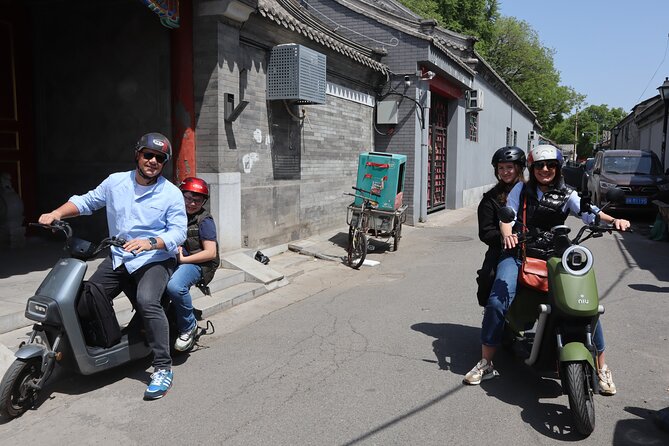
A hutong tour by bike beats wandering. You’ll follow an English-speaking guide through narrow alleyways, with e-bikes or bicycles and helmets to make the route actually manageable. I especially like the built-in local focus: you get snacks, drinks, and chances to try everyday hutong foods without playing guessing games. I also like the small-group feel of a private-style outing where your guide can steer you toward the places you’d likely miss on your own.
One thing to consider: hutongs mean tight turns and close sidewalks, so you’ll need to feel comfortable riding (even if it’s an e-bike) and staying aware in traffic-adjacent lanes. If you’re hoping for a totally low-effort experience, this is more active than a bus tour—just in a fun, practical way.
In This Review
- Key points to know before you book
- Why Hutong Lanes Feel Better on Two Wheels
- E-bike or Bike Setup, Helmets, and the Safety Pace
- Where You Meet and How the Ride Returns You
- The Our Beijing Hutong Ride: What You’re Actually Doing
- Street Food, Drinks, and Traditional Games Under the Towers
- Optional Adventure Flavor: Rooftop Views and Ancient Lakes
- English-Speaking Guide: The Real Reason It Feels Personal
- Price and Value: Is $150 for 3 Hours Worth It?
- What to Wear and How to Prep for a Hutong Bike Day
- Who This Tour Suits Best (and Who Might Feel Strained)
- Should You Book This Hutong Experience by Bike?
- FAQ
- How long is the hutong bike experience?
- Does the tour include an e-bike or only bicycles?
- Where does the tour start and end?
- What’s included in the price?
- Is pickup and drop-off provided?
- How big is the group?
- Is free cancellation available?
Key points to know before you book
- E-bikes or standard bikes, plus helmets, keep the riding smooth and the day doable in Beijing heat.
- Pickup and drop-off from designated meeting spots means less time lost figuring out where to start.
- English-speaking guide gives you context fast, plus local tips you can use later in the city.
- Street food and drinks are part of the experience, not an optional add-on you have to plan.
- Traditional games near the Drum & Bell Towers add variety beyond just sightseeing.
- Small maximum group size (up to 15) helps keep the ride feeling coordinated and safe.
Why Hutong Lanes Feel Better on Two Wheels
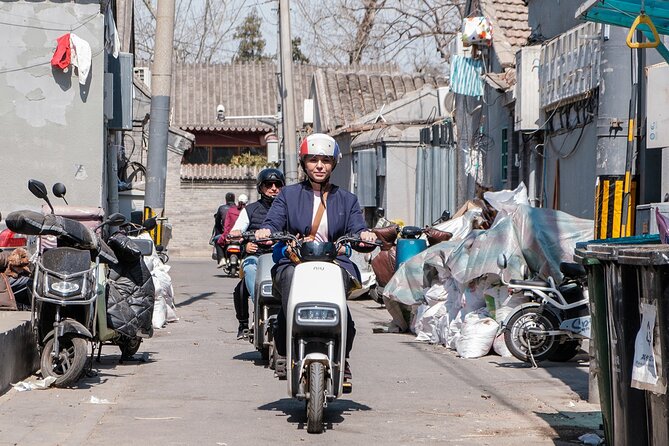
Beijing’s hutongs are charming, but they’re also confusing. Those narrow lanes mean you can’t just wander and expect to cover a lot—or find the good snack stops—without doubling back. A bike route fixes that problem because you can move at the pace of daily life, then quickly reposition when the lanes change.
The big win here is that the guide helps you read the neighborhoods while you ride. You’re not just going from landmark to landmark; you’re getting local context as you pass homes, courtyards, and the everyday rhythm that makes hutongs feel real. You’ll also get help spotting the safer lines to take through tight sections, which is a relief if you’re not used to navigating busy city edges.
You can also read our reviews of more cycling tours in Beijing



E-bike or Bike Setup, Helmets, and the Safety Pace
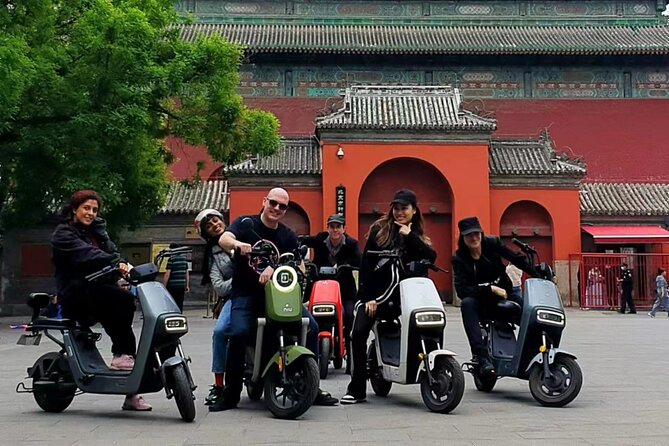
You get to choose between an e-bike and a regular bicycle, and helmets are included. That matters because hutongs can feel like a maze even when you’re walking, and on a bike you need simple, consistent handling. The e-bike option is a smart pick if you want less legwork and more time enjoying the scenery and snack stops.
Safety is part of the experience design. In the feedback I’m using to learn what to expect, one guide named Dominic stands out for doing thorough safety checks and making sure riders know how to handle the bike confidently. Even if you don’t get him, you can assume you’ll receive guidance before you roll.
Practical tip: wear comfortable shoes with a solid grip. You’ll be starting, stopping, and maneuvering at lower speeds, and the last thing you want is to fumble with slippery soles when you dismount.
Where You Meet and How the Ride Returns You
The tour starts at 74 Dong Si Bei Da Jie, Dong Cheng Qu, Bei Jing Shi, China, 100009, and it ends back at the meeting point. That round-trip setup makes planning easier, especially if you want to pair it with an afternoon in the city afterward.
It also helps that the meeting area is near public transportation. So if you’re arriving by metro or bus, you’re not stuck in the kind of location where you need a taxi just to begin. For a 3-hour experience, saving those logistics headaches adds real value.
The Our Beijing Hutong Ride: What You’re Actually Doing
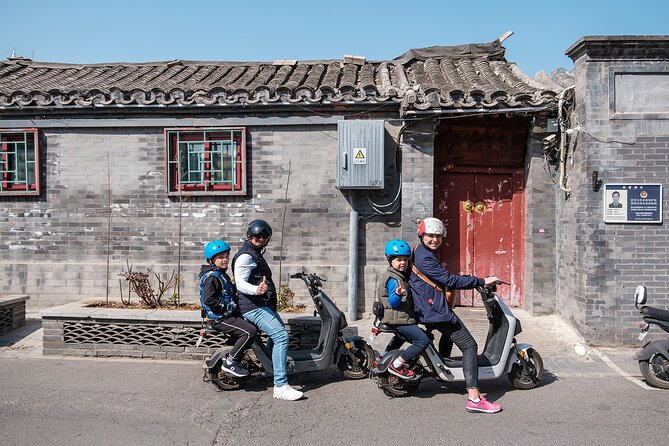
The core of the tour is a ride through centuries-old hutong neighborhoods with a focus on daily life, history, and local culture. Instead of a long lecture, you’ll learn in motion—your guide points out details as you pass them, so the stories connect to what you’re seeing right now.
This is also where the experience feels different from a standard sightseeing loop. You’ll be going through smaller lanes and turning points that are hard to manage alone, especially if you don’t speak the language or you’re not familiar with how neighborhoods connect. The bike format lets you cover ground without rushing, which is exactly what you want when the goal is to see more than just the obvious.
Possible drawback: hutong streets can be tight and the riding style can require attention. You won’t be “speed cruising.” You’ll need to keep your hands steady, follow your guide’s direction, and be ready for brief slowdowns as the group navigates the lanes.
Street Food, Drinks, and Traditional Games Under the Towers
One of the strongest parts of the outing is how much it leans into food and everyday culture. You’ll have delicious street foods included as snacks, plus bottled water and soda/pop. That means you’re not spending your budget trying to figure out what to eat at every stop. The guide’s local recommendations also help you avoid the common trap of ordering something that looks tempting but isn’t right for the moment.
The tour also builds in breaks, so you’re not stuck riding the entire time without a breather. You’ll get chances to cool down and regroup during the experience, which is important in Beijing where weather can shift fast and long outdoor stretches can feel heavy.
A fun cultural add-on comes through traditional games under the Drum & Bell Towers. It’s a nice shift from street food and alley riding, and it gives you a different lens on local life. You get to slow down and participate instead of just observing, which is usually where tours stop being forgettable.


Optional Adventure Flavor: Rooftop Views and Ancient Lakes
The experience hints at extra adventurous moments for those who want more than the standard route. Depending on conditions and the group plan, you might get a chance to hunt for rooftop views or experience the kind of offbeat scenery that makes people say the day felt like a real local adventure.
There’s also mention of a chance to swim in ancient lakes for the adventurous. I’m not treating that as guaranteed, because it depends on what the day allows and your comfort level. But it’s a useful signal: the tour isn’t only about bikes and snacks. It’s designed to flex toward more unusual Beijing sights when possible.
If you like options, ask your guide what’s feasible on the day. You’ll learn quickly how flexible the schedule can be and what’s realistic based on timing and weather.
English-Speaking Guide: The Real Reason It Feels Personal
A good guide can turn a “ride through alleys” into an understanding of how neighborhoods work. That’s what you’re paying for here. The guide is English-speaking, and you’ll get plenty of local tips and recommendations as you go.
What I like about this setup is that it’s not just facts. You’ll pick up practical knowledge: what to watch for while walking later, where to look for good food, and how to think about hutong life without turning it into a museum. When you’re done, you’ll often feel like you gained a mental map, not just photos.
And since the tour is set up as a private experience with a maximum group size (up to 15), your guide can keep the pace realistic for the group. That matters a lot when you’re riding in narrow spaces.
Price and Value: Is $150 for 3 Hours Worth It?
At $150 for about 3 hours, the price isn’t “cheap,” but it’s also not out of line when you count what’s included. You’re paying for a guide, an organized route in hard-to-navigate hutong lanes, and the bike setup (either e-bike or bicycle), plus helmets. Add in bottled water, soda, snacks, and you’re already covering several costs you’d likely pay separately.
This is the kind of tour where value comes from friction reduction. If you tried to do it solo, you’d spend time figuring out where to ride safely, what to eat, and how to see meaningful parts of hutong neighborhoods without getting lost. Here, the guide removes that guesswork. For many people, that saved stress is worth a lot.
One cost note: alcoholic drinks aren’t included and are available to purchase. If you want beer or something stronger, budget extra. If you don’t, you’re fine—most of the included refreshment is non-alcoholic.
Also check for mobile ticket support and any group discounts, since the booking may offer different ways to pay based on your situation.
What to Wear and How to Prep for a Hutong Bike Day
You’ll enjoy this more if you prep for bike comfort rather than “museum comfort.” Aim for breathable clothing and layers if the day starts cool. Even with an e-bike, you’ll still be moving, so light sweat is normal.
Bring:
- Comfortable shoes for quick stops and possible dismounts
- Sun protection (cap, sunglasses, sunscreen), since you’re outdoors
- A small bag you can keep controlled while riding
Don’t bring anything you need to constantly adjust. Hutong lanes don’t give you much time for fiddling, and the day runs best when you stay focused on the route and the stops.
Who This Tour Suits Best (and Who Might Feel Strained)
I’d put this at the top of the list for you if you:
- Want to see more than the main sights in Beijing
- Like food-led experiences with local context
- Are comfortable riding a bike in city conditions, even at low speed
- Prefer an English-speaking guide who explains what you’re seeing
It may not be ideal if you:
- Strongly dislike riding at all, even on an e-bike
- Have mobility limitations that make starting/stopping or dismounting hard
- Want a completely passive, sit-and-watch itinerary
Good news: “most travelers can participate,” and the bikes plus helmets make it accessible in the basic sense. The key is whether you’re comfortable navigating tight lanes safely with guidance.
Should You Book This Hutong Experience by Bike?
If you’re deciding between a hutong walk tour and a bike option, I’d lean this way for most first-time visitors. The hutongs are tricky to navigate alone, and the guide removes the biggest friction: route confusion plus “what do we eat?” decisions. The included street food, drinks, and a culture break near the Drum & Bell Towers give you more than just scenery.
Book it if you want a practical, high-reward afternoon where you come away with better street sense and real neighborhood flavor. Skip it only if you’re very sensitive to riding in tight urban spaces or you want a totally low-activity outing.
If you do book, come with a flexible mindset. This kind of day works best when you treat it as an active neighborhood experience, not a rigid checklist of sights.
FAQ
How long is the hutong bike experience?
It lasts about 3 hours.
Does the tour include an e-bike or only bicycles?
You can choose between e-bikes or bicycles, and helmets are included.
Where does the tour start and end?
It starts at 74 Dong Si Bei Da Jie, Dong Cheng Qu, Beijing, and it ends back at the same meeting point.
What’s included in the price?
The tour includes the escort/host, bottled water, soda/pop, snacks (delicious street foods), and use of a bicycle (plus helmets and the bike setup).
Is pickup and drop-off provided?
Pickup and drop-off are available from designated meeting spots.
How big is the group?
The maximum group size is 15 travelers. The experience is described as private for a more personalized feel.
Is free cancellation available?
Yes. You can cancel up to 24 hours in advance for a full refund.