REVIEW · BEIJING
Beijing Private Tour of Temple of Heaven, Tian’anmen Square, Forbidden City
Book on Viator →Operated by Discover Beijing Tours · Bookable on Viator
Beijing’s imperial map is suddenly walkable. This private route connects the spiritual Temple of Heaven with the political gravity of the Forbidden City, and you get a guide who turns architectural detail into plain, useful context. I also love that you pause to watch everyday life around the park near the Temple, not just posed sightseeing.
One catch: Tian’anmen Square may close for government activity, and security waits can get slow. The tour plan accounts for that, including the option to skip the Square if lines run long so you do not lose time (or get cooked in the heat) before the Forbidden City.
In This Review
- Key highlights to look for
- Why this Temple of Heaven–Tian’anmen–Forbidden City route works
- Price and logistics: what $100.30 per person buys you
- Temple of Heaven first: morning calm, Ming symbolism, and local life
- Hall of Prayer for Good Harvests to Yuanqiutan: what to focus on
- Hongqiao Market and the Pearl Market: a useful souvenir reset
- Tian’anmen Square: views, monuments, and the “closure-proof” mindset
- Entering the Forbidden City: Meridian Gate and the “greatest hits” approach
- Lunch and energy management in a 6–7 hour day
- Choosing your option: subway budget vs private vehicle (and Summer Palace)
- Option 1 (budget style)
- Option 2 (with lunch)
- Option 3 (tight schedule + Summer Palace entry)
- Should you book this private Beijing classics tour?
- FAQ
- How long is the Beijing private tour, and how much do you walk?
- What’s included in the price?
- Do I need my passport for this tour?
- What happens if Tian’anmen Square is closed?
- Are entrance tickets included for the main sights?
- Is lunch included?
- Is this tour really private?
Key highlights to look for
- A guided path across two Ming-era UNESCO sites that share the same imperial worldview
- Crowd and gate strategy so you spend less time figuring things out
- Realistic Tian’anmen planning for closures and long security lines
- Stop-by-stop Temple of Heaven focus at the Hall of Prayer, Danbi Bridge, Echo Wall, and Circular Mound Altar
- Flexible pacing inside the Forbidden City with a main “greatest hits” walkthrough plus extra time depending on your option
Why this Temple of Heaven–Tian’anmen–Forbidden City route works
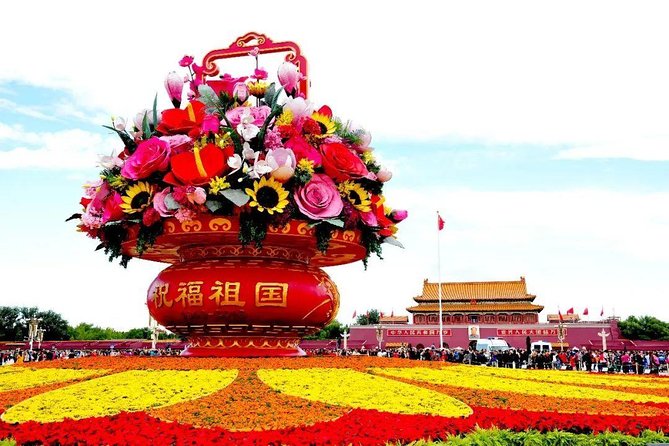
This is one of those rare Beijing days that makes the city’s main story feel logical. The Temple of Heaven sets the tone with heaven-worship rituals and the Ming empire’s big ideas about order. Tian’anmen Square acts like the public stage—massive space, major monuments, and the National Museum area you can take in from the square. Then the Forbidden City brings you into the power center: the palace complex where emperors ruled in real life, not just in theory.
I like that the day is built around movement along Beijing’s central axis. Even if you do not study a single timeline, the layout helps you connect themes: sacred ritual, state power, then imperial administration.
The experience also feels “guided, not herded.” You get a private guide, and the route is organized enough that you are not bouncing between confusing entrances while trying to keep track of ticket rules. That matters a lot with these sites because the crowds and lines can turn a self-guided day into a full-time job.
You can also read our reviews of more city tours in Beijing
Price and logistics: what $100.30 per person buys you
At about $100.30 per person, the value is in what’s packaged together: a professional guide, hotel pickup and drop-off (for the central area pickup), entrance fees, and transport during the day. That’s the kind of bundle that usually costs more if you try to cobble it together yourself, especially on a day when three big-ticket sites overlap.
There are also three practical layers to think about:
- Private guide time: you’re not just buying admission; you’re buying interpretation, pacing, and on-the-ground decision-making.
- Ticket and entry support: you’ll use mobile tickets for included entries, which helps reduce friction.
- Transport choice based on your option: subway/bus in the budget-style option, or a private vehicle when you choose lunch options.
One more practical detail: the tour requires your passport name and number at booking, and you must bring your passport for entry. In other words, do not pack it in the bottom of a bag and forget about it.
Temple of Heaven first: morning calm, Ming symbolism, and local life
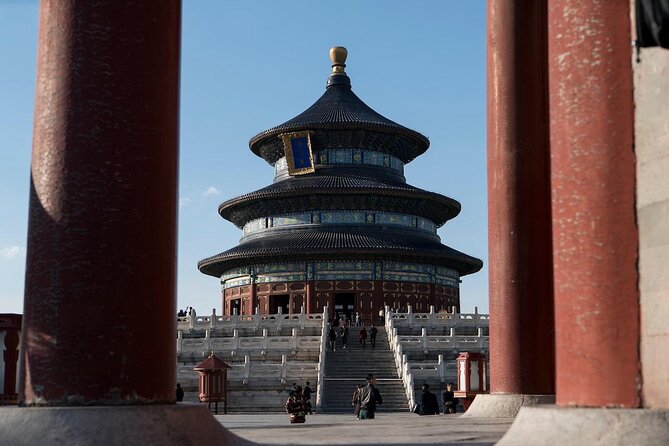
Starting at the Temple of Heaven is smart. You beat some of the worst crowds, and the mood is calmer than you’ll find later near Tian’anmen and the Palace Museum. The guide begins you with the setting and the big concept: this complex was built by the same emperor associated with creating the Forbidden City’s imperial vision.
The day’s first “human” moment also matters. You get a pause to see local people exercising in the park near the Temple. It’s a small stop, but it changes the feeling of the morning from museum mode to real-Beijing life.
If you like architecture but hate “lecture tourism,” this is a good balance. Your guide can explain what you’re looking at without turning the day into a classroom. In the same route, guides such as Renee, Susan, Lucy, Cindy, and Alice Ji are repeatedly praised for answering questions and helping you keep a reasonable pace while still learning the why behind the design.
Hall of Prayer for Good Harvests to Yuanqiutan: what to focus on
The Temple of Heaven visit is built around the places that carry meaning, not just the prettiest photos.
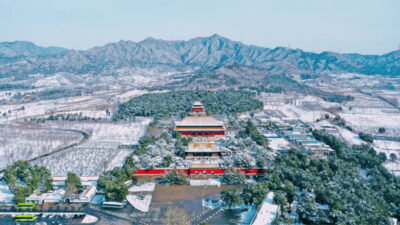
Hall of Prayer for Good Harvests is your first stop. It’s described as the most iconic structure here, and you’ll spend enough time inside with your guide to understand how the shape and the ritual ideas connect. If you only walk past the buildings, you’ll miss the point. With the guide, you get the context that makes the circular designs feel intentional rather than decorative.
Then you move into the area linked to imperial symbolism:
- Danbi Bridge / Echo Wall area: the walk includes the Danbi Bridge, a long, gently sloping path reserved exclusively for emperors, used as a symbol of ascent to heaven. You’ll also reach the Echo Wall stop.
- Circular Mound Altar (Yuanqiutan): this is the most sacred place for heaven-worship ceremonies. You can step onto the Heavenly Heart Stone at the center area and mimic the Ming-era emperor position.
Here’s the practical tip: take your time on the altar-related stop. It’s the moment where the whole complex’s purpose clicks. If you race ahead to take pictures, you’ll feel rushed. If you slow down, you’ll understand why people pause there even when it’s crowded.
Hongqiao Market and the Pearl Market: a useful souvenir reset
Between major monuments, you get a stop near the Hongqiao Market / Pearl Market area. If you want souvenirs, it’s positioned conveniently right by the Temple complex, so you are not adding extra travel time.
The listing says the admission here is free. That’s good news because it lets you treat this as optional. You can browse for a set amount of time and then refocus your energy for the later, bigger walking inside the Forbidden City.
My advice: if you do plan to shop, keep it simple. Pick one or two items you genuinely want, not the entire market. This tour is already long enough.
You can also read our reviews of more private tours in Beijing


Tian’anmen Square: views, monuments, and the “closure-proof” mindset
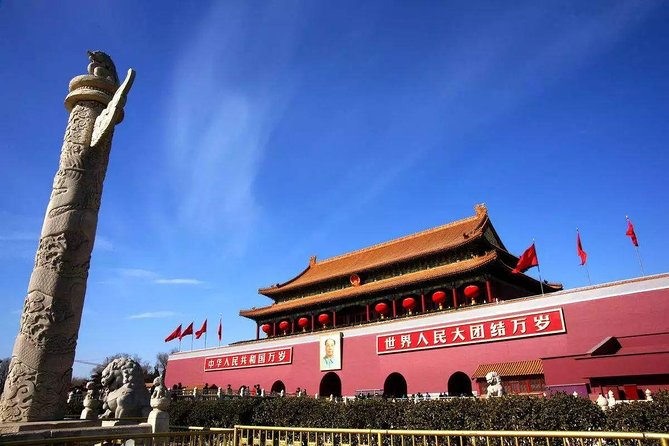
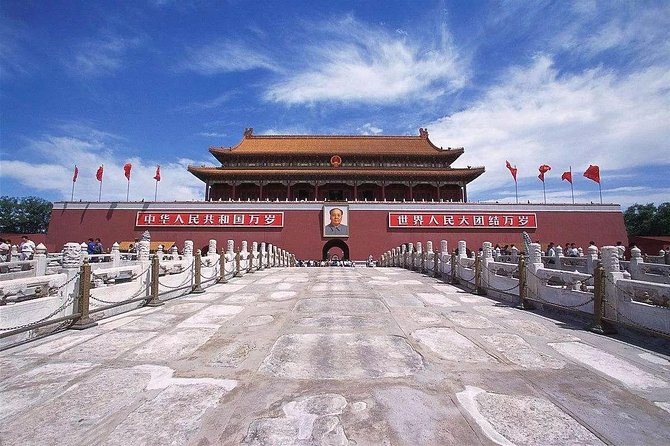
Tian’anmen Square is huge, and it’s not subtle. Your planned time includes views of the National Museum of China, Mao Zedong’s mausoleum, and the Monument to the Peoples’ Heroes.
But here’s the reality you should respect: the square might be temporarily closed due to official events, and security checks can be stringent. The tour notes that if the wait exceeds one hour, it’s recommended to consider skipping the square, especially because heat and prolonged waiting can raise the risk of heat-related illness. Also, spending too long at Tian’anmen can pull focus away from the Forbidden City, which is the day’s heavy hitter.
So how do you make the most of it?
- Go in with a flexible mindset. If you see a long line, do not stubbornly cling to the plan.
- Use your guide’s call. The whole point of doing a private tour is having someone coordinate timing when the city throws curveballs.
This is also where a good guide earns their pay. The tour may reach the square by subway or private car, and your guide should be able to adjust when timing changes. That adjustment is part of what you’re paying for.
Entering the Forbidden City: Meridian Gate and the “greatest hits” approach
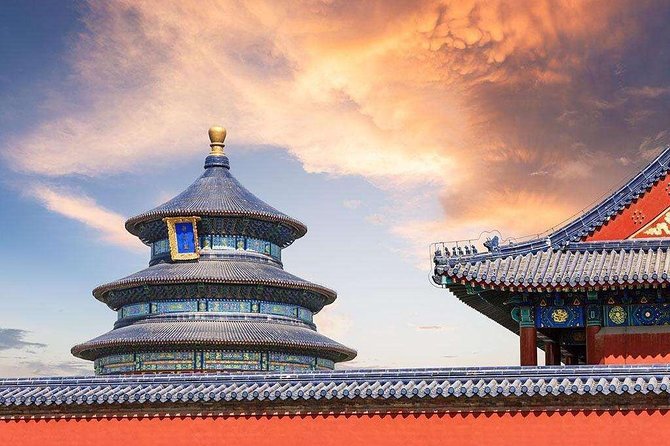
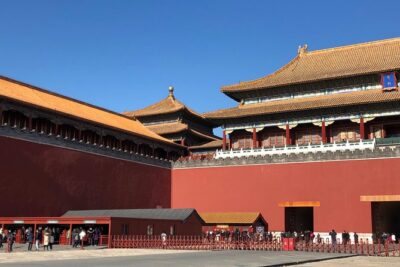
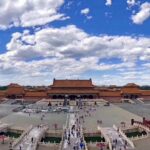
After Tian’anmen, you enter the Forbidden City from the south side via the South Gate, called the Meridian Gate. That’s important. Getting the right entry point saves time and mental energy when crowds swell.
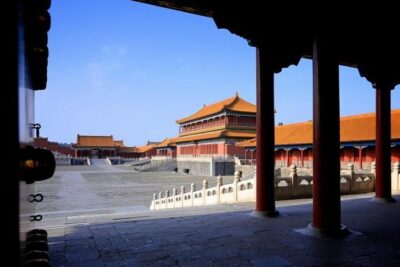
Inside, you visit highlights of the Palace Museum. You’ll start with Hall of Supreme Harmony, described as the grand hall where emperors held coronations and major state ceremonies. Your guided time here is around two hours, which is a smart length for a first trip. The Forbidden City can swallow an entire day if you wander without direction, so this structure helps you see the most meaningful areas without burning out.
One of the best benefits of this tour style is pacing. Instead of you trying to build a route from your own knowledge (which is easy to mess up in a sprawling palace complex), your guide chooses what to see first and explains what you’re looking at. Many guides on this experience are praised for crowd navigation and for getting you through with shorter waits, including through smart entrance choices.
After the main highlights, your option determines how you spend the next stretch:
- In the more budget-minded setup, you may be able to explore more areas independently with directions from your guide.
- In the lunch-focused options, the tour structure usually keeps you on a tighter, guided path.
Either way, the key is this: you will not feel like you’re trying to “solve” the Forbidden City by yourself.
Lunch and energy management in a 6–7 hour day
Lunch is included only if you choose option 2 or 3. If you choose the budget-style option (option 1), your listed inclusion is more about guide + admissions, while transport is via subway/bus and lunch may not be covered.
This matters because a day built around three major sites is about stamina as much as sightseeing. The Forbidden City involves a lot of walking, and Tian’anmen can add waiting time based on security conditions.
From the experience reports, guides often pair lunch with good local choices (and in at least one case, Peking duck came up). You should treat lunch as a recovery reset: hydrate, eat something filling, and plan your next 90 minutes with the idea that crowds are about to pick up again.
Comfort tip: bring water if the day feels hot, and dress in layers. The tour says it operates in all weather conditions, so you might need a rain plan too.
Choosing your option: subway budget vs private vehicle (and Summer Palace)
You’re offered at least three packages, and the “right” one depends on how you want to travel.
Option 1 (budget style)
This option keeps costs down and uses subway/bus, with subway/bus fees included during the tour. Lunch is not explicitly included here. It’s a good choice if you are comfortable navigating transit and you want the classics without paying extra for a private vehicle.
Option 2 (with lunch)
If you want a more relaxed logistics day, this option adds lunch and uses a private vehicle. That means less transit friction and usually a smoother connection between Temple of Heaven, Tian’anmen area timing, and Forbidden City entry.
Option 3 (tight schedule + Summer Palace entry)
Option 3 adds Tian’anmen Square, Forbidden City, Temple of Heaven, and the Summer Palace, and it’s described as tight with a lot of walking. If you pick this, you need to be physically ready for the extra load. It’s also the option that gives you the most “all-in-one Beijing” value if you know you won’t have another day for Summer Palace.
If you’re the type who likes to stop, look longer, and take in details (rather than just keep moving), option 3 can feel rushed. If you prefer efficiency, it might be exactly your style.
Should you book this private Beijing classics tour?
If you want an efficient first-time Beijing day that hits Temple of Heaven + Tian’anmen Square + Forbidden City, I’d say it’s a strong pick. The package value comes from the guide’s structure, the included entrances, and the way the day is planned to handle crowd reality—especially at Tian’anmen and inside the Forbidden City.
Book it if:
- You want someone to translate Ming and imperial symbolism into something you’ll actually remember.
- You prefer a private pace over guessing your way through multiple entry points.
- You care about practicality: pickup/drop-off, tickets handled, and a day that’s organized around the central axis.
Skip it or choose a simpler option if:
- You hate long walking days and you’re considering option 3 with Summer Palace.
- You might feel annoyed by security line unpredictability at Tian’anmen Square (even though the plan can adjust).
FAQ
How long is the Beijing private tour, and how much do you walk?
The tour runs about 6 to 7 hours. It includes guided time at the Temple of Heaven and highlights inside the Forbidden City, with additional walking between stops. Option 3 is specifically described as tight with a great deal of walking.
What’s included in the price?
The package includes a private guide, hotel pickup and drop-off (central area), entrance fees for the Temple of Heaven and Forbidden City, and lunch if you choose option 2 or 3. It also includes transport fees during the tour (subway/bus for option 1; private vehicle for options 2 and 3), and mobile ticket access is mentioned.
Do I need my passport for this tour?
Yes. Your passport name and number are required when booking, and you should bring your passport the day of the tour. Entry can be refused without it.
What happens if Tian’anmen Square is closed?
Tian’anmen Square might close temporarily due to government activity. If it happens, the tour will skip the Square.
Are entrance tickets included for the main sights?
Yes. The tour includes entrance fees for Temple of Heaven and Forbidden City.
Is lunch included?
Lunch is included only if you choose option 2 or 3. For option 1, lunch is not listed as included.
Is this tour really private?
Yes. It’s a private tour/activity, meaning only your group participates.
If you tell me your travel month and which option you’re considering (1, 2, or 3), I can help you pick the best fit for your pace and weather.