REVIEW · BEIJING
One day tour to downtown Tianjin from Beijing by high speed train
Book on Viator →Operated by Cindy Zhang · Bookable on Viator
Two cities, one rail day. This Tianjin day trip from Beijing turns your morning into a fast ride, then serves up concession-era streets, Haihe River views, and the Five Great Avenues area with real context from Cindy Zhang. I especially like how the tour mixes big sights (European-style architecture) with smaller street moments that make Tianjin feel specific, not generic.
The main thing to think about is time: it’s an about 11-hour day with limited stop windows, plus some walking, so plan for comfort over perfect photo timing. Also, the return high-speed train ticket is listed as extra (payable on the tour day in second class).
In This Review
- Key highlights at a glance
- Why this Tianjin day trip works better than DIY
- Price and value: what you pay, what you still pay
- Meeting point and timing: departing Beijing South around 9:00
- The high-speed train segment: it sets the tone
- Tianjin Railway Station views: Haihe River, Jinwan Plaza, Liberation Bridge
- Jiefang North Road Financial Street: French and British concessions
- Five Great Avenues and Xiaobailou: old Western street-grid swagger
- Italian Style Town: shopping streets with a snack break
- Ancient Culture Street and Tianhou Palace area
- Tianjin Eye (Ferris wheel): quick look at the bridge-built wheel
- Jingyuan (Jing Garden): Puyi’s residence, 1929–1931
- Heping Road and the Porcelain House shopping stretch
- Haihe River Cultural Square: the wrap-up before heading home
- Cindy Zhang’s role: why the guide quality matters on a rushed day
- What you’ll actually do (and how hard it feels)
- Who this tour suits best—and who might want a different plan
- Should you book it? My practical take
- FAQ
- How long is the Tianjin day tour from Beijing?
- What is included in the price?
- What attractions are ticketed?
- Do I need to buy the train ticket back to Beijing?
- Where do I meet the tour?
- Is hotel pickup available?
Key highlights at a glance
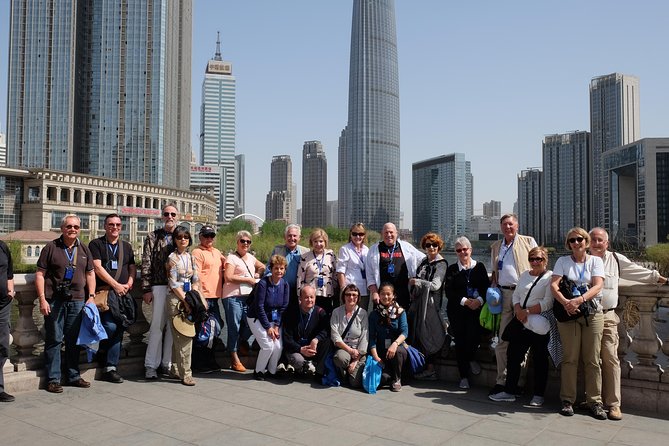
- High-speed train day flow that handles the hard part: getting from Beijing to Tianjin and back without you hunting schedules.
- Cindy Zhang’s street-by-street storytelling that helps the concessions and palace grounds actually make sense.
- Five Great Avenues and Xiaobailou—a former wealthy neighborhood feel—plus a quick look at the city’s old Western dining history.
- Jingyuan (Jing Garden), the Puyi-era residence site (1929–1931) with an included entry ticket.
- Lunch plus admissions where they count, meaning you’re not constantly paying again for basics.
Why this Tianjin day trip works better than DIY
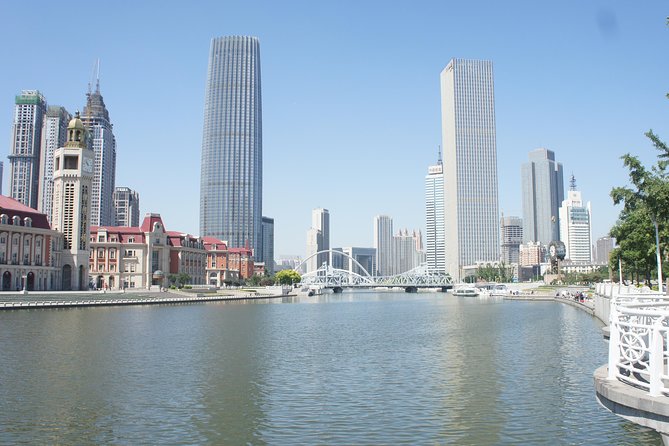
I like Tianjin most when it’s placed in context. On your own, you can absolutely take the train and wander the concessions, but you’ll spend energy figuring out what you’re looking at. This tour is designed to solve that. You’re guided through areas that once belonged to different foreign concession zones, and you get the story while you’re standing in the streets.
Tianjin is also a great “second city” option from Beijing because it’s close enough for a day trip. You get a totally different city rhythm: broad river frontage, old foreign-built structures, and shopping streets that locals actually use. The tour keeps that variety moving—train, walk, photo stops, then a more focused museum/palace-style stop with Jing Garden.
You can also read our reviews of more tours and experiences in Beijing


Price and value: what you pay, what you still pay
The tour price is listed at $234, and it’s not just a walking tour. You’re paying for hotel transfers in the defined area, a guide, lunch, transportation inside Tianjin, and selected entrance tickets (Jing Garden, plus Ancient Culture Street).
What’s not included is the return train ticket in second class. You can pay it on the tour day for CN¥118 per person. That matters for budgeting: your real cost is the tour price plus that added rail ticket.
Is it worth it? For most visitors, it usually is, because the tour removes three headaches at once:
- figuring out train timing and coordinating a day schedule
- local transit decisions once you arrive
- paying admission fees separately for the main ticketed stops
If you already have your rail plan locked down and you prefer total freedom, a DIY route could be cheaper. But if you want a structured day with someone watching the timeline, this is priced like a time-saver.
Meeting point and timing: departing Beijing South around 9:00
You start at Beijing South Railway Station (Bei Jing Nan Zhan). The day is structured for a morning departure—your train is described as leaving around 9:00 from Beijing and bringing you back to Beijing South around 19:40.
That means two things for your day:
- your morning needs to run on time (no late breakfast heroics)
- your energy has to last through multiple short walking stops and two longer visits with structure
The tour also caps at 20 travelers, which is the sweet spot for group pacing. Large groups can feel rushed; small groups usually feel easier to manage at street corners and photo pauses.
The high-speed train segment: it sets the tone
The day begins with the high-speed rail ride into Tianjin, then immediately shifts into city orientation. When you arrive at Tianjin Railway Station, the tour doesn’t dump you into the street without bearings.
Within about 15 minutes, you’re shown key river-and-bridge landmarks you can recognize later as you walk the Haihe River area. It’s a smart start because Tianjin can feel spread out, and having a “map in your head” early helps you enjoy the rest of the stops instead of just surviving transfers.
Tianjin Railway Station views: Haihe River, Jinwan Plaza, Liberation Bridge
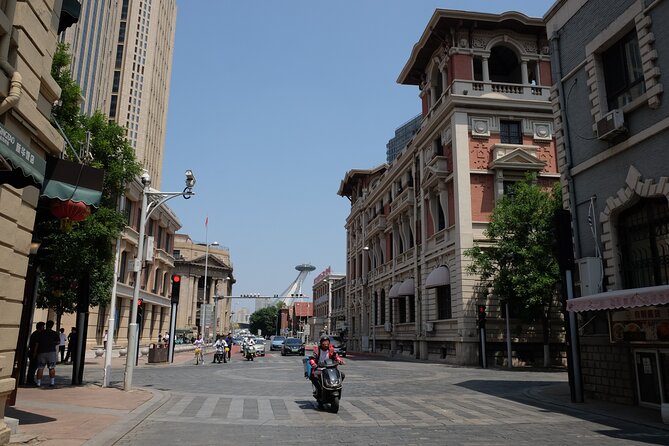
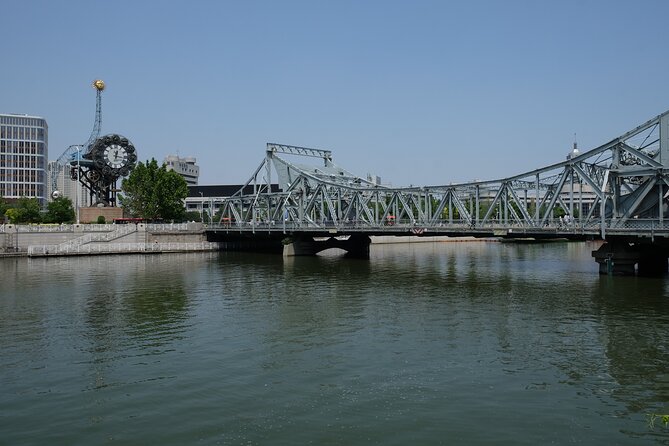
At Stop 1 you get a quick orientation at Tianjin Railway Station with sights called out like:
- the Haihe River
- Jinwan Plaza
- Liberation Bridge
- the Century Clock
Even if you don’t spend time inside buildings, this is one of those stops that gives you context. Tianjin’s identity is tied to the river corridor, and early river viewpoints help your later walks along the water feel purposeful instead of random.
Also, admission here is noted as free, so you’re not losing time or budget on entry lines.
Jiefang North Road Financial Street: French and British concessions
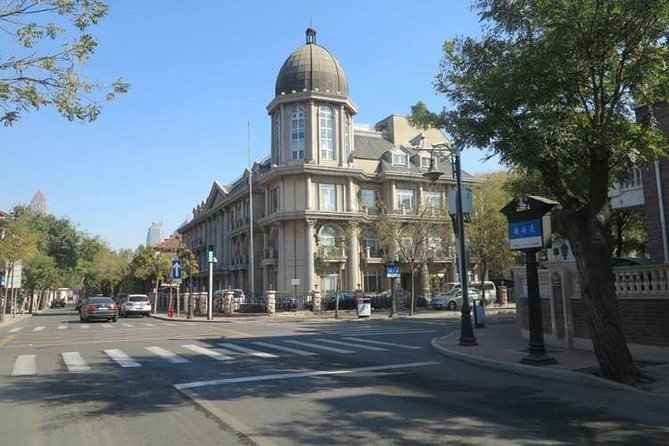
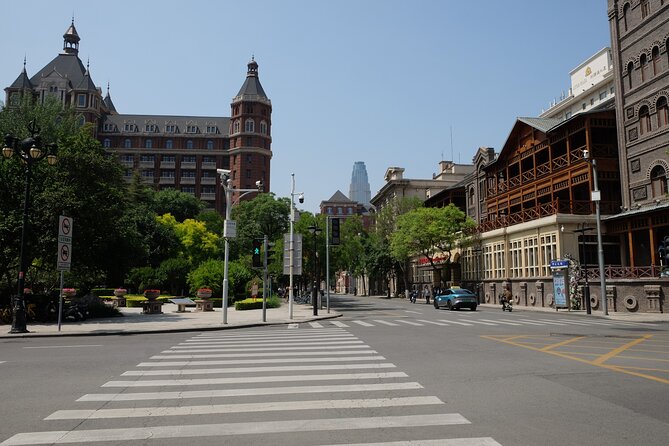
Stop 2 is where Tianjin starts to feel like a layered city. You walk along Jiefang North Road (Tianjin Financial Street) in the former concession areas—specifically areas tied to the former French concession and the former British concession.
The tour highlights historical building types you can still look for on the street:
- an early post office of the Qing Dynasty
- clubs, barracks
- consulates
- foreign firm buildings
This is a good segment for photos, but it’s also where the guide matters. The difference between “pretty old buildings” and “understanding what these blocks were for” is whether you know what to look at. With Cindy Zhang, the tour focuses on street-level meaning, so the architecture becomes readable.
Time is about 1 hour 20 minutes, which is just enough to walk, absorb, and ask questions without feeling like you’re stuck for hours.
Five Great Avenues and Xiaobailou: old Western street-grid swagger
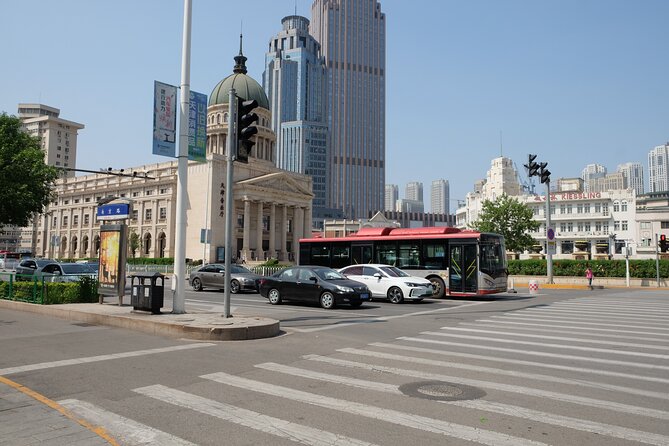
At Stop 3, you head toward Xiaobailou (Little White Building), described as the most prosperous area in Tianjin about a century ago. You also visit the Five Great Avenues area, which consists of five east–west streets—a traditional living quarter.
One specific detail I like here: you get to visit the area connected with Keissling, mentioned as one of the four Western restaurants in China. It’s the kind of small named reference that makes the neighborhood more real, instead of just architectural generalities.
This stop is about 30 minutes and the admission is free, so it’s a “see it, recognize it, remember it” segment. You won’t get a long sit-down experience here, but the short time works because you’ll see other concession-style lanes soon after.
Italian Style Town: shopping streets with a snack break
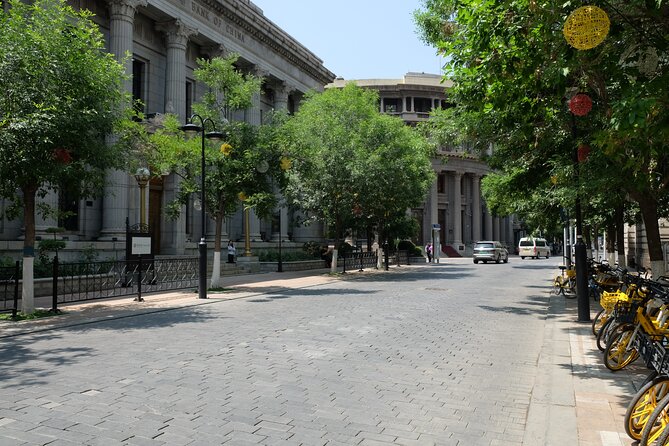
Stop 4 takes you to Italian Style Street (Italian Style Town)—the center of the former Italian concession. Today it’s described as a recreational area where you can shop, eat, and drink.
This is also where you get a practical local-food moment. The tour points out tasting Tianjin Jianbing, a type of Chinese crepe. If you’ve only had Jianbing in Beijing or elsewhere, this is a chance to try it in a place that people associate with the local street-food style.
Time here is about 50 minutes, admission free. That’s enough time to walk the lane, grab a bite, and still keep momentum.
One small caution: street-food stops can make the group spread out slightly. Keep an eye on where you’re meeting back up, especially if you’re the type who wants to explore side alleys.
Ancient Culture Street and Tianhou Palace area
Stop 5 is Ancient Culture Street (Gu Wenhua Jie), located outside Tianhou Palace. The tour frames Tianhou Palace as the earliest building in Tianjin and says it was built near the confluence of three rivers, tied to the birthplace story of Tianjin.
This segment matters because it switches gears. After concession-era streets and foreign architectural zones, you move into a traditional street setting with shopping and atmosphere around a major cultural landmark.
Time is about 50 minutes, and admission is listed as included for this stop. That means you get at least one ticketed, structured visit day—useful for balancing the free-photo stops.
Tianjin Eye (Ferris wheel): quick look at the bridge-built wheel
Stop 6 is brief—about 10 minutes—and focused on the Eye of Tianjin (Tianjin Eye). You’re told it’s the only ferris wheel built on a bridge across a river in the world, and you’ll take in the view from a good spot.
This is mostly a viewpoint and photo moment. The tour doesn’t position it as a long ride; it’s a “see it and move on” stop. Admission is listed as free, so you’re not paying just to look.
If you want a longer look, arrive early with better timing mindset. Here, the value is the river-and-bridge perspective and the fact that the tour adds it to your route instead of leaving it to chance.
Jingyuan (Jing Garden): Puyi’s residence, 1929–1931
Now for the stop with the most emotional weight. Stop 7 is Jingyuan (Jing Garden), described as one of the former residences of celebrities in Tianjin. The headline is Puyi: the last Emperor of China lived there for about two years (1929–1931).
This is an included-admission stop (ticket listed as included), and it’s about 1 hour. That duration works well because palaces and garden residences aren’t just about walking paths—you need time to understand layout and how the setting connected to status and power.
Also, this is where the guide’s style becomes obvious. In a palace-garden setting, it’s easy to feel like you’re passing rooms without meaning. Cindy Zhang’s street-and-building knowledge is especially helpful here because the tour emphasizes historical connections rather than only architecture.
Heping Road and the Porcelain House shopping stretch
Stop 8 is a more relaxed city-walk segment. You’ll see a Porcelain House, described as a French-style little building decorated with porcelain pieces and porcelain vases and ornaments.
Then you continue through pedestrian shopping streets like Heping Road and Binjiang (as referenced by the tour). Admission here is listed as free, and the time is about 30 minutes.
This stop is for atmosphere—shopping streets, small design details, and everyday city life. Don’t treat it like a huge museum segment. Think of it as the place where the day turns from guided sightseeing into walking the city’s tempo.
Haihe River Cultural Square: the wrap-up before heading home
Stop 9 brings you back to the river. At Tianjin Haihe Cultural Square, you get a walk along the Haihe River and a chance to experience local lifestyles in the riverside area. It’s a calmer finale, roughly 40 minutes, then you head back to Tianjin Railway Station to board the train.
You should be back at Beijing South around 19:40.
Admission is listed as free for this stop, so your value here is time with views and an easy end-of-day pace—less ticketing, less entry logistics, more breathing room.
Cindy Zhang’s role: why the guide quality matters on a rushed day
In a one-day trip, the guide isn’t a nice extra. It’s the difference between collecting stops and actually understanding a city.
Cindy Zhang is highlighted for being friendly and chatty, making people feel at ease. She’s also praised for knowing every street and building and for turning local history into something you can picture while walking. That’s exactly what you want on this route, because Tianjin’s meaning is tied to the streets: concession zones, former functions of buildings, and why the river matters.
She also comes across as organized and responsive—important when you’re moving from rail station viewpoints to multiple concession lanes to ticketed attractions.
If you care about history but don’t want a lecture, this tour hits a good balance: enough explanation to understand what you’re seeing, without turning your day into a classroom.
What you’ll actually do (and how hard it feels)
This is a walking-heavy day made of shorter blocks:
- several 40–50 minute or 1+ hour walking/visiting segments
- one ticketed garden visit around 1 hour
- a palace-and-garden style experience where you’ll likely want comfy shoes
- a quick ferris wheel viewpoint and multiple free-photo streets
Your physical requirement is listed as moderate fitness, which is fair. You’re not climbing mountains, but you are on your feet for long stretches.
If you’re sensitive to long walking days, bring footwear you can do all-day in, plus a layer because weather can affect comfort.
Who this tour suits best—and who might want a different plan
This one-day tour is a strong fit if you:
- want a structured Tianjin route without rail planning
- like concession-era architecture and city history explained in plain language
- want lunch included and selected admissions handled
- appreciate a guide who knows the street-level story and keeps things organized
You might choose a different approach if you:
- hate tight schedules and prefer long time at fewer locations
- want to roam independently in shopping streets without group timing
- don’t want to add the extra second-class return train ticket on top of the tour price
Should you book it? My practical take
If your goal is a first taste of Tianjin with the main sights connected into a single story, I’d book it. The biggest strength is not the number of stops—it’s that the day is managed so you don’t waste time guessing.
The value calculation is simple:
- You get transport support, a guide, lunch, and ticketed time at Jing Garden and Ancient Culture Street.
- You only have a clear extra rail cost for the return in second class.
If you’re the type who enjoys walking through meaningful streets (not just taking landmark snapshots), this fits your style.
One last tip: check the weather on the day. The tour notes it requires good weather, and if it gets canceled for poor conditions you’ll be offered another date or a full refund.
FAQ
How long is the Tianjin day tour from Beijing?
The duration is listed as about 11 hours.
What is included in the price?
Included items are hotel transfers within the defined area, transportation in Tianjin, guide service, entrance tickets to Jing Garden, and lunch.
What attractions are ticketed?
Jing Garden is included, and Ancient Culture Street (Gu Wenhua Jie) is also listed as admission included.
Do I need to buy the train ticket back to Beijing?
Yes. Return train tickets (second class) are not included, and you can pay CN¥118 per person on the tour day.
Where do I meet the tour?
The start meeting point is Beijing South Railway Station (Beijing Nan Zhan).
Is hotel pickup available?
Pickup is offered for hotels in the defined area. Transfers outside that area may cost extra.