REVIEW · BEIJING
Beijing Culture: Tea Ceremony, Heritage Instrument & Calligraphy
Book on Viator →Operated by Culture Heritage Tour China · Bookable on Viator
Tea, strings, and brushwork—no crowds. In about 2.5 hours in Beijing’s Chaoyang area, you get hands-on tea ceremony guidance and learn how three core traditions connect.
I particularly love two parts: first, you don’t just listen to a Guqin performance—you learn a full melody with live instruction. Second, the calligraphy workshop is real brushwork with meaningful traditional characters, and you come away with something you can keep.
One thing to consider: the experience requires good weather, and the meeting point is at 813 Creative Park—so build extra time for getting there.
In This Review
- Key moments you’ll remember
- Why this Beijing culture workshop feels different from the usual show
- The 2.5-hour flow: tea, Guqin, calligraphy (and why the order works)
- Tea ceremony with a certified tea master: more than tasting
- The Guqin lesson: playing a full melody, not just listening
- Calligraphy workshop with traditional characters: accuracy with meaning
- The venue vibe at 813 Creative Park: calm, air-conditioned, and photo-ready
- Price and value: is $78.60 worth 2.5 hours?
- Who this fits best (and who should think twice)
- A few practical tips before you go
- Should you book this Beijing culture experience?
- FAQ
- How long is the Beijing Tea Ceremony, Guqin & Calligraphy experience?
- Where is the meeting point in Beijing?
- Do I need transportation to the venue?
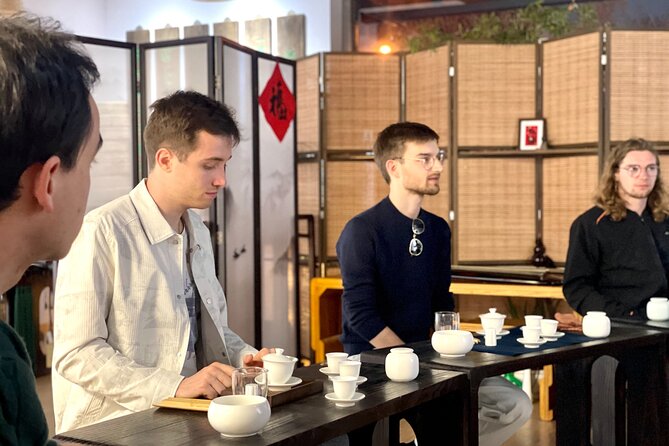
- Is the tea ceremony included, and do I taste the tea?
- Do I get to play the Guqin or only watch?
- Is the calligraphy workshop hands-on?
- What about traditional clothing for photos?
- How large is the group?
- Will I get confirmation after booking, and how quickly?
- What happens if weather is poor or I need to cancel?
Key moments you’ll remember
- Closed-to-the-public heritage venue with a calm, curated atmosphere (and air-conditioning)
- Tea tasting with a certified tea master you can ask questions to
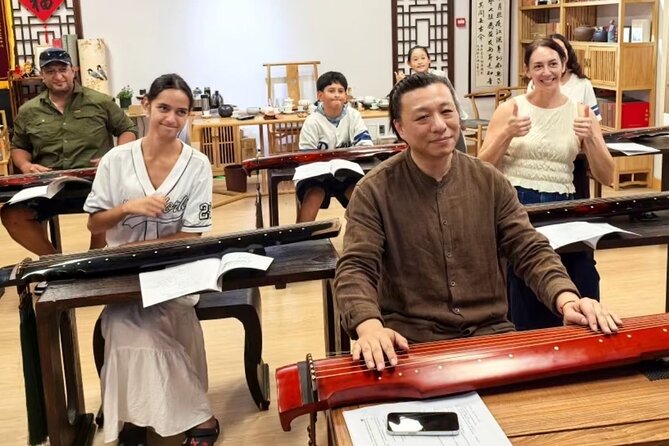
- Guqin learning session built around playing a complete melody, not just watching
- Chinese calligraphy workshop with expert guidance on traditional characters
- Traditional outfit attire rental for ritual, comfort, and photos
- Small group (max 8) with a bilingual guide (M.A. in History & Sociology)
Why this Beijing culture workshop feels different from the usual show
This isn’t the kind of activity where you sit politely, clap on cue, and leave with photos but no new skill. The format is built around you doing the work: brewing tea, learning your way through a Guqin melody, and writing characters with a brush.
The setting matters, too. You start in a private heritage venue that’s described as closed to the public, so you get the quiet rhythm that these traditions depend on. Add a small group size—maximum 8—and it feels like a careful lesson rather than a crowd event.
And yes, it’s designed to be English-friendly. You’ll have a bilingual guide with an M.A. in History & Sociology, and the instruction is meant for people who want understanding, not just “look at that” moments.
You can also read our reviews of more historical tours in Beijing

The 2.5-hour flow: tea, Guqin, calligraphy (and why the order works)
The whole workshop runs about 2 hours 30 minutes, and the sequence is part of the design.
You begin with tea. That first step slows everything down. It gets you thinking about ritual, attention, and patience—things you’ll need later when your hands are doing the Guqin and your arm is doing brushwork.
Then comes Guqin. You’ll hear a live heritage artist perform, and you’ll also have a hands-on session learning how to play a full melody. This is the section where the room’s calm turns into focus: you’re not just admiring an instrument, you’re learning how it speaks.
Finally, you move to calligraphy. Writing characters isn’t quick, and that’s the point. The instruction helps you understand what you’re drawing and why it carries meaning, not just how to copy shapes.
If you like activities where you leave with muscle memory and a clearer mind, this timing makes a lot of sense.
Tea ceremony with a certified tea master: more than tasting
Tea ceremony here includes both a traditional ceremony and tea tasting, guided by a certified tea master. That means you’re not limited to one “flavor sample.” You get guidance that’s meant to connect the steps of the ritual to the feelings they’re designed to create.
I like that tea is treated like a practice, not a gimmick. Even if you’ve had tea before, the ceremony format asks you to notice things you might otherwise rush past—warmth, aroma, and the pacing of each step.
Also, this workshop pairs tea with explanation from a guide trained in history and sociology. That combo helps you avoid the common problem of “I enjoyed it, but I don’t really know why it matters.” You’re learning the logic behind the ritual as you do it.
The Guqin lesson: playing a full melody, not just listening
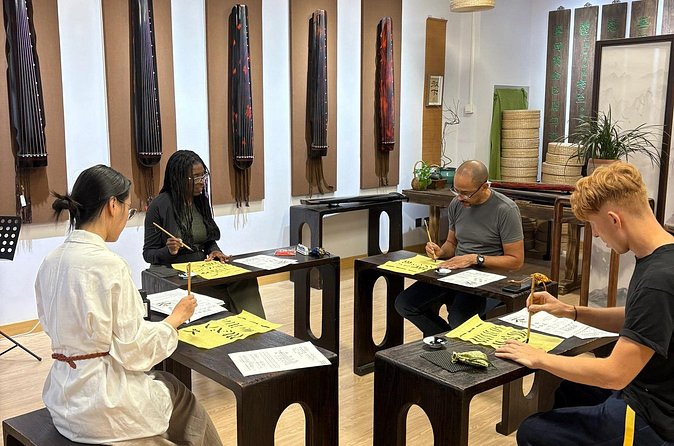
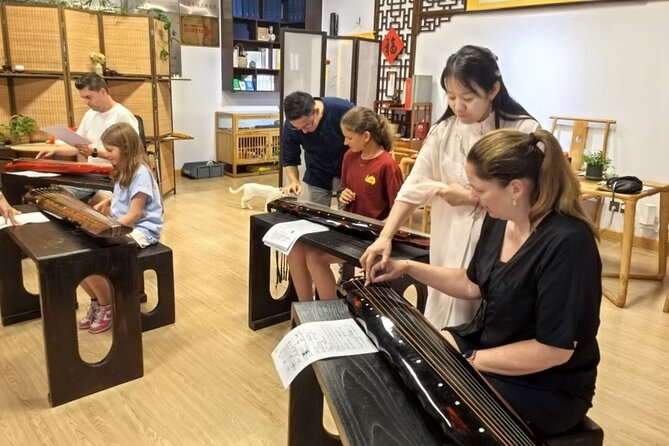
A Guqin is one of China’s most revered ancient instruments, and this experience treats it with respect. You’ll start with a live Guqin performance by a national-level heritage artist, then you get a hands-on learning session.
The big value is the hands-on part. A lot of cultural experiences stop at watching. Here, the goal is that you can try to play a complete melody, guided by someone who actually plays at a high level.
The instruction style is also described as quiet and personal—think guidance that helps you place your fingers and follow the flow of the music. If you enjoy learning music by doing rather than just listening, this is the moment you’ll talk about after the trip.
One practical note: Guqin playing is subtle and slower than many western instruments. If you expect a fast, energetic class, you might need to adjust your mindset. The reward is in the stillness and precision.
Calligraphy workshop with traditional characters: accuracy with meaning
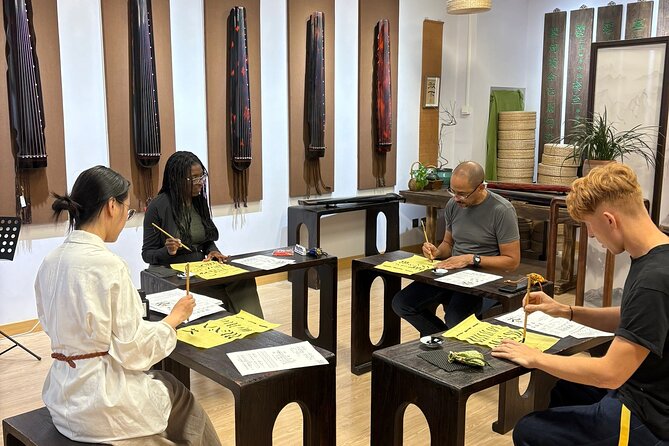
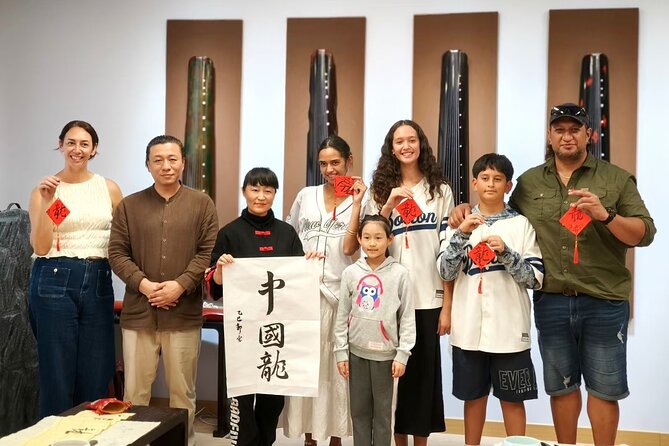
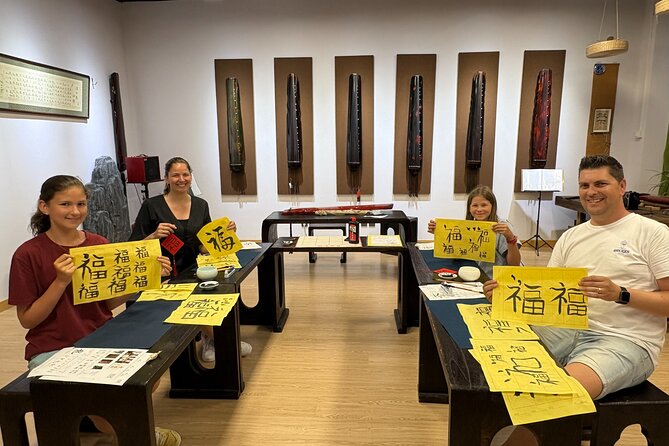
The calligraphy portion is a hands-on workshop with expert guidance. You’re not just copying random strokes—you’re writing meaningful Chinese characters and learning their ancient roots.
This is the part that many people find surprising. Brush calligraphy can look simple from far away, but it’s controlled and physical. Your hand has to learn a rhythm, and your brain has to stop thinking in shortcuts.
One detail that stands out in the experience descriptions: there’s support for writing personal characters. You may even write your Chinese name during the session, and you’ll take the paper with you to keep. That turns calligraphy into a souvenir with meaning, not just an artwork you bought.
Tip for your expectations: give yourself patience. Good calligraphy isn’t about speed. It’s about steady movement, consistent pressure, and letting the brush do what it’s meant to do.

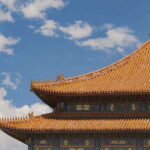

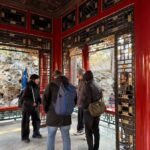
The venue vibe at 813 Creative Park: calm, air-conditioned, and photo-ready
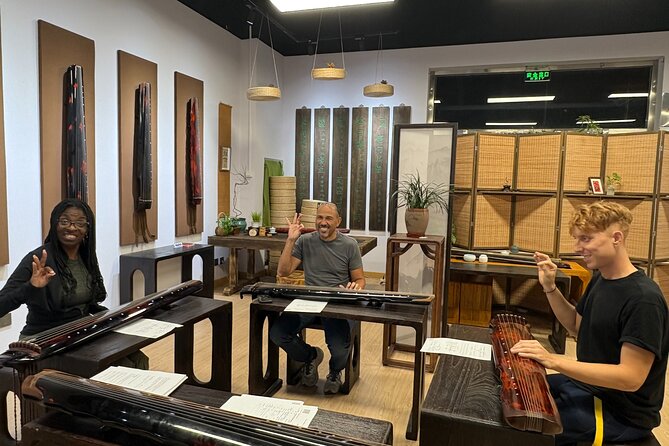
Your meeting point is 813 Creative Park (VGP3+CCX), Chaoyang, China, 100124, and the activity ends back at the same meeting point. Since transportation to and from the venue isn’t included, I’d plan to arrive a bit early and keep your route simple.
Inside, the experience is described as a serene, air-conditioned cultural haven—a private heritage venue with a peaceful setup. That’s not just comfort. It’s part of why tea, Guqin, and calligraphy work together. These traditions don’t compete with noise.
You also get traditional outfit attire rental for ritual and photos. This is practical because it makes the experience feel complete, but it also helps you look like you belong in the setting. If you’re the type who enjoys dressing for cultural moments in a respectful way, this will be fun without feeling like a costume party.
And because the group is kept small, you’re less likely to feel rushed through each station.
Price and value: is $78.60 worth 2.5 hours?
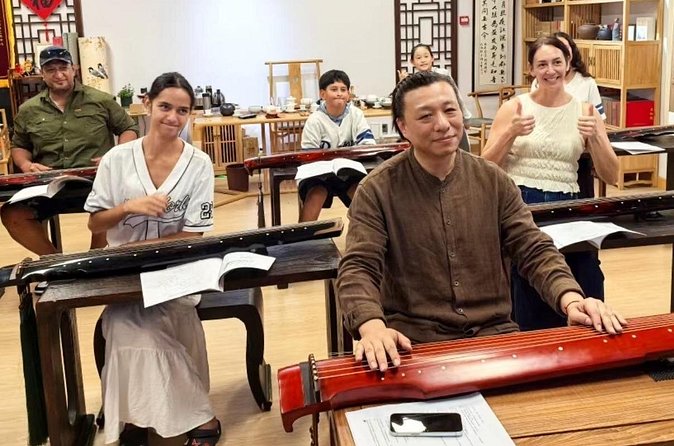
At $78.60 per person for about 2.5 hours, you’re paying for more than “entry” to a cultural site. You’re paying for access to instructors described as national-level cultural masters and for multiple skill-based components: tea ceremony, Guqin performance and learning, calligraphy instruction, and outfit rental.
Here’s the value logic I’d use before booking:
- You’re learning skills, not just watching. Tea, Guqin melody practice, and calligraphy all require guidance.
- You’re getting expert time in a small group (max 8). That’s usually where experiences either shine or feel crowded.
- You get materials/outcomes like calligraphy paper to keep, plus a photo-ready moment in traditional attire.
- You get context from a bilingual guide (M.A. in History & Sociology), which can turn a pleasant activity into a meaningful one.
Is it cheaper than a museum ticket? Yes. But it’s also a different category of experience: a lesson with living tradition, not a collection behind glass.
If your trip already includes big-ticket sights in Beijing, this is the kind of add-on that adds depth instead of just another landmark stamp.
Who this fits best (and who should think twice)
This works especially well if you:
- Want a quieter, indoor cultural activity that’s a break from sightseeing chaos
- Like hands-on learning where you leave with new skills
- Appreciate traditions where meaning matters, not just performance
- Prefer small groups and personal instruction
It may be less ideal if you:
- Need a fast-paced agenda. The tone is calm and skill-based.
- Expect broad sightseeing stops. This is about one heritage workshop, not a multi-site city tour.
- Are traveling when weather is unpredictable, since the experience requires good weather.
A few practical tips before you go
- Plan your route to 813 Creative Park in Chaoyang ahead of time since transportation isn’t included.
- Wear something you can move in comfortably for calligraphy and Guqin practice. You’ll be seated, but your arms and hands will work.
- If you’re camera-focused, use the traditional outfit rental time wisely. It’s included and built into the rhythm of the ritual/photo moment.
- Bring a calm mindset. Tea, music, and brushwork reward patience.
Should you book this Beijing culture experience?
I’d book it if you want the “living culture” side of Beijing—quiet, hands-on, and guided by people who practice what they teach. The small group limit, the combination of tea + Guqin + calligraphy, and the fact that you learn (not just watch) make it a strong choice for travelers who are tired of the usual scripted performances.
Skip it if you only want a short, casual activity with zero effort. This workshop gives you more by asking you to participate.
If you’re looking for one of the most meaningful breaks you can take from Beijing sightseeing, this is a smart candidate.
FAQ
How long is the Beijing Tea Ceremony, Guqin & Calligraphy experience?
It lasts about 2 hours 30 minutes.
Where is the meeting point in Beijing?
You meet at 813 Creative Park (VGP3+CCX), Chaoyang, China, 100124, and the tour ends back at the same meeting point.
Do I need transportation to the venue?
No. Transportation to and from the venue is not included.
Is the tea ceremony included, and do I taste the tea?
Yes. The experience includes a traditional tea ceremony and tea tasting with a certified tea master.
Do I get to play the Guqin or only watch?
You do both. There’s a live Guqin performance by a national-level heritage artist and a hands-on Guqin learning session.
Is the calligraphy workshop hands-on?
Yes. You’ll participate in a Chinese calligraphy workshop with expert guidance.
What about traditional clothing for photos?
Traditional outfit attire rental is included for ritual and photos.
How large is the group?
The experience has a maximum of 8 travelers.
Will I get confirmation after booking, and how quickly?
Confirmation is received within 48 hours of booking, subject to availability.
What happens if weather is poor or I need to cancel?
The experience requires good weather. If it’s canceled due to poor weather, you’ll be offered a different date or a full refund. There’s free cancellation up to 24 hours in advance for a full refund.