REVIEW · BEIJING
3-Hour Private Night Tour: Beijing Foodie Experience
Book on Viator →Operated by Unique Beijing Tours · Bookable on Viator
Night food here beats dinner plans. This private 3-hour route through Dongsi Hutong turns Beijing street food into a guided snack map you can follow after dark.
I love the hotel-lobby meet-up and the way guides like Lucy, Kevin, and Roy help you order without second-guessing. I also love the variety of bites, from lamb kabobs and Erguotou to sesame cakes, cold noodles, and Yunnan Cross Bridge rice noodles.
One caution: this is a walking-and-stopping night. If someone in your group needs a slower pace or you have a sensitive stomach, tell the guide up front so choices and timing can work better.
In This Review
- Key things that make this Beijing night tour work
- Beijing after dark in Dongsi Hutong: why this area fits a foodie night
- Hotel pickup and the first hour: meeting in your lobby and getting oriented fast
- Xinjiang Taste Restaurant: lamb kabobs, sides, and the Erguotou moment
- LongFuSi Jie and Zhangzizhong Street: tanjianbing and the street-snack checklist
- Sichuan kabobs and the spicy side: when the tour turns hot
- The Yunnan cuisine stop: flower cake, plum liquor, and Cross Bridge noodles
- Dish-fired bamboo worm: the optional adventure tasting (own expense)
- That snack-set finish: sweet bean, millet porridge, and rice cake comfort
- Price and value: what $79.20 buys you, plus the likely extra costs
- How to make the tour comfortable: pace, preferences, and vegetarian options
- Who this Beijing night tour is perfect for (and who should think twice)
- Should you book? My honest call
- FAQ
- How long is the 3-hour private night food tour?
- Where does the tour take you during the evening?
- Is hotel pickup included in the price?
- What kinds of food are included in the tastings?
- Do I have to try the bamboo worm?
- Can the tour accommodate vegetarian diets or dietary restrictions?
- Is this a private tour or shared group tour?
- Can children join, and is there an age limit?
- What is the cancellation policy?
- Do I need a paper ticket?
Key things that make this Beijing night tour work
- Private guide, private group: you eat at your speed and skip the awkward crowd rhythm
- Hotel pickup when you’re in the city: fewer steps before you start tasting
- Kabobs + tanjianbing combo: savory first, then a hot, pan-fried street staple
- Several cuisine styles in one route: Xinjiang, Sichuan, and Yunnan show up in the same evening
- Dietary tailoring is real: vegetarian options are available if you plan ahead
- Optional bamboo-worm tasting: for the true adventure food crowd, and only if you want it
Beijing after dark in Dongsi Hutong: why this area fits a foodie night
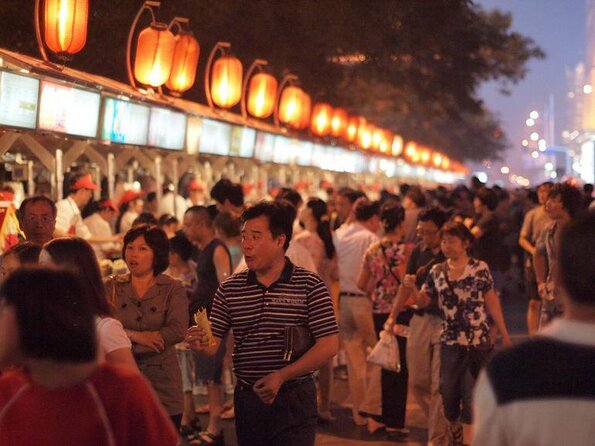
Dongsi Hutong isn’t just a photo stop. At night, those narrow lanes feel like a working neighborhood, not a museum set. That matters, because this tour is built around food you’re more likely to actually taste in local spots than in a restaurant-with-a-view.
You’re also not stuck with one style of food. The route mixes Xinjiang flavors (kabobs), classic Beijing street snacks (like tanjianbing and sesame cakes), and southern Chinese comfort dishes from Yunnan. You end up with a mini “China in one evening” story, without needing a train ticket or a second tour.
And since it’s a private night experience, the guide can steer you toward what makes sense for your group—especially if you want to go lighter, avoid certain ingredients, or just focus on the stand-out dishes.
You can also read our reviews of more tours and experiences in Beijing
Hotel pickup and the first hour: meeting in your lobby and getting oriented fast
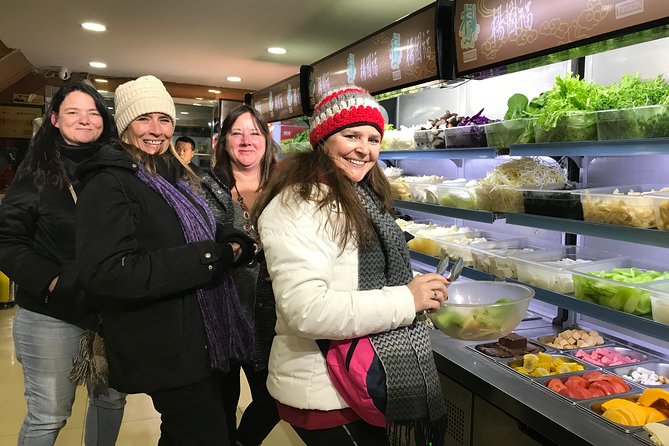
The night starts with the guide meeting you at your hotel lobby. If your hotel is inside the city area, pickup is free; if not, there’s an extra transport fee listed for getting to the Hutong area. Either way, the point is simple: you should spend your energy on tasting, not on figuring out buses at night.
In many cases, guides also use a practical mix of taxis and public transport depending on where you’re staying and what’s easiest that evening. The tour is designed to keep logistics smooth, and it helps that the stops cluster around known snack areas rather than spreading you across the whole city.
Once you’re set, you move into the Hutong lanes with a guide who points out how the neighborhood shapes daily life—where food is bought, how people snack, and why certain dishes show up again and again.
If you’re visiting Beijing for the first time, this is a smart way to get your bearings. You learn how to order in local places without translating every menu item yourself.
Xinjiang Taste Restaurant: lamb kabobs, sides, and the Erguotou moment
The first big tasting stop centers on kabobs at Xinjiang Taste Restaurant. You’re not doing one “signature skewer.” You’re trying 3–5 types of kabobs, often including lamb kabobs, with side dishes like eggplant, garlic, leeks, and other add-ons such as beans and nang.
This stop is where the tour earns its stripes. Beijing food tours can sometimes feel like a parade of random plates. Here, the kabob section gives you a baseline: you learn how the different skewers taste, how seasoning works, and how the sides balance the heavier meat flavors.
Then comes a cultural drink test: Erguotou, described as traditional Chinese white liquor. It’s part of the tasting, but it’s also the clearest fork in the road for some people—if you don’t drink alcohol, you should tell the guide early so your tasting plan still feels fun rather than awkward.
What I like about this stop for your value-for-money is that it teaches you how the meal fits together. You’re not just consuming; you’re learning what to look for next time you see a similar dish.
LongFuSi Jie and Zhangzizhong Street: tanjianbing and the street-snack checklist
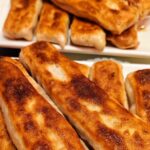
After the kabob-focused start, the tour moves into the real street-food rhythm. One of the standout items here is tanjianbing—a savory pan-fried pancake that locals love. It’s hot, crispy, and built for handheld eating. If you’ve only had “pancakes” as breakfast food elsewhere, this one is a total different lane.
Along the same street zone, you’ll also run into classics like:
- sesame cakes (sweet and nutty depending on the version)
- Ma hua and other doughy snacks
- zongzi (glutinous rice dumplings)
- baozi (steamed buns)
- Beijing jar yogurt
- tanghulu, the crabapple candy skewer
You’ll also see drinks like peanut beverage or orange soda, which helps when you’re tasting multiple hot items back-to-back.
One practical point: this part of the tour can feel like tasting fast. That’s not a bad thing—it’s a night food tour—but it’s smart to go in hungry and pace yourself. If you know you get full quickly, ask the guide to slow down a bit between stops.
Sichuan kabobs and the spicy side: when the tour turns hot
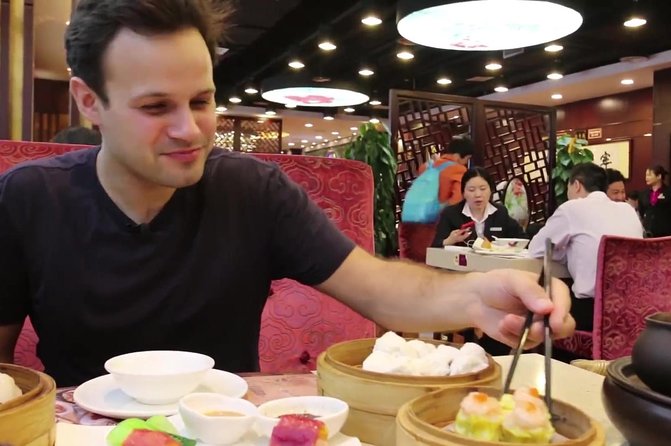
Some of the tasting includes a section focused on Sichuan kabobs—with notes that you may try 5–12 kabobs here. This is where you get more heat and more seasoning complexity compared with the earlier kabob stop.
You’re still in a familiar format (skewers, bites, shared tables), but the flavor style can shift from “savory-forward” to “spice-aware.” If you’re sensitive to heat, tell the guide before ordering—guides can often help you choose milder versions or adjust what you eat.
This stretch is also where the tour can land slightly more on salty than sweet. Some people appreciate that, since it keeps the tasting consistent. Others prefer a stronger sweet finish. If you’re in the second group, it’s worth mentioning your preference to your guide at the start.
You can also read our reviews of more private tours in Beijing


The Yunnan cuisine stop: flower cake, plum liquor, and Cross Bridge noodles
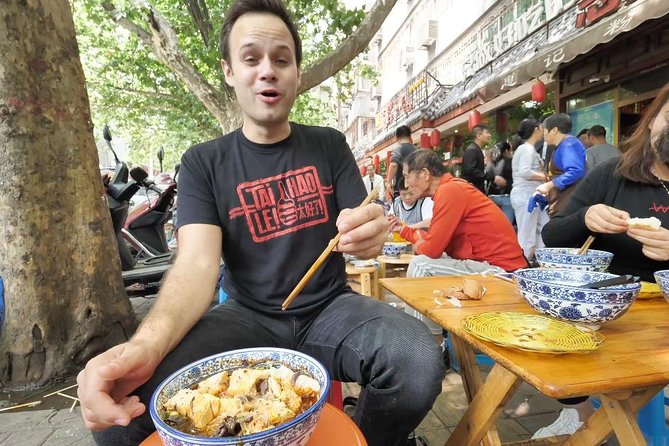
Then the tour shifts provinces—at a local restaurant serving Yunnan cuisine. This is one of the most satisfying parts because Yunnan dishes tend to feel different from the northern snack lane.
You may try:
- flower cakes
- plum liquor
- cold cakes made of pea
- grilled bread covered by rice flower
- rice wine
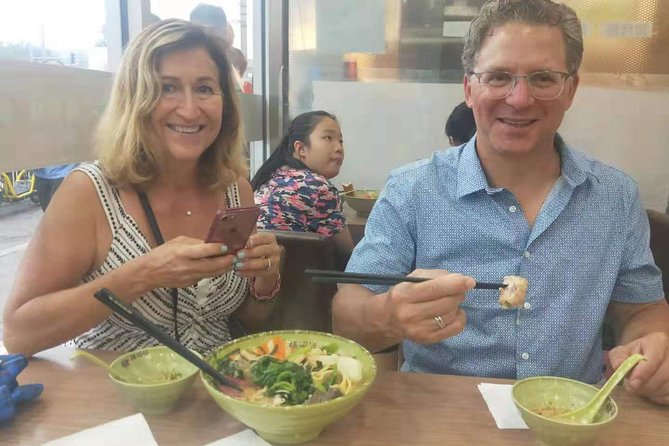
- Cross Bridge rice noodles
Cross Bridge rice noodles are famous for a reason: the dish is built around layers and timing. On a food tour like this, you get a chance to taste it without needing the restaurant know-how to order correctly.
Also, there’s a “hands-on culture” angle here. The guide is meant to explain ingredients and what the dish represents locally, so you get more meaning than just flavor. I like that because it turns your final meal back into knowledge you can actually use on future trips.
Dish-fired bamboo worm: the optional adventure tasting (own expense)
Here’s the part of the night that lets you choose how daring you want to be. The tour notes that if you’re an adventure foodie, you can try a famous dish-fired bamboo worm option at your own expense.
Important: this is not required tasting. It’s presented as optional, so you can skip it without ruining the rest of the meal.
If you do try it, go in with the right mindset. This is more about the experience of local food culture than about expecting something like popcorn or shrimp chips. If insects are a hard no, simply tell the guide and focus on the rest of the Yunnan and snack set.
That snack-set finish: sweet bean, millet porridge, and rice cake comfort
Beyond the named restaurant tastings, you may also get a Beijing Snack Set style platter that includes items such as:
- glutinous rice roll with sweet bean flour
- yellow pea cake
- steamed rice cakes with sweet stuffing
- seasoned millet porridge
- and more small bites
This portion is useful because it rounds out the night. You get more soft, starchy, comfort-food textures after the earlier skewers and hot pancakes. It’s also where sweetness shows up more clearly for people who want a dessert-like ending.
If you’re the kind of eater who hates wasting calories, this is a great way to avoid “we tried everything but nothing felt like dessert.”
Price and value: what $79.20 buys you, plus the likely extra costs
At $79.20 per person, this tour is positioned as mid-range for a private night food plan in Beijing. The value comes from two things that matter most:
1) Private guide time for about 3 hours
2) Multiple tasting stops across different regional styles, plus hotel pickup when eligible
You’ll still want to budget for extras that aren’t included. The tour lists transport as not included, with a fee noted for getting from your hotel to attractions and to the Hutong area (listed as $5 per person). If your hotel is within the city area, pickup is described as free, so the exact cost depends on where you stay.
There’s also dish-fired bamboo worm noted as own expense.
Here’s my practical take: if you’re staying outside the pickup-friendly zone, the “plus transport” cost can make the deal feel less sharp. If you’re in or near the city center and can start in your lobby, it becomes easier to justify—especially because you’re not wasting time or money on trial-and-error meals.
How to make the tour comfortable: pace, preferences, and vegetarian options
This tour is built for most people, and it’s explicitly set up as a private group experience, so the guide can adjust orders and pacing. That’s a big deal in Hutong lanes, where the spacing is tight and the stops can move quickly.
Vegetarian options are available if you request them at booking. That’s the kind of detail that determines whether you enjoy the night or spend it feeling left out.
Also, based on real feedback from guides’ styles, some guides handle different needs well—one guide was praised for keeping an elderly parent moving at the right pace and checking preferences while ordering. Another guide was noted for being funny while still staying organized, which can make a dense tasting route feel lighter.
One more consideration: the schedule is tight at about 1 hour per major stop cluster. If your group has mobility limits or you’re recovering from illness, talk to the guide early and be honest about pace. A private guide can help, but it’s best to set expectations from the start.
Who this Beijing night tour is perfect for (and who should think twice)
Book this if you want:
- a guided route through Dongsi Hutong without guessing what to order
- a strong mix of kabobs, street pancakes, and noodle dishes
- a private experience where you can ask for adjustments (including vegetarian planning)
- an evening activity that feels like local life, not a packaged show
Think twice if you:
- hate walking and want a mostly seated plan (there is movement between lanes and eateries)
- avoid alcohol and don’t want any liquor tasting near your plate (tell the guide so your tasting order can be adjusted)
- have a very limited diet and want to be extremely strict—request specifics early, since the menu is still very food-street oriented
Should you book? My honest call
If you’re aiming for a high-impact first Beijing food night, this is a strong pick. The mix of Xinjiang kabobs, tanjianbing, and a Yunnan stop with Cross Bridge rice noodles gives you range, and the private guide factor makes it easier to navigate unfamiliar dishes.
At $79.20, it’s not the cheapest way to eat in Beijing, but it’s also not just “one restaurant meal.” You’re paying for time, translation-free ordering help, and the ability to hit several standout foods in a short evening window.
If you’re staying centrally and can start with free pickup, it becomes even better value. If you’re farther out, factor in transport fees early so the price feels fair.
FAQ
How long is the 3-hour private night food tour?
The tour runs for about 3 hours.
Where does the tour take you during the evening?
The route focuses on the Dongsi Hutong area, with tasting stops around LongFuSi Jie and Zhangzizhong Street, plus a Yunnan cuisine restaurant stop.
Is hotel pickup included in the price?
Pickup is offered. If your hotel is inside the city, pickup is free. Transportation fees are listed as not included, including charges related to getting to the Hutong area and attractions.
What kinds of food are included in the tastings?
Expect kabobs (including lamb kabobs and Sichuan kabobs), tanjianbing, sesame cakes, peanut milk or peanut drinks, cold noodles, steamed rice cakes, baozi, Beijing jar yogurt, tanghulu, and Yunnan dishes like flower cake and Cross Bridge rice noodles. The tour also mentions a Beijing Snack Set.
Do I have to try the bamboo worm?
No. The bamboo worm is offered as an optional tasting at your own expense.
Can the tour accommodate vegetarian diets or dietary restrictions?
Yes. Dietary restrictions are accommodated, and a vegetarian option is available if you request it at booking.
Is this a private tour or shared group tour?
It’s private. Only your group participates.
Can children join, and is there an age limit?
Children must be accompanied by an adult. Age under 4 is free to join.
What is the cancellation policy?
You can cancel for a full refund up to 24 hours before the start time. If you cancel within 24 hours, the amount paid is not refunded.
Do I need a paper ticket?
No. The tour offers a mobile ticket.