REVIEW · BEIJING
Beijing Half Day: National Museum of China In-depth Tour with Subway Transfer
Book on Viator →Operated by Beijing Meitu Travel Agency Co., Ltd. · Bookable on Viator
5000 years, in one half-day. This tour makes the National Museum of China feel doable, with an English guide steering you toward the most meaningful pieces across prehistoric to modern China. I especially like the hotel pickup plus museum ticket booking, which saves you from ticket-snag stress.
And yes, big museum days can get messy fast, but the structure helps. Your guide will work with the crowd so you don’t just wander in circles.
A possible drawback: the museum is very crowded, and with only about three hours on the exhibits, you’ll need to accept that you’re seeing the best hits, not everything.
In This Review
- Key highlights that make this tour worth your time
- First stop: getting to the museum without burning your morning
- National Museum of China in-depth: Ancient China highlights that actually connect
- What to expect from the pace
- Ancient Buddha Statue rooms: when the tour slows just enough
- Subway transfer and meeting points: small details that reduce stress
- English-guide value: why this is not just a museum admission
- Price and value check for $114 per person
- Who this half-day National Museum tour is best for
- Practical tips for getting the most from your 4 hours
- Should you book this National Museum of China tour?
- FAQ
- What are the tour start times?
- How long is the tour?
- Is admission to the National Museum included?
- How do you get from the hotel to the museum?
- Is this a private tour?
- Can I cancel for a full refund?
Key highlights that make this tour worth your time

- Ticket handling that spares you the hardest part of booking
- Crowd-smart pacing led by guides like Mike, Cathy, and Diana
- Ancient China Exhibition Hall in 2 focused hours, with specific show-stoppers
- Ancient Buddha Statue rooms for Song dynasty art and context
- Hotel pickup plus subway or taxi transfer, so you arrive ready to start
First stop: getting to the museum without burning your morning
The smartest part of this experience is how it treats the pre-museum chaos. You meet your guide at your hotel lobby either at 8:30am or 1:00pm, then you head over by subway or taxi. This matters because Beijing museums can swallow time fast—especially if you’re coordinating transport while also trying to figure out where to go first.
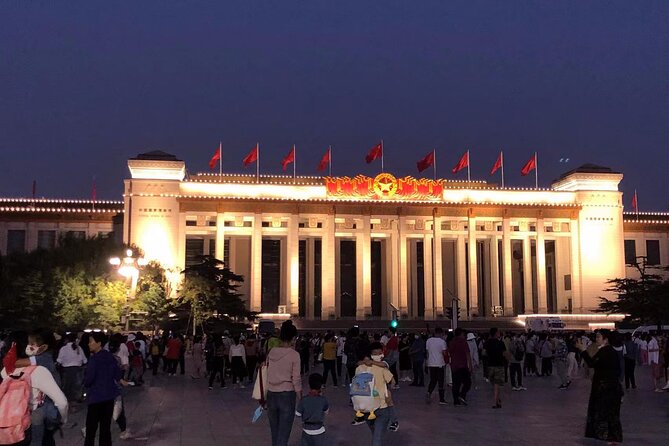
Once you’re at the National Museum of China, your guide’s job starts right away: helping you go from overwhelmed to oriented. Even if you already have museum maps, the building is huge and the collections are deep. A guide gives you a route that actually makes sense for a half day.
I also like that pickup and transfer are built in. For many visitors, that’s the difference between a smooth morning and a stressful scramble. You’re not guessing. You’re not chasing directions. You’re showing up and starting.
You can also read our reviews of more museum experiences in Beijing


National Museum of China in-depth: Ancient China highlights that actually connect
Your main museum time is in the Ancient China Exhibition Hall for about 2 hours. This is where the tour earns its name: not just walking past display cases, but linking objects to stories you can remember.
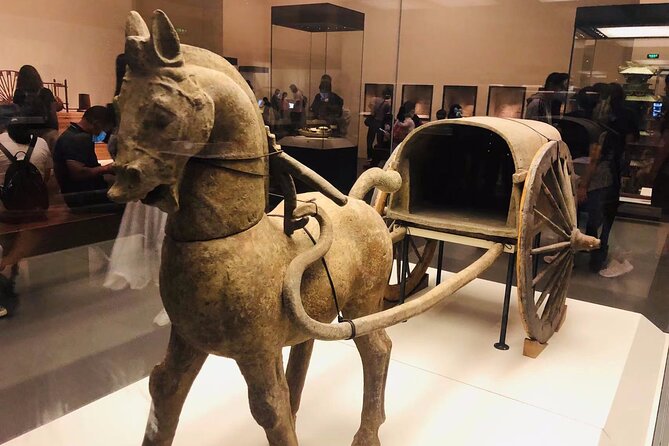
Expect to see a mix of famous and truly odd artifacts—the kind of things that make you stop mid-gallery and re-check what you’re looking at. The tour description points to unsolved-mystery painted pottery jars, the famous reputation of the first dragon style artwork called the Jade Dragon, and even a display described as a refrigerator from about 2000 years ago. Yes, a refrigerator. That alone is worth the ticket.
This is also where you’ll get guided context for big-ticket relics, including:
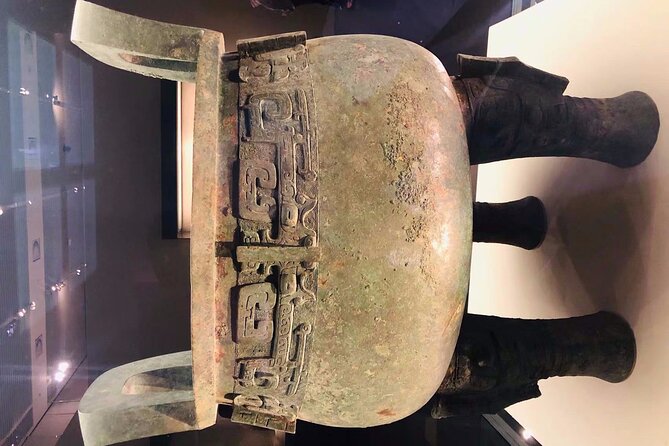
- Si Mu Wu Ding, the hall treasure unearthed in 1939 from Henan Province
- Siyang Fangzun, featuring horn sheep facing the four directions
- A look at the Sanxingdui civilization and what it represents
- Coverage from prehistoric material (as far back as about 2 million years ago, based on the tour overview) through to relics tied to 1911
Here’s what I think is most valuable for you: the guide helps these pieces stop being random “cool artifacts” and start being evidence of how Chinese civilization changed over time. In a museum this size, that’s huge. Without a plan, you can easily spend your time reading labels and still feel like you learned nothing.
One more practical note: on busy days, you don’t just stand in line for forever. The guide helps you work around crowd flow, so you keep moving through the right galleries. That shows up again and again in the feedback—people praised guides who could stay calm and pick good moments to see key rooms.
What to expect from the pace
Two hours in a major permanent exhibition is a sprint, not a stroll. You’ll see major selections, but you won’t get endless time in every chamber. If you’re the type who likes to sit with one object for ten minutes, you’ll need to compromise. Think: fast, clear, and focused.
Ancient Buddha Statue rooms: when the tour slows just enough
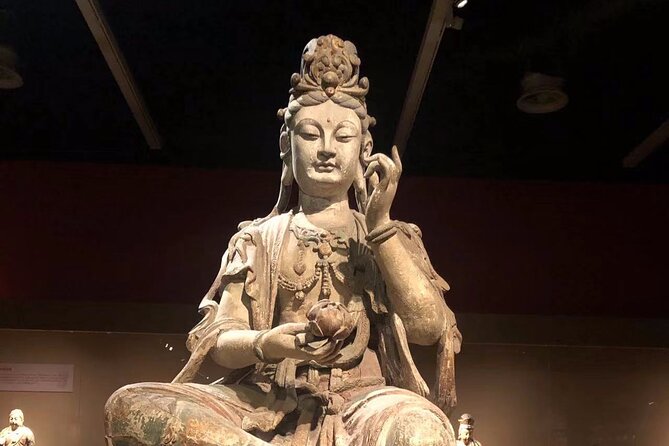
After the Ancient China hall, you shift to the Ancient Buddha Statue exhibition room area for about 1 hour. This is a different kind of museum experience. Instead of raw prehistory and state-building relics, you’re looking at art meant to express devotion and spiritual ideals.
The tour highlights a specific standout: a painted wooden statue of Guan yin from the Song Dynasty. The comparison given is that its image and peaceful smile can be discussed in the same breath as the Mona Lisa—meaning the face and expression are the point, not just the material.
You’ll also have time to see Buddha statues from different times, with the guide connecting style changes to what those eras valued. The tour description also mentions a food culture exhibition, so if that’s included in your route that day, it’s a nice shift in tone—less solemn, more everyday.
If you like variety, this second stop keeps your half day from turning into one long lecture. It’s structured, but it doesn’t feel like only one “topic block.”
Subway transfer and meeting points: small details that reduce stress
The tour’s timing is built around realistic city movement. Meeting at 8:30am or 1:00pm keeps the plan tight. You’re not waiting around for hours before you even reach the museum.
And the transport piece is practical: the experience includes hotel pickup and a single way taxi transfer, while the main transfer can be by subway or taxi depending on what the guide determines. I take that to mean you won’t be stuck coordinating how to get there on your own. You’ll be guided to the quickest path at that moment.
One more thing: the tour includes a mobile ticket, which helps a lot if you’re trying to avoid paper chaos. You’re dealing with one clear ticket flow instead of multiple steps while you’re already inside the museum rush.
You can also read our reviews of more tours and experiences in Beijing





English-guide value: why this is not just a museum admission
The ticket itself gets you into the National Museum of China, but the guide is what turns entry into meaning.
People repeatedly praised guides by name—Mike and Cathy in particular—with feedback noting clear English, strong explanations, and a sense of humor. That combination matters. When the museum is crowded, you want someone who can keep you moving and make the stories understandable.
It also helps that the tour is described as private, meaning it’s designed for your group only. That usually leads to a more flexible experience: you can ask questions, pause when something grabs you, and get the guide’s attention without feeling like you’re in a cattle lineup.
Price and value check for $114 per person
At $114.00 per person for about 4 hours, this isn’t the cheapest way to enter the National Museum. The value is in what’s included:
- Professional English-speaking guide
- Hotel pickup
- Museum tickets booking
- Single way taxi transfer (plus route by subway/taxi as needed)
- Group discounts
- Mobile ticket
For a place like this, the “hidden costs” add up fast if you’re going solo: time spent figuring out ticket access, translation friction, and the stress of choosing a route that fits a half day. This tour packages those headaches into one plan.
There’s also a booking-timing clue: it’s often booked around 19 days in advance on average. That tells me you should plan ahead if your dates are fixed. When museums like this become hard-ticket, waiting can turn into a scramble.
Who this half-day National Museum tour is best for
This experience fits best if you:
- want a high-impact half day rather than a full museum day
- care about understanding what you’re seeing, not just photographing it
- prefer having someone manage crowds and routing
- don’t want to wrestle with ticket processes in Chinese systems on your own
If you’re the kind of traveler who enjoys slow wandering and reading every label, you might find the pacing a bit tight. But if you’re visiting Beijing and you want the museum to count, this tour gives you direction and context fast.
Practical tips for getting the most from your 4 hours
Here’s how to make the time work for you:
- Pick your two or three must-see objects before you arrive. If you already care about things like Si Mu Wu Ding or the Jade Dragon display described here, tell yourself you’ll hunt those first.
- Don’t try to see everything. The tour is designed for the highlights: Ancient China hall plus Buddha rooms.
- Plan for crowds. The museum can be extremely busy, and the tour approach is built to handle that with crowd-smart pacing.
- Use questions. The guide’s value is not just facts, it’s interpretation—ask why an artifact matters and what changed across dynasties.
If you do those things, you’ll leave with a clearer timeline in your head, not just a stack of photos.
Should you book this National Museum of China tour?
I’d book it if you want the National Museum to feel structured and meaningful in a short amount of time, especially because tickets are handled for you and you’ll have a real English guide guiding you through the permanent exhibition highlights.
Skip it only if you’re planning to spend multiple full days in museums and you want complete freedom to wander at your own pace. This is a focused hit list, not an unlimited museum membership.
If your schedule is tight and you want to walk out thinking, I get how 5000 years connects, this is a strong choice.
FAQ
What are the tour start times?
You meet your guide at your hotel lobby at 8:30am or 1:00pm.
How long is the tour?
The experience runs about 4 hours.
Is admission to the National Museum included?
Yes. National museum tickets are included, and ticket booking is handled as part of the tour.
How do you get from the hotel to the museum?
You’ll receive hotel pickup and travel by subway or taxi. The experience also includes single way taxi transfer.
Is this a private tour?
Yes. It’s listed as private, so only your group participates.
Can I cancel for a full refund?
Yes. Free cancellation is available up to 24 hours before the start time for a full refund.