REVIEW · BEIJING
Forbidden City Admission Ticket – With Guide Option
Book on Viator →Operated by Travel China Guide · Bookable on Viator
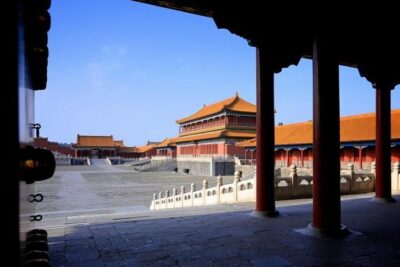
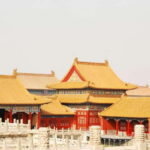
One good line beats a bad day. This passport-based Forbidden City admission cuts the ticket scramble and gets you into one of Beijing’s biggest time machines. You’ll walk in past Meridian Gate (Wu Men), then follow the central sights tied to power and ceremony, including the Gate of Divine Prowess and the Dragon Throne.
What I like most is how direct the entry feels once you’re there. You bring your passport, they scan it at the Meridian Gate, and you’re in without fiddling with printed tickets or app screens. I also love that the ticket covers the core must-sees along the palace axis and beyond, including major halls and both the Palace area and Imperial Garden.
The main drawback to plan around is crowd reality plus rules that can affect photos. Expect long lines and restrictions like no tripods, and you’ll be on a timed entry slot even if you can spend hours once inside.
In This Review
- Key points before you go
- Passport-Based Entry Through Meridian Gate (Wu Men)
- What Your Ticket Actually Gets You Inside
- Meridian Gate (Wu Men): The Moment You Feel the Scale
- Hall of Central Harmony (Zhonghe Dian): Built for Ceremony
- Hall of Preserved Harmony (Baohe Dian): More Power, Same Axis
- Palace of Heavenly Purity (Qianqing Gong): Where Daily Power Lived
- Palace of Earthly Tranquility (Kunning Gong): The Counterpart Mood
- Imperial Garden: A Needed Reset
- The Crowd Reality: Timed Entry Plus Real Lines
- Photography Rules You Should Know Before You Get Inside
- Value of $9.90: Why This Ticket Beats the Stress Spiral
- Who Should Book This (and Who Might Want Something Else)
- Should You Book This Forbidden City Ticket With Guide Option?
- FAQ
- Do I need a printed ticket?
- Where do I enter the Forbidden City?
- How long can I spend inside after I enter?
- What’s included with this admission?
- Is this ticket valid for any day I choose?
- Are there free entry tickets for children?
- Is transportation included?
- Is this service available to everyone?
- Can I cancel for a refund?
Key points before you go

- Passport entry at Meridian Gate (Wu Men): your passport is the key, not a paper ticket
- Great core coverage: Hall of Central Harmony, Hall of Preserved Harmony, Heavenly Purity, Earthly Tranquility, and Imperial Garden
- Timed entry slot only: you must arrive for your reserved window on the selected date
- Big site, plan your time: the complex covers 72 hectares and you may want more than the 2–4 hour estimate
- Photo limits: tripods aren’t allowed, and even certain phone setups can be restricted
- Overseas-only service: this is for overseas clients, not Chinese citizens
Passport-Based Entry Through Meridian Gate (Wu Men)
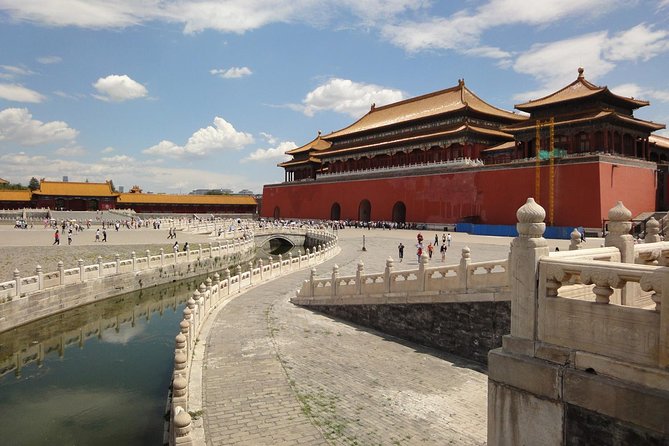
The Forbidden City works best when your morning is calm. This ticket is built for that. Instead of chasing a barcode or fighting for a paper pass, you show your passport for direct entry at the Meridian Gate (Wu Men). It’s the same gate you’ll see referenced everywhere because it’s the main ceremonial entrance.
When you book, you must provide your name and passport number accurately. That match matters because the entry point checks your passport. If there’s a typo, you could end up stuck at security while things get sorted out. I’d treat the booking details like you’re boarding a plane: double-check them before you hit submit.
One nice detail: the ticket is for selected-date entry. You get a reserved time slot, and entry is strictly limited to that slot. So while you can explore once you’re inside, your arrival timing still matters. This is the part that determines how smooth your day feels.
You can also read our reviews of more tours and experiences in Beijing
What Your Ticket Actually Gets You Inside
This isn’t just a generic entry pass. It’s admission that includes several specific sites across the palace complex. You’ll have access to:
- The Hall of Central Harmony (Zhonghe Dian)
- The Hall of Preserved Harmony (Baohe Dian)
- The Palace of Heavenly Purity (Qianqing Gong)
- The Palace of Earthly Tranquility (Kunning Gong)
- The Imperial Garden
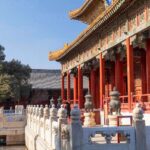
The broader palace complex is famous for its architecture and scale, and the ticket also connects you to headline sights you’ll see as you move through the grounds, like the Gate of Divine Prowess and the Dragon Throne area mentioned in the experience overview.
If you’re the type who hates wandering without structure, this coverage helps. You’re not just paying for a wall-and-tiles stroll. You’re paying to hit the major named stops that define the Forbidden City’s layout.
Meridian Gate (Wu Men): The Moment You Feel the Scale
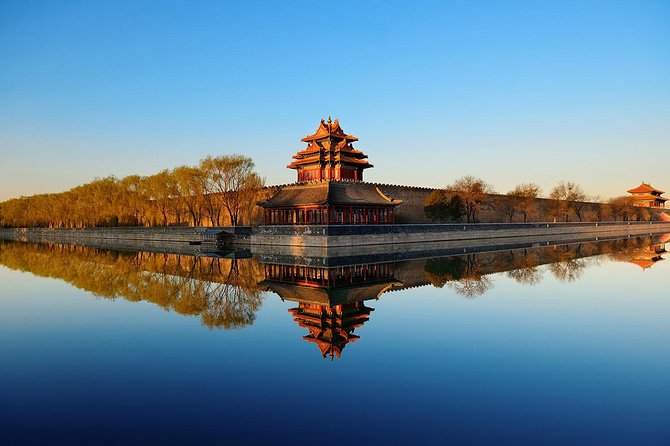
Your visit starts at Meridian Gate (Wu Men). This is one of those places where the size hits immediately. The Forbidden City is described as having over 9,000 rooms, and it served as the seat of power for Ming and Qing dynasties. The palace complex also has a long timeline behind it: 24 emperors over more than 600 years.
That matters because it changes how you look at the space. You’re not just viewing buildings. You’re seeing a designed system for ceremony and hierarchy. Even if you only spend a couple of hours, beginning at Meridian Gate helps you orient yourself to the central axis and the logic behind where the major halls sit.
Practical tip: expect multiple security checks and a lot of people moving in the same direction. One helpful theme from real-world experiences is that the entry process is organized even when it’s crowded, but the queue can still eat time.
Hall of Central Harmony (Zhonghe Dian): Built for Ceremony
The Hall of Central Harmony (Zhonghe Dian) is one of the big-ticket stops on the central axis. It’s the kind of place that makes you pause even if you’re not a history fanatic, because the design screams official ceremony.
What I like about having this hall included is that it gives you a concrete target on Day One. The Forbidden City is massive—72 hectares—and it’s easy to lose the plot if you wander randomly. With a ticket that specifically includes this hall, you can follow a clear path rather than guessing.
Drawback to note: this hall sits in the most popular zone. That usually means tighter movement, more phone cameras, and more waiting for clean sightlines. If your priority is photos, come prepared for the rules and the crowd pressure.
Hall of Preserved Harmony (Baohe Dian): More Power, Same Axis
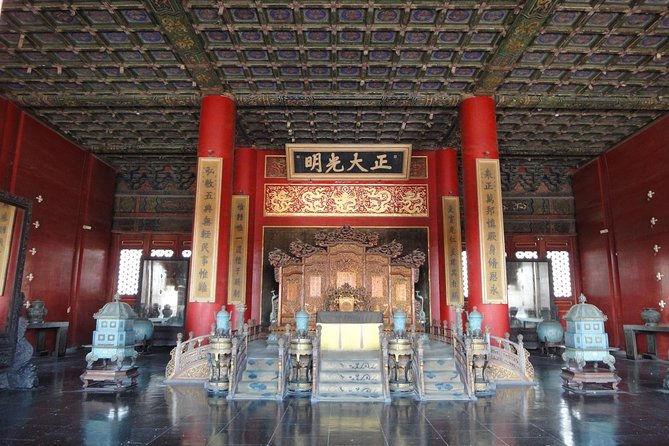
Next up is Hall of Preserved Harmony (Baohe Dian). If Central Harmony feels like the main stage, Preserved Harmony reinforces the theme: the Forbidden City’s most famous architecture isn’t casual. It’s political design, built to project control and order.
From a value standpoint, I appreciate the pairing. Many visits cover one major hall and stop. Here, you get both. That means if you’re there for a short window, you still leave with the two most recognizable “front-of-house” ceremonial halls on your list.
One realistic note: the experience overview mentions exploring at your own pace once inside, but timed entry means you’ll still be managing crowd flow. Don’t be surprised if you spend more time waiting at chokepoints than you expect.
You can also read our reviews of more guided tours in Beijing
Palace of Heavenly Purity (Qianqing Gong): Where Daily Power Lived
Then you shift from the brightest ceremony zone toward a more personal power space: Palace of Heavenly Purity (Qianqing Gong). This is where the mood starts changing. The tone of a palace interior read is different from the open hall experience.
I like this included stop because it balances the visit. If you only see the grand exterior ceremony spaces, the complex can feel like a photo museum. Including the palace areas helps you understand that this was lived-in power architecture, not just a stage set.
What to expect in practice: you’ll be moving through the imperial layout with lots of directions that look similar at first glance. That’s where having named stops helps. You always know you’re working toward a specific included area.
Palace of Earthly Tranquility (Kunning Gong): The Counterpart Mood
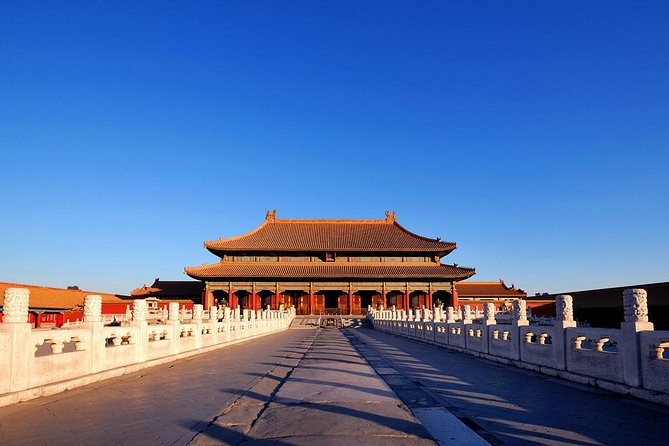
Palace of Earthly Tranquility (Kunning Gong) is the complementary palace stop. It’s on the same broad theme, but the feel can land differently because it’s another anchor point within the imperial residential realm.
This is a good place to slow down. If you’ve been moving fast to hit the big halls, Earthly Tranquility is often where you start appreciating the day-to-day logic of the palace plan: symmetry, separation of functions, and how spaces shift from public ceremony to more controlled private life.
Also, plan for movement fatigue. The complex is huge, and even a “2–4 hour” visit can turn into a longer outing if you stop for photos and read signage.
Imperial Garden: A Needed Reset
The ticket includes the Imperial Garden, and I’m glad it’s on the list. Big palace complexes can feel like one long sprint of buildings, courtyards, and viewpoints. The garden area gives you a break from the highest crowds and often a different visual rhythm.
Even if your itinerary is tight, treat the garden as your decompression zone. Walk it like a pause button. This is also a good spot for taking photos within the rules, because it may feel less chaotic than the main hall clusters.
The Crowd Reality: Timed Entry Plus Real Lines
Even with passport-based entry, you’re still entering one of the most visited sites in the world. Expect crowds. Some experiences note a queue of around 30 minutes for entry on busy days, though entry can feel well-managed once you’re in the system.
The key is how the timing works:
- Your ticket is tied to a specific selected date
- Entry is limited to your reserved time slot
- Once inside, you can explore for as long as you want, and the site spans 72 hectares
So your strategy should be simple: arrive at your slot, then build in extra time for walking and pauses. If you only allocate 2 hours and you hit a slow morning line, you may feel rushed.
Also consider the exits. The experience notes two main exit points:
- Shenwu Gate near Jingshan Park
- Donghua Gate near Wangfujing Street
Choosing the exit that matches your next stop can save time and energy.
Photography Rules You Should Know Before You Get Inside
One clear downside from real usage is photo restrictions. Tripods are not allowed, and even setting a phone on a flat platform can be restricted. This can be frustrating if you like steady shots or want a clean composition without waiting for people to move.
I’d plan for it in advance:
- Use normal handheld photos or brief repositioning
- Accept that some angles will be crowded
- Aim for photos earlier in your route, then prioritize slower viewing later
If your heart is set on tripod-style shots, I’d rethink your expectations for this day and focus on seeing the architecture and exhibits instead.
Value of $9.90: Why This Ticket Beats the Stress Spiral
At $9.90 per person, the value is really about what you avoid. The Forbidden City has far-reaching history and a massive collection of artifacts linked to the Palace Museum, and it’s also known for long lines and intense demand. When tickets sell quickly, a booking service saves you from the time-wasting hunt.
This option is also passport-driven. That means less friction on the day itself. People report being able to show passports at entry with no need for a separate ticket displayed. That’s not a small thing. It reduces stress when your time is limited and the site is already crowded.
Where the price can stop feeling like a win is if you make mistakes with passport details or you arrive late for the reserved slot. But when your documents are correct and you follow your entry time, the process is straightforward and efficient.
Who Should Book This (and Who Might Want Something Else)
This ticket option fits best if you:
- Want a low-friction way into a top Beijing attraction
- Prefer self-guided exploring after entry
- Are okay with crowds and structured access
- Are visiting as an overseas client who can use passport-based entry
It’s less ideal if you:
- Strongly rely on tripod-based photography
- Need extra hand-holding for navigation and time planning
- Want a fully guided interpretive tour (because the details provided here focus on ticketing and admission coverage, not a named guide program)
If you’re traveling with kids under 6, the data states they’re free, which can make this even better value for families.
Should You Book This Forbidden City Ticket With Guide Option?
If your goal is to see the major palace areas without losing time to ticket hunting, I’d book it. The passport entry at Meridian Gate (Wu Men) is the big win, and the included admissions to the named halls plus Imperial Garden mean you’ll hit real highlights even if your visit is on the shorter side.
The call hinges on two things. First, book when you can arrive for the reserved time slot on your selected date. Second, go in knowing the place is crowded and photo rules apply. If you can live with that, you’ll likely feel like you bought back your day.
FAQ
Do I need a printed ticket?
No. You use your passport for direct entry. The ticket is booked under your passport, and you present it at the Meridian Gate.
Where do I enter the Forbidden City?
You enter through the Meridian Gate (Wu Men).
How long can I spend inside after I enter?
The experience says you can dedicate as much time as you need to explore the grounds. The visit duration is listed as about 2 to 4 hours (approx.), but you are not limited to that once inside.
What’s included with this admission?
The included admissions cover the Hall of Central Harmony, Hall of Preserved Harmony, Palace of Heavenly Purity, Palace of Earthly Tranquility, and the Imperial Garden.
Is this ticket valid for any day I choose?
No. It is only valid for the selected date, and entry is tied to the reserved time slot.
Are there free entry tickets for children?
Yes. Children under 6 are free and need to show their passport on-site.
Is transportation included?
For the ticket booking-only option, transportation is not included.
Is this service available to everyone?
It is exclusively for overseas clients and not available to Chinese citizens.
Can I cancel for a refund?
Yes. You can cancel up to 24 hours in advance for a full refund, with cut-off times based on local time.