REVIEW · BEIJING
Beijing Hutongs Walking Tour
Book on Viator →Operated by Roy Li Tours Beijing · Bookable on Viator
Hutongs can feel like a maze. That’s exactly why I like this Beijing Hutongs Walking Tour: you get a relaxed, small-group stroll that helps you read the city instead of just passing through it, with courtyard-house lanes you’d miss on your own. Two big wins for me are the small group size (max 15) and the chance to learn from an English-speaking guide named Roy Li, who keeps the stories moving and practical.
There is one drawback to keep in mind: this is a walking tour with a set meeting point and start time, so if you’re late, you may lose the group. One past participant had that exact problem, so do yourself a favor and arrive early at the metro exit.
Expect a compact route (about 1 hour 30 minutes to 2 hours) focused on hutong atmosphere—Nanluoguxiang lanes, Mao’er Hutong, and the Houhai/Qianhai area—plus a start tied to the Bell and Drum Towers. You’ll finish near the Drum Tower side, after seeing several classic courtyard neighborhoods in one go.
In This Review
- Key highlights worth your time
- Why hutongs are easier with a guided route
- Price and time: what you really get for $30
- Meeting at Nanluoguxiang (Line 6 or Line 8, Exit E)
- Stop by Stop: what you’ll see and why it matters
- Bell and Drum Towers: Beijing’s time-keeping frame
- Nanluoguxiang lane: courtyard houses and old-tree atmosphere
- Mao’er Hutong: stories, famous buildings, and lane rhythm
- Empress’s Mansion: Wanrong and Puyi’s personal link
- The Qianhai–Houhai connection: where the lanes meet water
- Guide Roy Li: why the group size actually helps
- What to pack and how to walk hutongs without stress
- Who should book this hutong walk
- Should you book this Beijing Hutongs Walking Tour?
- FAQ
- How long is the Beijing Hutongs walking tour?
- How much does the tour cost?
- Where do we meet the guide?
- Where does the tour end?
- What size is the group?
- Is admission included?
- Can I cancel for free?
Key highlights worth your time

- A small group (up to 15) for real back-and-forth with Roy Li
- Courtyard homes in and around Nanluoguxiang, with a look at older traditional architecture
- Mao’er Hutong character and history, including stories tied to famous residents
- A photo stop at Empress’s Mansion, linked to Puyi’s empress Wanrong
- Time-and-place context at the Bell and Drum Towers, paired with hutong walking
Why hutongs are easier with a guided route
Beijing’s big sights can be impressive, but hutongs are where the city starts to feel human. The lanes are narrow, the turns come fast, and the atmosphere depends on small details—grey courtyard walls, old trees, and the way daily life used to be arranged around home compounds.
This tour is designed for exactly that. Instead of asking you to guess your way through, it gives you a route that connects landmarks and neighborhoods into one story. You’ll also get a guide who can point out what you’re looking at, then translate it into something you can actually remember after the walk.
The other thing I like: the pace is described as relaxed and laid-back. In practice, that matters because hutong sightseeing works best when you can pause, look, and ask questions—not when you’re being rushed down the next block.
You can also read our reviews of more walking tours in Beijing



Price and time: what you really get for $30

At $30 per person for about 1.5–2 hours, you’re paying for three things: time with an English-speaking guide, route planning through hutong streets, and context so the sights mean something. For Beijing, that’s good value if you want the “how did people live here?” layer rather than only the postcard layer.
Two practical notes from the tour info:
- Admission tickets are not included, so if you plan to enter anything, expect extra costs.
- The route is short enough to fit into a first or second day without blowing up your schedule.
If you’re trying to squeeze everything into a few days, this is the kind of tour that saves mental energy. You’re buying clarity: where to go, what to notice, and how the neighborhoods connect.
Meeting at Nanluoguxiang (Line 6 or Line 8, Exit E)

The tour starts at 10:00 am in the Nanluoguxiang area, near South Luogu Lane. Your meetup point is tied to the metro stop: Line 8 or Line 6 Nanluoguxiang station, and the instruction is Exit E.
This is worth taking seriously. Hutong streets can be confusing, and metro station exits are easy to mix up when you’re new to Beijing. I’d rather you arrive 10–15 minutes early and get settled than sprint in at the last second.
Also, the start point is in the Dongcheng District side of central Beijing (South Luogu Lane / Nanluoguxiang). That’s convenient if you’re staying around the city center and want to avoid long commutes just to reach your first neighborhood walk.
Stop by Stop: what you’ll see and why it matters
Bell and Drum Towers: Beijing’s time-keeping frame
The walk is anchored by the Bell and Drum Towers area. The tour description connects this stop to learning about Chinese time-keeping, which is a smart pairing. You’re not just seeing towers—you’re getting the idea that historic Beijing had a very different rhythm, marked by signals and routines rather than alarms and apps.
If you’ve only seen Beijing as a collection of grand imperial structures, this is a nice reset. It sets a theme: time, order, and how the city used to function.
Practical consideration: since this is part of the downtown core, you may see more crowds than in the hutongs themselves, especially around popular metro-linked streets. That’s normal—use it to get your bearings before you slip into the lanes.




Nanluoguxiang lane: courtyard houses and old-tree atmosphere
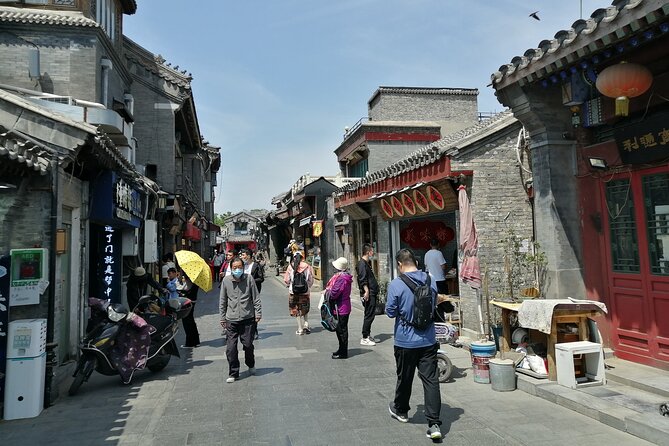
After the meeting area, you move into Nanluoguxiang and its surrounding lanes. The tour guide’s approach here is important: you’re looking at traditional architecture not as a museum display, but as lived-in space.
You’ll get a feel for the kind of courtyard homes associated with older Beijing street life. The tour description specifically mentions:
- a sense of the past reaching back to the Yuan Dynasty
- vernacular courtyard houses with grey-colored walls
- old trees that help define the mood of the lane
That combination is what makes hutongs feel different from other urban areas. It’s not just the buildings—it’s the way the street “holds” the buildings, with trees and compound layouts shaping views and walking routes.
Tip: bring your camera energy. You don’t need a photo every ten steps, but courtyard lanes reward slow looking.
Mao’er Hutong: stories, famous buildings, and lane rhythm
Next comes Mao’er Hutong. This is where hutong walking starts to feel like a real neighborhood experience rather than a highlight checklist.
You’ll learn about famous buildings and character stories tied to this lane. The point isn’t to cram names into your brain—it’s to understand how these lanes were connected to people, status, and daily life. Once you grasp that, Beijing’s hutongs become easier to recognize even after the tour ends.
If you’re the kind of traveler who likes to connect architecture to human stories, this stop is a strong match. If you only care about big-ticket landmarks, you may need a minute to appreciate the smaller scale and the quieter details.
Empress’s Mansion: Wanrong and Puyi’s personal link
One of the most distinctive parts of the route is the photo stop at Empress’s Mansion, described as the former residence of Puyi’s empress Wanrong.
Even if you don’t know their story going in, the tour frames the stop with meaning: you’re seeing a real place associated with the final imperial era of China, not just learning dates in a lecture. And because it’s a photo stop, it’s the kind of moment you can remember later without needing extra tickets or a long visit inside.
A practical tip: if you want photos, wear shoes that let you stand and wait comfortably. The best shots often happen when you pause at the right angle, especially in narrow lanes.
The Qianhai–Houhai connection: where the lanes meet water
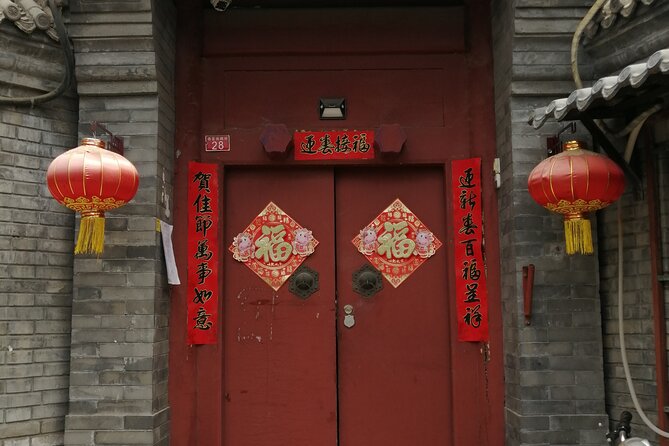
Toward the end, you get to an area tied to Qianhai Lake and Houhai Lake. The tour mentions visiting a narrow channel joining Qianhai Lake and Houhai Lake, which is a fun detail because it shows how water and lane life overlap in Beijing.
This is a good “cool down” segment. After straight-line walking through hutong streets, the water-side scenery changes the pace. It also helps you understand why the hutong map isn’t just grids and blocks—Beijing has natural and historic boundaries that shape movement.
The tour ends near the Drum Tower side, with the listing indicating completion around Houhai / Xicheng District and a note that the tour finishes at the Drum Tower. Either way, you’ll finish in a lively central area where it’s relatively easy to keep exploring on your own.
Guide Roy Li: why the group size actually helps
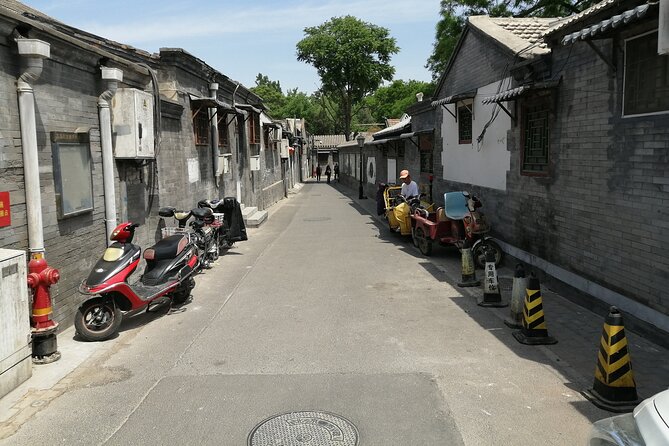
This tour is led by Roy Li Tours Beijing, and the guide for this experience is specifically English-speaking.
From the feedback I focused on, Roy’s style is what makes the walk feel like more than a route. People praised his English and his storytelling approach, including being actively involved—one comment notes that Roy engaged the group by quizzing them. That’s a small detail, but it matters. When a guide asks questions and keeps you thinking, you remember more than facts you quickly forget.
The cap of 15 travelers also matters. In a crowd, hutong walking turns into a line. In a smaller group, you can stop without the whole group stretching into a human slinky behind you.
What to pack and how to walk hutongs without stress
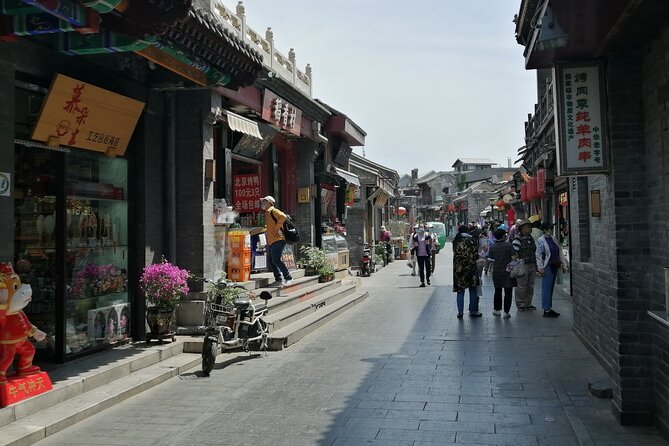
This is a short tour, but hutongs are still walking. To make your life easier:
- Wear comfortable shoes you can move in at lane pace.
- Keep your phone handy for the mobile ticket and for directions.
- Bring a light layer. Even when Beijing is pleasant, weather can shift quickly around central areas and open spaces.
One more thing: plan to be early at the metro exit. The tour isn’t described as flexible on timing, and one miscommunication example in feedback was basically a timing failure. You don’t need to be anxious—just be punctual.
Who should book this hutong walk
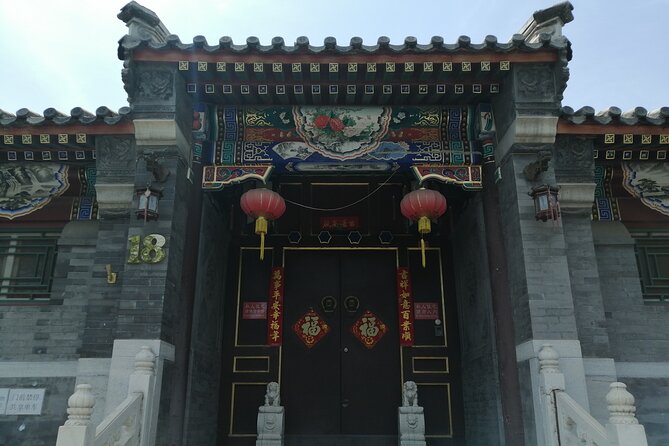
This is a great choice if:
- you want a first taste of Beijing that goes beyond the major imperial sights
- you like city history tied to real places and architecture
- you enjoy short guided walking tours that don’t swallow your whole day
- you’re traveling with someone who would rather ask questions than read signs for hours
It may not be your best match if:
- you dislike walking through narrow streets
- you only want inside-access tickets and don’t care about atmosphere and exterior viewpoints
- your schedule is so tight that you struggle to arrive exactly on time
Should you book this Beijing Hutongs Walking Tour?
If you want an efficient, human-scale introduction to Beijing’s lanes, I think it’s a strong yes. The value is in the pairing: hutongs + courtyard architecture + context from an English-speaking guide named Roy Li, all within about two hours and a max group size of 15.
Book it especially if you’re trying to avoid the common problem: spending your first day in Beijing bouncing between landmarks without understanding what you’re seeing. This tour gives you a way to connect neighborhoods—Nanluoguxiang, Mao’er Hutong, and the Qianhai/Houhai water area—into one coherent picture.
Go for it if you like stories tied to specific places (like Wanrong’s Empress’s Mansion) and you’re happy to learn by walking, pausing, and looking closely.
FAQ
How long is the Beijing Hutongs walking tour?
It runs about 1 hour 30 minutes to 2 hours.
How much does the tour cost?
The price is $30.00 per person.
Where do we meet the guide?
You meet at South Luogu Lane in the Nanluoguxiang area. The guide meeting instructions also point to Nanluoguxiang station for Line 8 or Line 6, Exit E.
Where does the tour end?
The tour ends around Houhai (Xicheng District), and the info also notes that the finish is at the Drum Tower.
What size is the group?
The maximum group size is 15 travelers.
Is admission included?
Admission tickets are not included.
Can I cancel for free?
Yes. You can cancel up to 24 hours in advance for a full refund.