REVIEW · BEIJING
Chinese Kung Fu Experience Class in Beijing
Book on GetYourGuide →Operated by Beijing Sanfeng Tai Chi Club · Bookable on GetYourGuide
Kung fu lessons in Beijing feel oddly calming. You trade a movie fight scene for real technique, taught in the Temple of Heaven gardens with Master Eric guiding you step by step.
I especially liked two things: the high-qualified instruction (clear, patient coaching) and the fact the class works in English and Chinese, so you won’t spend half the time guessing what to do. It’s also held in a location that’s easy to enjoy, not just a spare room and a stopwatch.
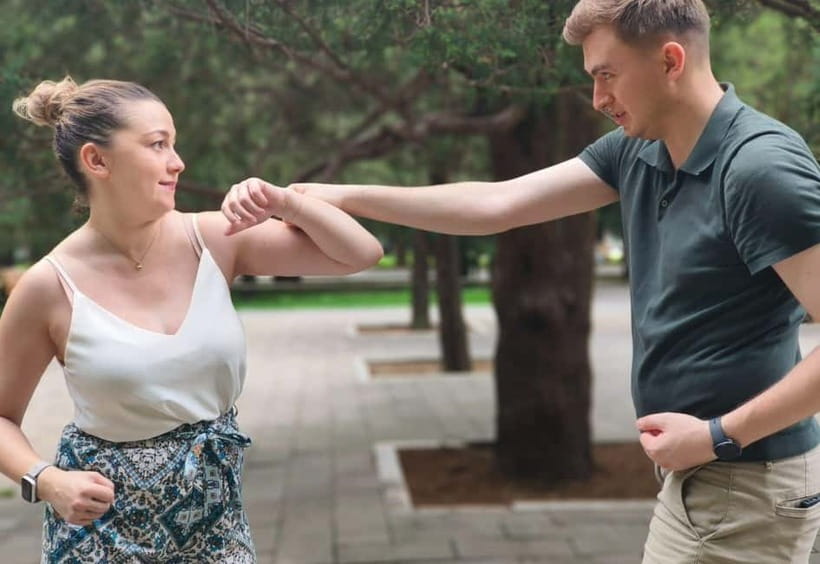
One possible drawback: expect some light contact as part of technique practice. In one session, the instructor demonstrated a punch on a participant without much warning, so if you’re sensitive to being hit at close range, ask how demonstrations will be handled before you start.
In This Review
- Key points worth knowing
- Arriving at the Temple of Heaven East Gate (and why it matters)
- What happens in 1.5 hours: stances to self-defense
- Warm-up through basic Kung Fu training
- The five stance fist form
- Joint-locking techniques
- Self-defend techniques
- The five stance fist form: more than a sequence
- Joint locks and controlled self-defense (how to stay confident)
- Master Eric’s teaching style: clear, patient, and international-friendly
- Price and value: $68 for a 90-minute technique class
- How to dress, what to bring, and what to avoid
- Who should book this Kung Fu session
- Should you book the Chinese Kung Fu class in Beijing?
- FAQ
- Where is the meeting point for the class?
- How do I get there using the subway?
- How long is the Kung Fu experience?
- What languages is instruction offered in?
- What should I wear or bring?
- Is food included?
Key points worth knowing
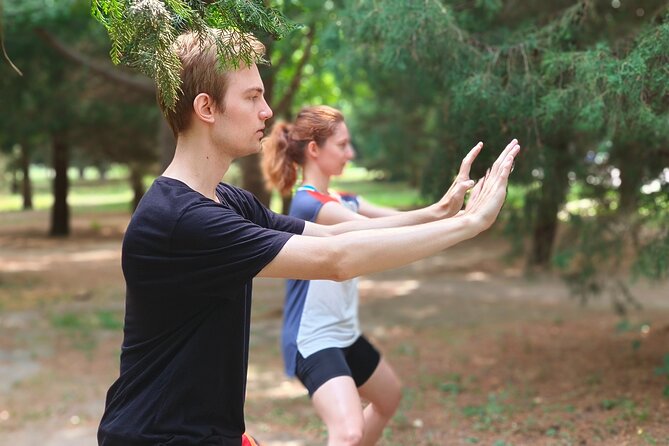
- Temple of Heaven setting: You practice among the calm gardens near the east gate.
- English-friendly teaching: The instructor supports you in English, with Chinese used as needed.
- 90-minute, skill-focused flow: Stances, a five stance fist form, joint locks, and basic self-defense.
- Private group feel: More time for questions and individualized corrections than in a large crowd class.
- Comfortable clothes matter: You’ll move more than you might expect for a short class.
Arriving at the Temple of Heaven East Gate (and why it matters)
Meeting up for this Chinese Kung Fu class is simple, and the location is the first reason it feels more “Beijing” than generic tourist activities. You start at the ticket office of the Temple of Heaven east gate (天坛东门售票处).
From the subway, take Line 5 and get off at Tian Tan Dong Men Station. Exit A, then walk about 50 meters to the east gate. This is useful because you can get there without a taxi, and Beijing’s transit makes the day plan easy.
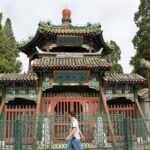
Why I like starting at this exact spot: the Temple of Heaven area has a rhythm. Even before you move into the training area, you’ll feel like you’re entering a real cultural space—not just arriving at a “class venue.” It sets a tone for kung fu that’s more about posture, control, and discipline than performance.
You can also read our reviews of more tours and experiences in Beijing


What happens in 1.5 hours: stances to self-defense
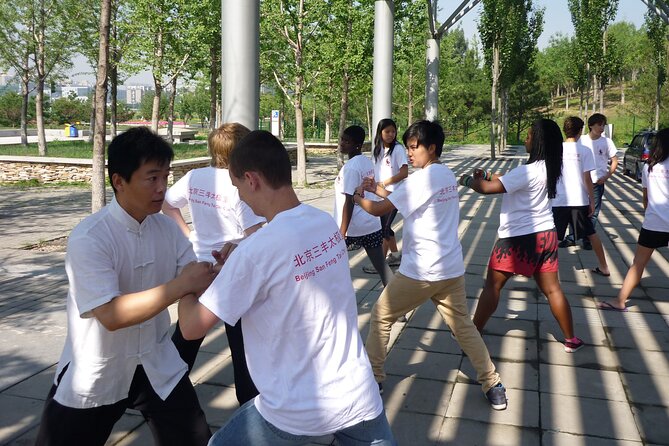
This is a focused 90-minute session. There’s no sense of “we’ll see how it goes.” The class moves through a clear progression, which is great if you want results fast.
Here’s what you can expect as the lesson unfolds:
Warm-up through basic Kung Fu training
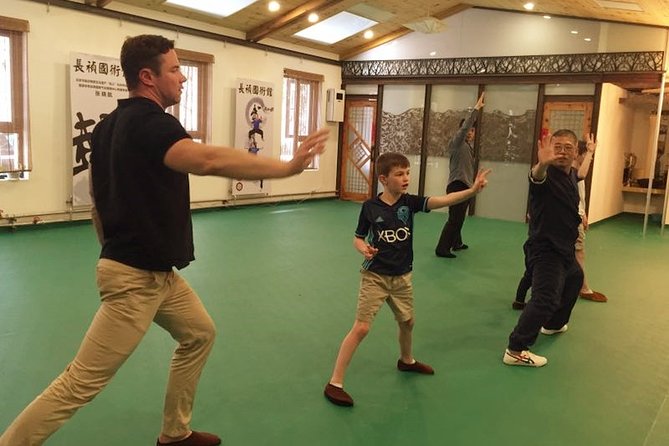
You begin with basic training, including stances, kicks, and punches. The goal isn’t to turn you into a fighter in one afternoon. It’s to build the right physical habits—how to stand, where your weight goes, and how your body moves as a connected unit.
You’ll likely get corrections on fundamentals like stance width, knee alignment, and how to rotate your hips and shoulders when you strike. Those details matter because they’re what make later movements feel stable instead of clumsy.
The five stance fist form
Next comes the Kung Fu five stance fist form. A “form” sounds dramatic, but think of it as a guided sequence that teaches you how techniques fit together. Instead of random punching practice, you follow a structured pattern.
For beginners, a form is a gift. It gives your brain something to hold onto: this is where your feet go, this is when your fists come up, and this is how you transition between positions.
Joint-locking techniques
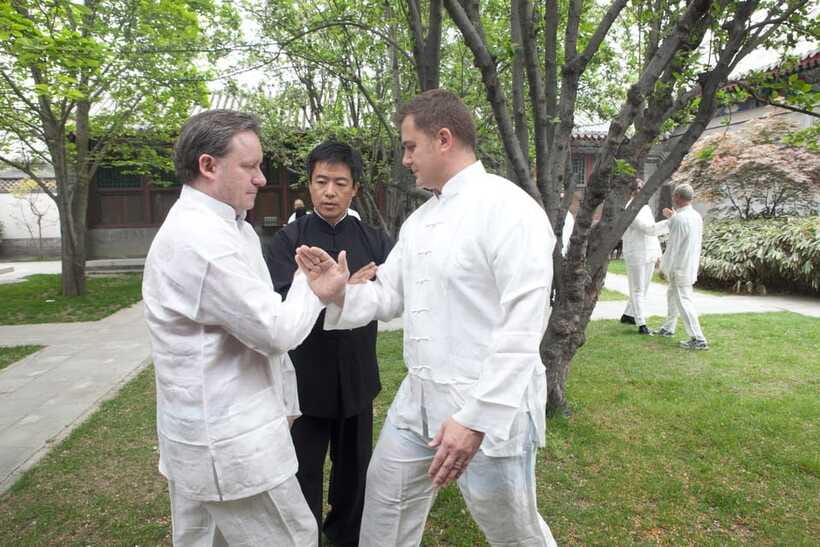
After the basics and the form, you move into joint-locking techniques. This is a different kind of skill from striking. Joint locks are about control and positioning—how to guide movement rather than just hitting it.
Even if you’re new, this part is where you start to understand that kung fu isn’t only offense and defense. It’s also about understanding leverage and restraint.


Self-defend techniques
The session finishes with self-defend techniques. Again, you’re not going to be fighting anyone. The purpose is practical: you learn simple defensive reactions and how to apply your basic training in a controlled way.
If you’re a total beginner, you’ll feel the difference between “doing a move” and “using a move.” That’s the value of a structured class like this.
The five stance fist form: more than a sequence
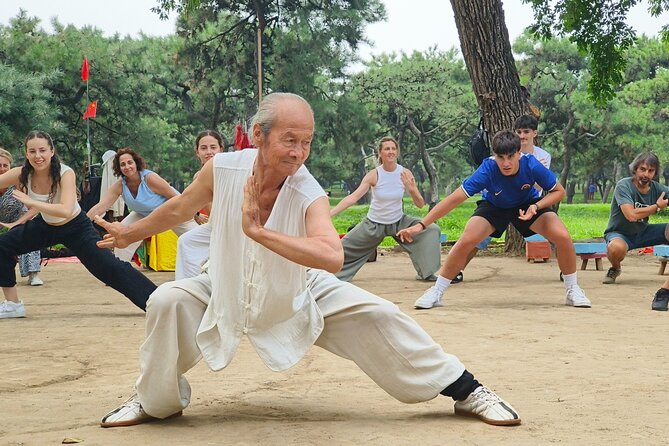
The five stance fist form is one of the key things the class teaches, and it deserves attention because it connects the whole lesson.
Kung fu training is often described through the idea that it builds more than fighting skill. In a class like this, you’ll see the other side of kung fu: moral cultivation, body building, and aesthetic appreciation. You may not label it that way while practicing, but you’ll feel it in the way the instructor expects good posture and deliberate control.
So what does the five stance form actually do for you?
- It teaches balance first. Your stance choices affect everything else: kicks, punches, transitions.
- It teaches timing. You learn when to shift weight and when to move your arms.
- It teaches coordination. Moving arms without moving the body is a common beginner mistake, and forms fix that fast.
- It gives you a memory path. Even after the class ends, you have a structure you can replay mentally.
One practical tip: don’t chase speed. In form practice, clean movement beats fast movement. If you keep your stance stable and your transitions consistent, you’ll look better and you’ll understand the mechanics more quickly.
Joint locks and controlled self-defense (how to stay confident)

Joint-locking techniques can look intimidating from the outside. In a proper class setting, they’re also one of the best learning tools you can get in a short session because they teach cause-and-effect.
You’ll be learning how to guide a partner’s movement using the joints. That means:
- You pay attention to hand placement and body position.
- You learn to keep your own body aligned, so you don’t rely on brute force.
- You practice with control, where technique matters more than power.
That said, this part can feel different emotionally than punching and stance work. If you’re wary about physical contact, it’s smart to set expectations early. Ask how the instructor manages contact and demonstrations so you know what to anticipate.
Also, bring the right mindset: focus on accuracy and safety. These techniques are best learned when you trust the instructor and when you go at the pace they set.
Master Eric’s teaching style: clear, patient, and international-friendly
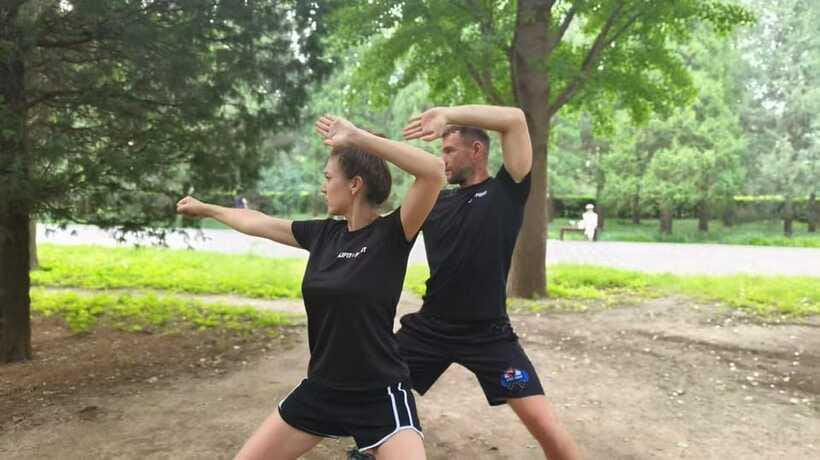
The class is led by Master Eric, and based on the way instruction is described, his style centers on patience and clarity. The coaching approach fits multiple learning styles: you get the structure of a form, plus correction on fundamentals, plus demonstrations to show how a stance should feel.
A big practical win here is language. The instructor offers English and Chinese, which matters more than people think. With kung fu, you can’t rely on generic “follow the movement” teaching. You need cues for how to shift weight, how to hold your arms, and what a correct stance is supposed to look like from the side.
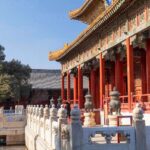
I’d also highlight the environment of instruction. Practicing in the gardens of the Temple of Heaven can make the class feel more like cultural training than a workout shoved into a time slot. Even when the moves are serious, the overall vibe helps you stay relaxed enough to learn.
Price and value: $68 for a 90-minute technique class
At $68 per person for about 1.5 hours, this sits in the mid-range for Beijing activity pricing. The value isn’t just the duration. It’s what you’re actually getting in that time:
- A full starter workflow (stances → five stance form → joint locks → self-defense)
- Instruction support in English and Chinese
- A setting that’s genuinely tied to Beijing (Temple of Heaven area)
- A private group format, which often means more direct feedback
If you’re the type of traveler who likes hands-on lessons with real technique (not just photos), this is a good use of an afternoon. If you’re hoping for a long training session or advanced sparring, you might find the time short. But for beginners and intermediate-curious people, it’s a smart entry point.
How to dress, what to bring, and what to avoid
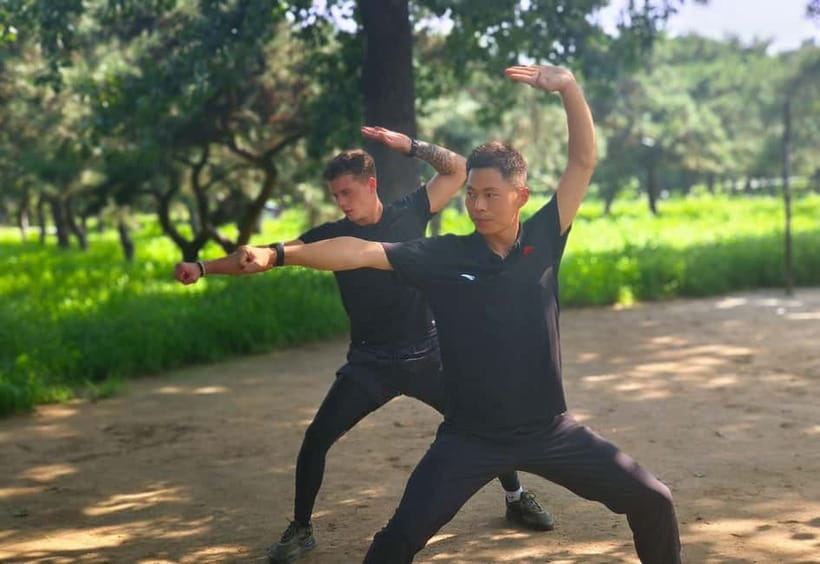
You only need one real gear decision: wear comfortable clothes. You’ll be moving through stances, kicks, punches, and joint mechanics, so avoid anything too stiff, too tight, or too hard to move in.
A few practical notes:
- Comfortable shoes are a plus if your clothes allow easy footwork.
- Think in layers if the morning air is cool, since temple-garden mornings can be breezy.
This class is not suitable for pregnant women, according to the activity information. If any other medical concerns apply, you should use your judgment and ask the provider how they handle safety.
Who should book this Kung Fu session
This class is ideal if you want:
- A real intro to Chinese kung fu basics in 90 minutes
- Clear technique teaching in English
- A calmer, more cultural setting at the Temple of Heaven rather than a studio-only experience
- A private group feel where you can ask questions without waiting your turn
It’s also a nice option if your Beijing schedule needs variety. You’ll get something physical and skill-based that complements temple walking days and museum time.
If you prefer zero-contact activities, ask about how demonstrations are done. While the class includes technique practice, the safest learning happens when you and the instructor agree on what feels comfortable.
Should you book the Chinese Kung Fu class in Beijing?
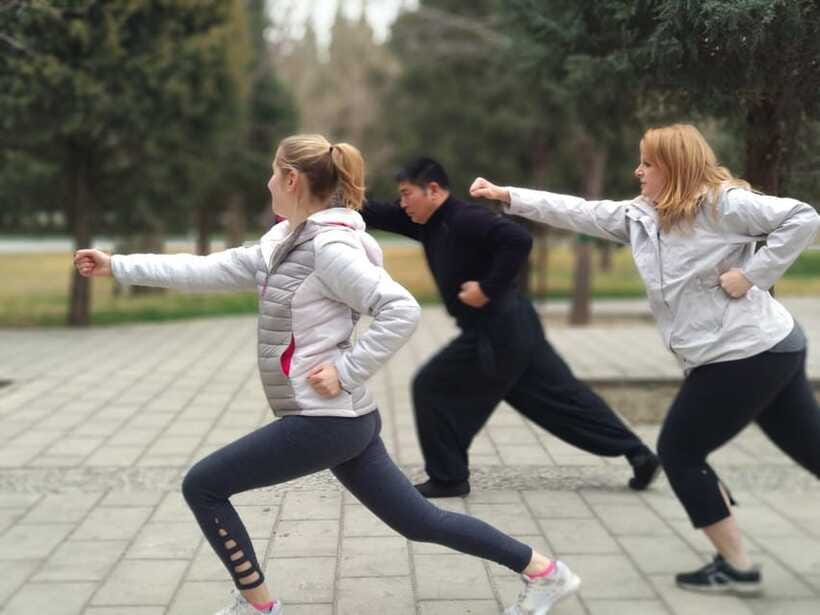
I’d book it if you want a structured kung fu introduction with an English-capable instructor, and if the Temple of Heaven location appeals to you. The combination of patient coaching, a complete beginner-friendly sequence, and a cultural setting makes it worth the price for many first-timers.
Skip it—or at least ask questions first—if you’re nervous about being lightly hit during demonstrations or you only want purely theoretical learning. For most people, though, the class offers exactly what a short cultural activity should: practical skills you can remember, taught in a place that feels like the real thing.
FAQ
Where is the meeting point for the class?
You meet at the ticket office of the Temple of Heaven east gate (天坛东门售票处).
How do I get there using the subway?
Take Subway Line 5 to Tian Tan Dong Men Station, exit at Exit A, and walk about 50 meters to the east gate.
How long is the Kung Fu experience?
The class lasts about 1.5 hours.
What languages is instruction offered in?
The instructor provides instruction in English and Chinese.
What should I wear or bring?
Wear comfortable clothes.
Is food included?
No. Food and drinks are not included, and the kung fu class fee is the included cost.