REVIEW · BEIJING
Beijing Wangfujing Calligraphy Class by Forbidden City
Book on Viator →Operated by Hutong Calligraphy Class · Bookable on Viator
Chinese calligraphy classes beat museum boredom.
In Beijing’s Wangfujing area, this Hutong Calligraphy Class turns you from spectator into maker. You’ll learn how Chinese characters are built with ink, brush, rice paper, and inkstones, with time to ask questions and get personal coaching.
I especially like how practical it feels: you’re not just hearing about the art, you’re making marks, fixing your hand, and learning why each stroke matters. The second big win is that it’s family-friendly, so kids and adults can work at the same table and still feel proud of their progress. One thing to consider: it’s a hands-on class in a small room setting, so if you’re hunting for outdoor sightseeing thrills, this is more practice than walking around.
In This Review
- Why the Wangfujing Location Works for This Beijing Calligraphy Class
- Hutong Calligraphy Class: What Your 1-Hour Session (or More) Feels Like
- The Materials Lesson: Brush, Ink, Rice Paper, and Inkstones
- Learning Chinese Calligraphy as a Culture Skill, Not Just a Souvenir
- Teacher Support: English Guidance and the Name You’ll Hear
- Group Size, Materials, and Why It Feels Personal
- Price and Value: Getting $20 Worth of Coaching
- Who This Beijing Calligraphy Experience Suits Best
- A Practical Way to Plan Your Day Around the Class
- Should You Book This Calligraphy Class?
- FAQ
- How long is the calligraphy class?
- What is included in the ticket price?
- Where do I meet for the experience?
- Do I need cash or extra fees during the class?
- What is the group size?
- Can I cancel and get a full refund?
Why the Wangfujing Location Works for This Beijing Calligraphy Class
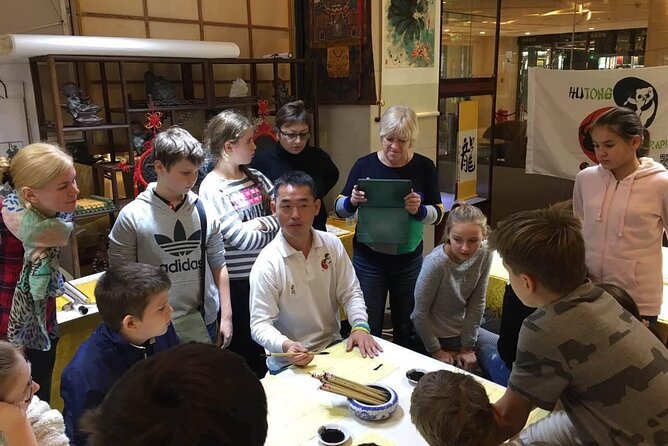
Beijing has plenty of landmark time. This experience offers something different: a calm, cultural skill you can do in about an hour (or longer, depending on the class length you choose). The meeting point is at Hilton Beijing Wangfujing, and the activity ends back there, which keeps things simple when your day is already packed.
Even if you’re planning to visit major sights, I think this kind of cultural stop pairs well with your schedule. Wangfujing is in the downtown area, so it’s easier to slot in between other activities. And because the class is built around materials like brushes and rice paper, it also gives you a break from walking—especially useful in hot, cold, or rainy conditions.
Hutong Calligraphy Class: What Your 1-Hour Session (or More) Feels Like
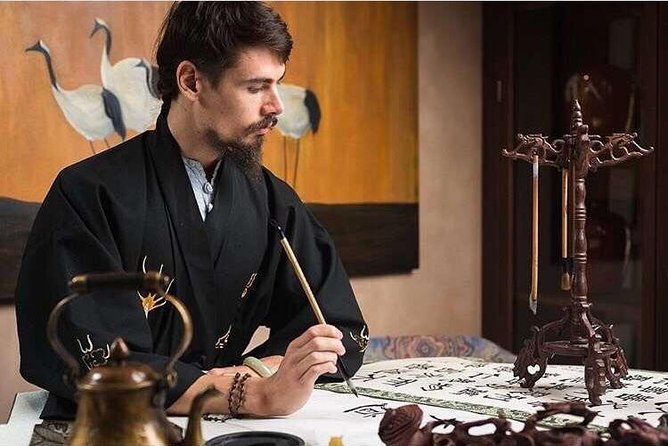
Your session is structured around learning the craft step by step. While the exact lesson flow depends on the class length you book, the core idea stays the same: you’ll be taught how Chinese calligraphy works as writing and as art.
Here’s what you can expect during the class:
- You’ll get guidance on basic strokes and how to control the brush.
- You’ll learn the role of each tool—what it does and why it matters.
- You’ll practice the motions until your characters start to look more balanced.
- You’ll have time to ask questions, which makes this feel less like a lecture and more like coaching.
This matters because Chinese calligraphy isn’t just about copying shapes. It’s about rhythm, pressure, and the way the brush moves across the page. When you practice with feedback, your brain starts to connect technique to result fast. That’s the kind of learning that sticks.
You can also read our reviews of more city tours in Beijing

The Materials Lesson: Brush, Ink, Rice Paper, and Inkstones
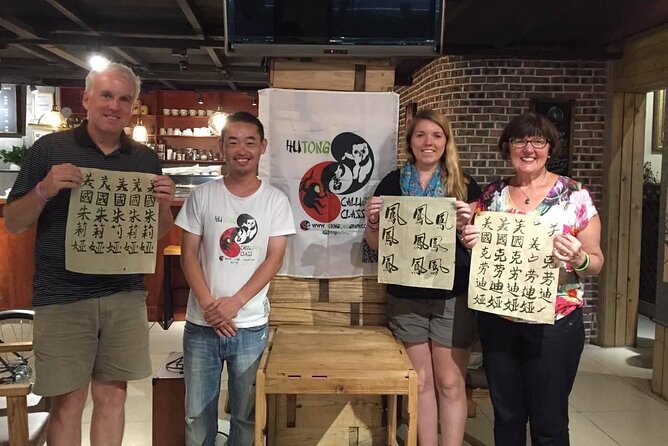
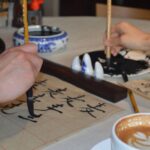
One of the most satisfying parts of this Beijing calligraphy class is that it treats the tools like part of the lesson, not background props. The class focuses on ink strokes, and it also covers the essentials you’ll hear about in any serious calligraphy conversation:
- Brushes: how you hold and move them, and how the brush reacts to your motion
- Ink: how it behaves and how stroke decisions show up on the page
- Rice paper: why the surface changes how lines land and spread
- Inkstones: the traditional connection between grinding ink and controlling results
- Seal carving: introduced as part of the wider calligraphy world
You don’t need to be artistic already. In fact, I like that the class gives you a pathway from tool to technique. When you understand what the materials are doing, you can stop guessing and start improving.
Also, if you’re bringing kids, this kind of tool-focused teaching works well. It turns calligraphy into a tangible experiment: move here, pressure there, and watch what changes.
Learning Chinese Calligraphy as a Culture Skill, Not Just a Souvenir
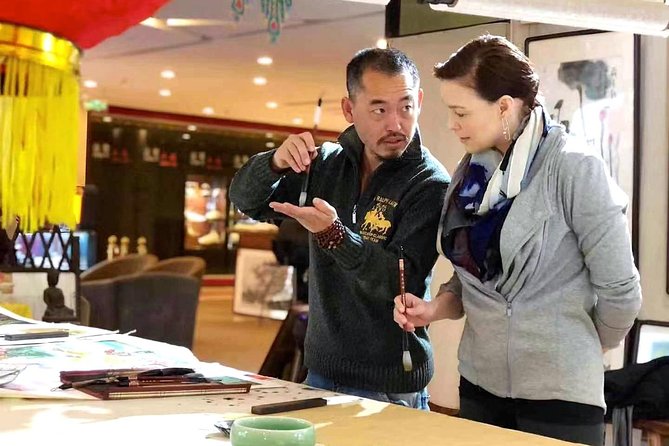
Calligraphy in Chinese culture isn’t only decoration. It’s treated like a way of thinking—an expression of language turned into visible movement. This class leans into that idea by explaining the practice behind the strokes and the materials.
You’ll come away with insight like:
- why calligraphy is seen as an artistic form of human language
- how the structure of characters connects to motion and time
- why the craft is respected, not just admired
That cultural framing is what turns the session into more than a quick photo moment. A cheap souvenir might look good on a shelf. But a skill—even a small one—makes you remember the day differently.
Teacher Support: English Guidance and the Name You’ll Hear
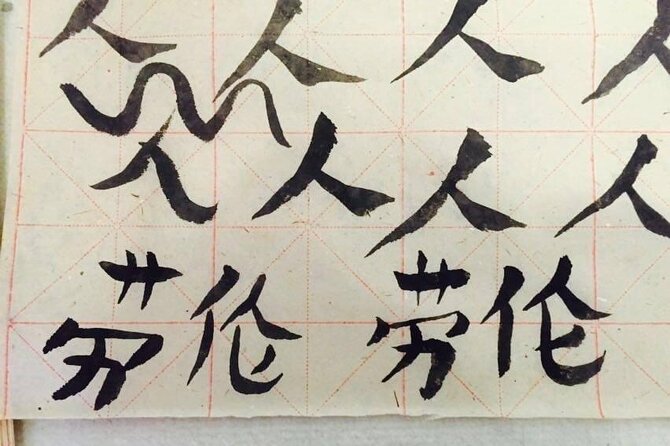
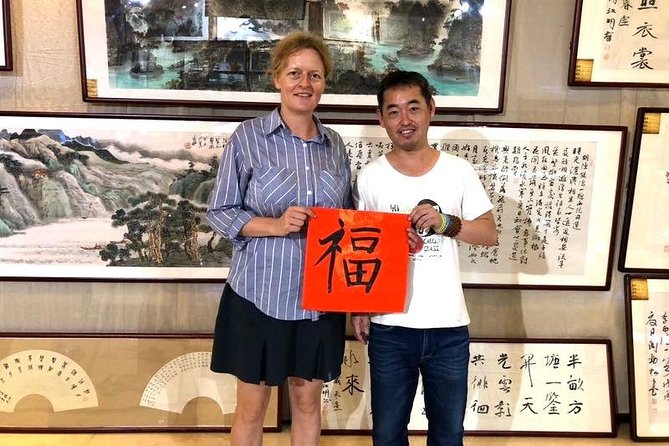
The experience includes an excellent English calligraphy teacher, and that makes a big difference for beginners. When the instructor can explain technique clearly, you spend less time translating in your head and more time actually practicing.
One teacher name that shows up in the experience feedback is Richard. If you get an instructor like Richard, the setup is geared toward helping you understand the movements and the meaning behind them, not just repeating steps.
Bottom line: this is a class where language shouldn’t be a barrier. You’ll still need to put ink to paper (that part is universal), but you won’t be stuck trying to decode what you’re supposed to do.
Group Size, Materials, and Why It Feels Personal
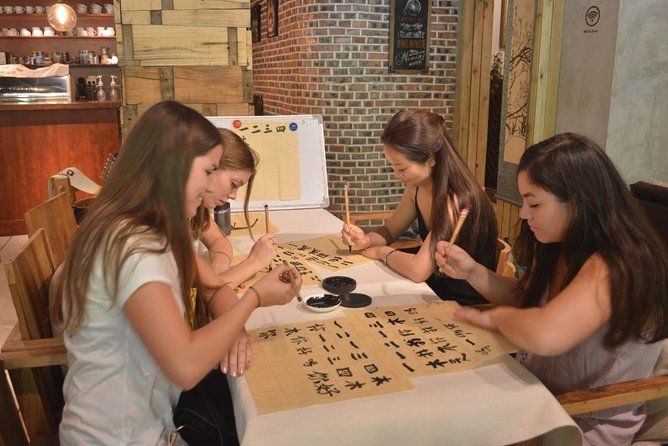
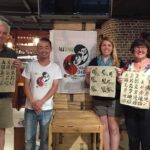
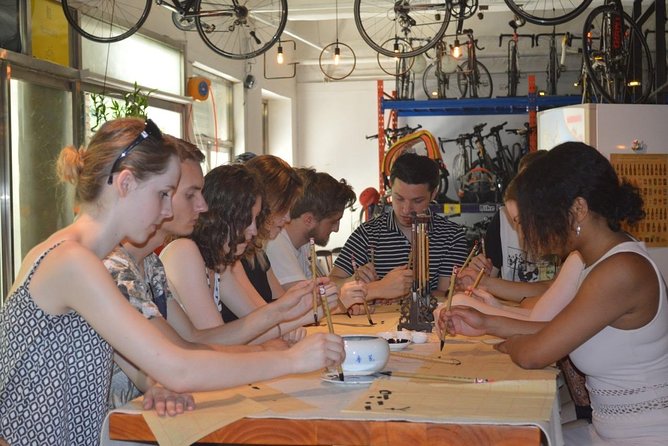
This isn’t a huge workshop. The group size is capped at 15 travelers, which keeps the atmosphere manageable and helps the teacher actually spot issues in your strokes.
What you’ll likely notice in a small group:
- You can ask questions without waiting forever
- Mistakes aren’t ignored; they get corrected
- You don’t feel like you’re being rushed through a script
This matters because calligraphy is physical. If you’re holding the brush slightly wrong or using too much pressure, the character will look off. A smaller group makes correction realistic, not theoretical.
You can also read our reviews of more tours and experiences in Beijing

Price and Value: Getting $20 Worth of Coaching
The listed price is $20.00 per person, and the class is approximately 1 hour. The experience also offers multiple length choices you pick during booking (30-minute, 90-minute, 1-hour, and 2-hour).
How do you judge value for a calligraphy class?
- You’re paying for instruction plus supplies. The class includes the calligraphy materials you use during the session.
- You’re paying for feedback, not just access to tools.
- You’re paying for a small group setting, capped at 15.
So even though it’s not priced like a museum tour or a full-day guided program, you’re getting something practical. If you learn a handful of strokes well, you’ll feel the value immediately. If you’re the type who likes hands-on cultural activities (and you don’t want to sit through another briefing), this is a solid use of time.
Who This Beijing Calligraphy Experience Suits Best
This activity fits a specific mood: curiosity plus willingness to try something new with your hands.
It’s a great match if:
- you’re a beginner who wants guidance
- you’re traveling with kids and want a cultural activity that doesn’t feel like a lecture
- you’d rather make something than only look at things
- you want an air-conditioned, indoor option that doesn’t depend on weather
You might want to skip it if your priority is classic big-attraction touring with lots of walking and photo stops. This class is designed around practice, not roaming.
A Practical Way to Plan Your Day Around the Class
Since you start at Hilton Beijing Wangfujing and return there at the end, it’s easy to connect this with other downtown plans. Here’s how I’d think about timing:
- If you’re doing temples or long sightseeing first, schedule the class for later as a calmer reset.
- If you’re traveling with kids, an hour can be a good middle-of-the-day activity when everyone needs a break.
- If you want more practice and more confidence with strokes, consider a longer option (30 vs 90 vs 1 or 2 hours).
Also, because it uses a mobile ticket, you’ll want your phone charged and ready. It’s a tiny detail, but it prevents the “where’s the code” scramble right when you arrive.
Should You Book This Calligraphy Class?
If you want a Beijing experience that’s genuinely different from standing in lines, book it—especially if you like hands-on learning. For $20, you get an English-friendly class, tool-based instruction, and a small group setting where you can ask questions.
I’d recommend it most strongly to beginners and families. Adults often enjoy it because it’s focused and calming, and kids enjoy it because it feels like making art with real materials. You’ll leave with more than a souvenir: you’ll have a better sense of how Chinese calligraphy works, from brush control to stroke rhythm.
That said, if you’re only interested in outer-city landmarks or you want lots of outdoor sightseeing, this won’t scratch that itch. It’s a classroom-style cultural activity, not a full touring day.
FAQ
How long is the calligraphy class?
The duration is listed as about 1 hour for this experience, and you can also choose different class lengths when booking: 30 minutes, 90 minutes, 1 hour, or 2 hours.
What is included in the ticket price?
The class includes the calligraphy instruction for the chosen time period, an English calligraphy teacher, and the calligraphy supplies you use during the class.
Where do I meet for the experience?
You start at Hilton Beijing Wangfujing, located at Wangfujing Dongjie 8, Dongcheng District, Beijing 100006. The activity ends back at the meeting point.
Do I need cash or extra fees during the class?
Gratuities are not included, and gratuities are recommended. Any other expenses not listed as included are also not included.
What is the group size?
The experience has a maximum of 15 travelers.
Can I cancel and get a full refund?
Yes. You can cancel for a full refund if you cancel at least 24 hours before the experience’s start time. Free cancellation is available up to that point.