REVIEW · BEIJING
Beijing: Peking University Campus Guided Walking Tour
Book on GetYourGuide →Operated by Explore PKU · Bookable on GetYourGuide
Two hours at PKU beats a photo-only visit. I love how this Peking University walking tour turns big-name landmarks like the Boya Pagoda into stories you can actually follow on foot.
I also like the small-group feel and that the guide keeps things practical in English as you walk. The only drawback is time: 2 hours hits the main sights, but PKU is huge, so comfortable shoes matter.
In This Review
- Key things you’ll notice on this PKU walk
- Entering Peking University East Gate and getting oriented fast
- Boya Pagoda, Weiming Lake, and the Bell Pavilion
- The PKU Library and the Statue of Cai Yuanpei
- Hua Biao, Qilin statues, and the meaning behind ornamental stone
- PKU’s evolution: from Yenching University to Yuanmingyuan and Heshen
- Traditional gardens, courtyards, and campus layout you can actually read
- Price, pacing, and who this tour fits best
- Should you book the Peking University campus guided walk?
- FAQ
- How long is the Peking University campus guided walking tour?
- What language is the tour guide?
- How large is the group?
- Where do I meet the guide?
- What major places will we visit during the tour?
- Is food included?
- What should I bring?
- How does cancellation work?
Key things you’ll notice on this PKU walk
- Boya Pagoda + Weiming Lake: classic campus views with meaning, not just scenery
- Bell Pavilion: a stop that helps you understand how PKU thinks about tradition
- Library and Cai Yuanpei: where the tour connects scholarship to real people
- Hua Biao and Qilin statues: you’ll learn what the ornament is trying to say
- Yenching University, Yuanmingyuan, and Heshen: PKU’s story ties into Beijing’s bigger history
- Gardens, courtyards, and layout: you’ll notice how nature and study were designed to work together
Entering Peking University East Gate and getting oriented fast
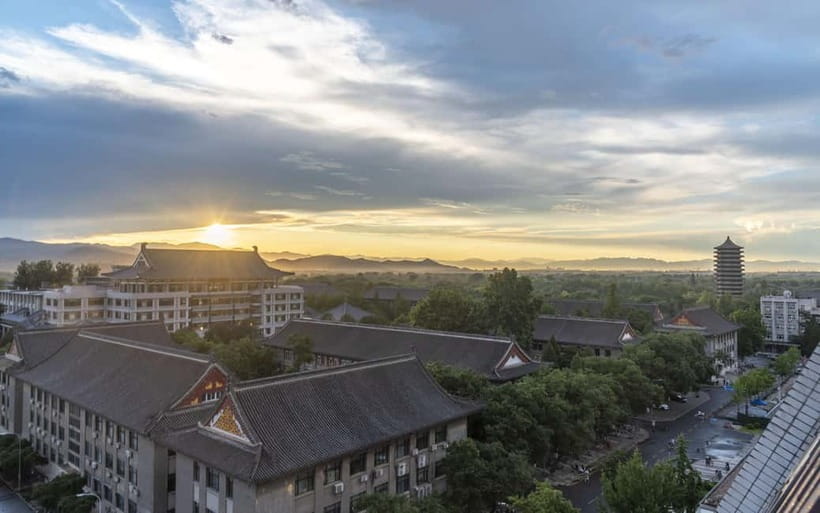
You start at the Beijing University East Gate (北京大学东门). The meeting spot is very specific: the stone lion on the right side when you’re facing the gate entrance. It’s the kind of detail that saves you time and stress—especially because PKU grounds can feel like a whole world once you’re inside.
Within the first minutes, the tour’s format clicks. A current-student-style perspective matters here, because you’re not just being shown buildings. You’re being coached on how to read the campus. You’ll learn what to look for in the layout—where sightlines lead, which corners feel ceremonial, and why certain spaces are placed the way they are. That’s the real advantage of having a guide with an English walkthrough: you get the “why” while you’re still standing in front of the “what.”
This is also where small group size helps. With a limit of 10 participants, you’re more likely to get your question answered without feeling rushed. The tone from the English-speaking guide is friendly and clear, and you’ll be able to keep up even if your Chinese is basically “hello.”
A small, practical tip: bring your camera, but also build in a few minutes where you put it away. Some stops are about details—patterns, placement, symbolism—and the photos look better once you understand what you’re capturing.
You can also read our reviews of more walking tours in Beijing



Boya Pagoda, Weiming Lake, and the Bell Pavilion
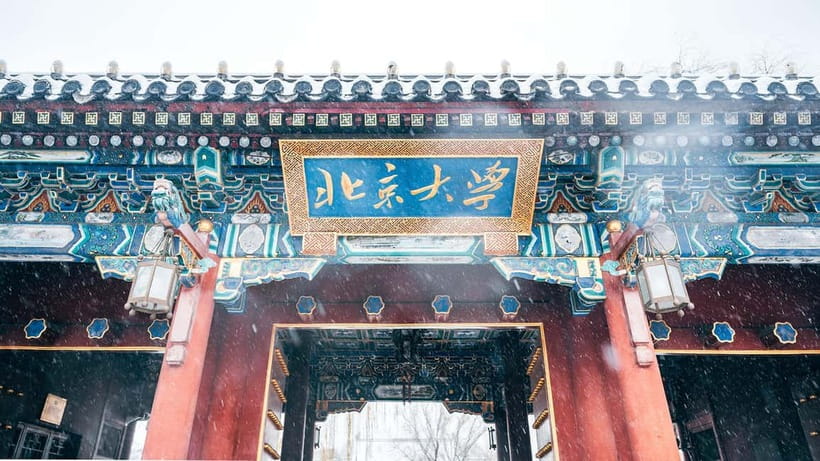
One reason people love PKU in the first place is that it looks like it was designed for slow wandering. This tour uses that advantage. You’re guided through several “signature” points in a way that makes the views feel intentional.
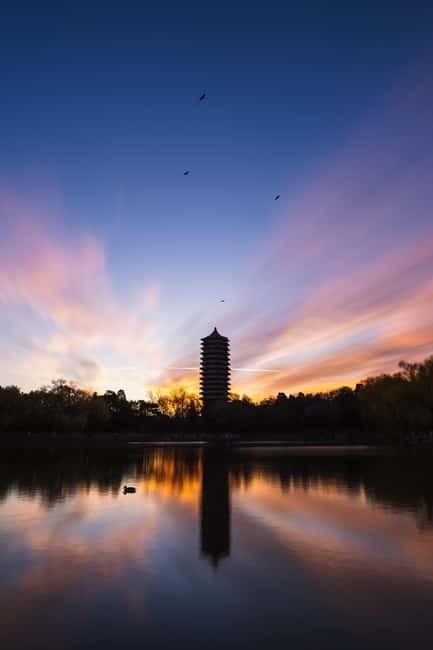
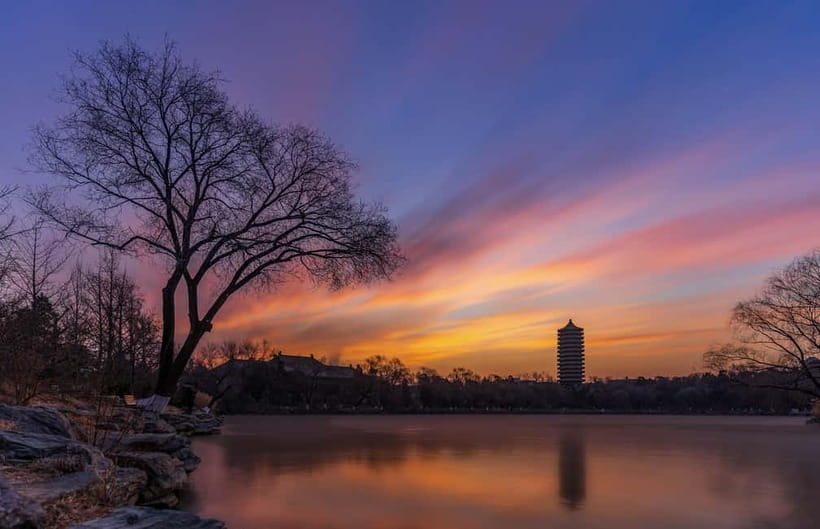
The Boya Pagoda is the anchor early on. It’s described as century-old, and the guide connects it to the campus’s long timeline—how PKU developed and how older cultural elements stayed in the background. The pagoda isn’t only a photo stop. You’ll hear about the symbolism and why it fits the surrounding academic environment.
Next comes Weiming Lake (未名湖), the kind of spot where the campus landscape and daily student rhythms overlap. On a clear day, it’s easy to see why a lake inside a university becomes a kind of social landmark. The tour helps you notice the contrast between calm water and the busy purpose of the school. It’s a reminder that student life isn’t separate from the environment—it’s built into it.
Then you’ll move toward the Bell Pavilion (钟楼). This is a stop that helps you understand how tradition can stay functional. Even if you don’t know the rules of campus bells or ceremonies, you’ll leave with a clearer sense that PKU traditions aren’t random decorations. They’re signals of order, time, and continuity.
What I like most about this part is how you’re not told to just admire. You’re prompted to look for meaning in basic things: where the pavilion sits, how the lake frames the buildings, and what the architecture seems to “promise” about the school’s identity.
Possible drawback? If you’re the type who wants zero walking and maximum sitting, this section may feel like you’re on your feet for most of the 2 hours. But if you’re okay walking, this is where the tour earns its value fast.
The PKU Library and the Statue of Cai Yuanpei
Two of the most important “attention magnets” on campus show up in the middle of the walk: the Peking University Library and the Statue of Cai Yuanpei.
The library is treated as more than a gorgeous academic building. You’ll get context on why it matters to PKU’s intellectual image. It’s one of those places where you can feel the school’s ambition, even before you fully understand the details. The guide’s stories help you read it as a symbol of PKU’s academic spirit—study, access to knowledge, and the idea that a university should be a living engine, not just a campus.
Then you pivot to Cai Yuanpei, a revolutionary former president of PKU. The statue stop works as a human anchor. Without it, the tour could stay too architectural. With it, you’re reminded that institutions are built by people with ideas—and sometimes by people with risky choices.
Cai Yuanpei’s presence also makes the tour feel more political in a useful way. You don’t get heavy lectures, but you understand how leadership shaped PKU’s direction. If you’re interested in modern Chinese history or the evolution of higher education, this is one of the strongest emotional stops on the route.
If you like tours that connect physical places to real personalities, you’ll enjoy this stretch.
Hua Biao, Qilin statues, and the meaning behind ornamental stone
Then comes the part where the tour turns “pretty” into “understandable.” You’ll see Hua Biao (ornamental pillars) and Qilin statues, both associated with ceremonial meaning in Chinese architectural tradition.
These are the kind of details many visitors rush past. The guide doesn’t let that happen. You’ll learn what these elements were meant to communicate—status, protection, respect, and the broader cultural grammar of imperial and scholarly symbolism. On a campus like PKU, those meanings get layered. The ornaments carry old messages, while the surrounding spaces carry new academic purpose.
This is also where a great guide makes the experience feel worth paying for. The tour isn’t just a list of sights. It’s a translator. You’ll walk away able to look at a pillar or statue and say, in your own words, what it’s trying to signal.
The effect is surprisingly satisfying. You’ll start spotting symbolism on your own, after the guide has taught you how to notice it.
A practical reminder: stone details can be slippery or hard to frame in photos depending on where you’re standing. Wear shoes with good grip and take a step back for your shots. You’ll thank yourself later.
PKU’s evolution: from Yenching University to Yuanmingyuan and Heshen
One of the most interesting threads the tour follows is how PKU developed from its older roots. You’ll learn about PKU’s evolution from its connection to Yenching University, and you’ll also hear about links to the Old Summer Palace (Yuanmingyuan).
That might sound like the tour is branching away from the campus, but it’s actually the opposite. These connections help you understand why PKU is positioned the way it is culturally—why it carries layers of earlier eras and influences.
Then the tour adds another Beijing-history layer through Heshen, described as an infamous Qing Dynasty official. This is where you get a more complicated, real-world edge. The campus isn’t floating in a museum bubble. It sits inside a national story with winners, losers, and political consequences.
The value here is perspective. If you’ve only seen PKU from outside or through a few landmark photos, you might think it’s mainly about prestige. This tour shows you it’s also about survival, transformation, and how institutions adapt while still holding onto visible remnants of earlier worlds.
If you like history that connects places to power and policy—without turning your tour into a textbook—you’ll appreciate this section.
You can also read our reviews of more guided tours in Beijing
Traditional gardens, courtyards, and campus layout you can actually read
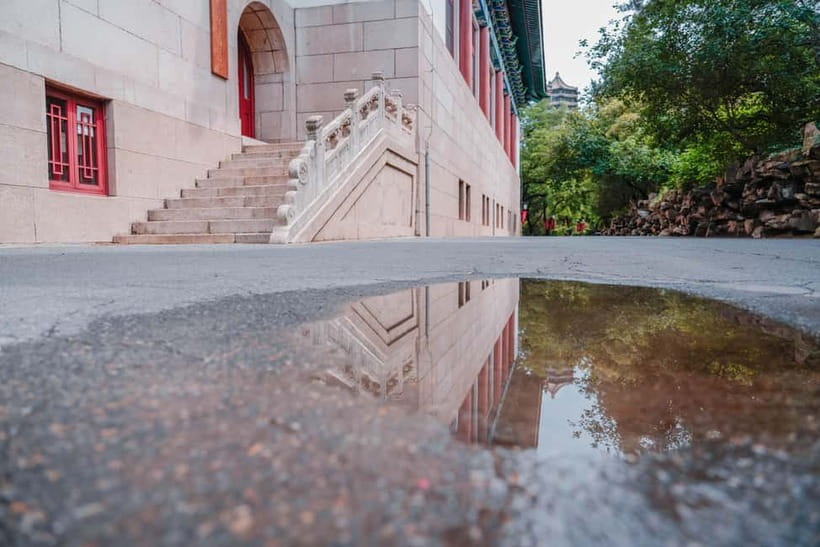
The tour doesn’t treat PKU as a set of separate buildings. It treats PKU as a designed system. You’ll spend time on traditional gardens, courtyards, and building layouts, with an emphasis on harmony between nature and scholarship.
This is one of those ideas that can sound vague until you’re walking it. When you’re shown the garden plan and the courtyards’ relationships to study spaces, you start seeing how the campus encourages certain behaviors: quiet observation, contemplative movement, and a sense that learning is part of daily life.
You’ll also get help noticing how the route itself reflects that design. Paths aren’t just pathways. They guide your attention. Open courtyards become moments where you can recalibrate your bearings. Garden views become a break that makes the academic buildings feel less intimidating.
A nice touch from the guide experience described in English-speaking tours: you’re not only learning facts. You’re learning how students might interpret the space. That’s what makes a garden tour feel different from a “walk by and move on” tour.
One more practical angle: gardens and courtyards can be gorgeous, but they can also be affected by weather and light. If you’re going when it’s hot or bright, plan on sunscreen and water even if food isn’t included. Your focus will stay better that way.
Price, pacing, and who this tour fits best
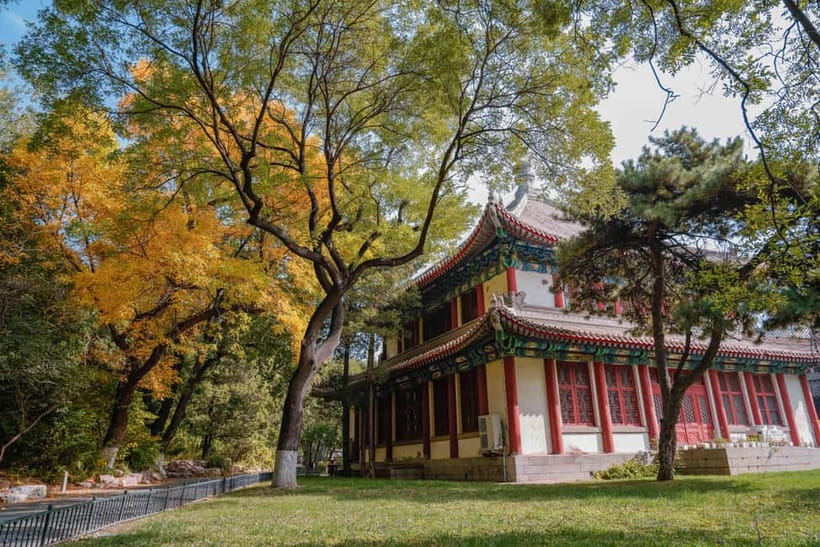
At $39 per person for a 2-hour guided walking tour, the question is simple: what are you getting for the money? You’re getting an English-speaking guide, a small group capped at 10, and access to multiple major PKU landmarks in a compact route.
Where the value really shows is in the “because” factor. The tour’s stories explain why things exist where they do, and how PKU’s evolution shaped what you see today. Without a guide, you could still visit the campus, but it’s easy to miss the significance behind Boya Pagoda, Weiming Lake, the Bell Pavilion, and the ornamental stone symbolism.
The pacing is also honest. Two hours won’t let you do a full campus loop or linger forever at every spot. But that’s not a flaw if you use it right. You’ll get a strong orientation plus the key interpretation that helps you enjoy the rest of your time on your own.
This tour is especially good for:
- History fans who want PKU’s story connected to Beijing beyond the campus gates
- Architecture and symbolism lovers who like meaning, not just photos
- Families and groups looking for a guide who can handle questions and keep things understandable
- Anyone dreaming of PKU and wanting a firsthand sense of the academic environment
And it may not be ideal if you want lots of free time to roam alone without interpretation, or if you’re dealing with mobility limitations that make steady walking hard. Comfortable shoes are the main “must,” and the tour is designed around walking.
Should you book the Peking University campus guided walk?
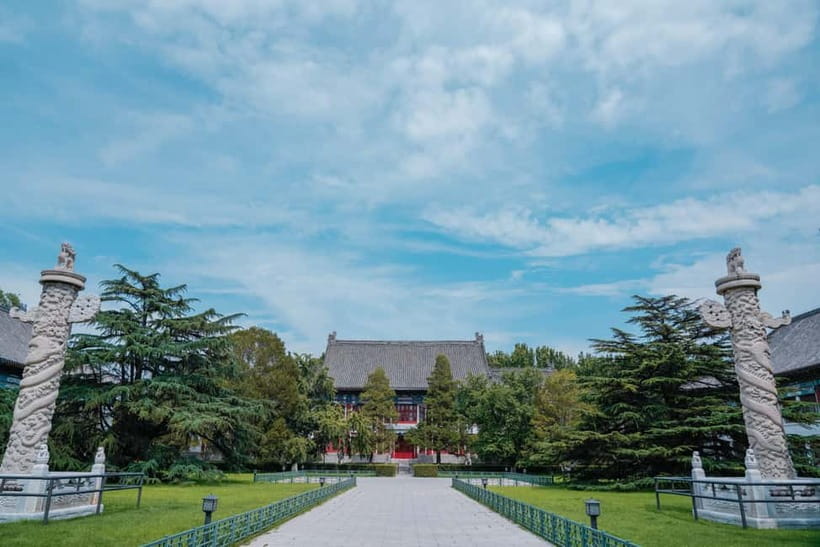
Yes, if you want more than landmark snapshots. This is a smart way to spend 2 hours at PKU because you get both scenery and context: Boya Pagoda, Weiming Lake, the Bell Pavilion, the library, Cai Yuanpei, and the symbolism of Hua Biao and Qilin. You also get the bigger historical connections—Yenching University, Yuanmingyuan, and Heshen—which makes the campus feel less like an isolated elite bubble.
Book it if you like guides who speak clearly in English and keep the tone friendly and practical. The guidance from Henry (based on prior tour experiences) is repeatedly described as careful, informative, and easy to communicate with, including patience with kids, which is a good sign if you’re traveling with family.
Skip it only if you truly want a long, slow self-guided campus day. This tour is short by design, so you’ll get the essentials and the meaning—then you’ll likely want to return on your own for deeper wandering.
If that’s your travel style, this PKU walk is a solid, good-value pick.
FAQ
How long is the Peking University campus guided walking tour?
It lasts 2 hours.
What language is the tour guide?
The tour guide speaks English.
How large is the group?
The group is limited to 10 participants.
Where do I meet the guide?
You meet at Peking University East Gate (北京大学东门), at the stone lion on the right side when facing the gate entrance.
What major places will we visit during the tour?
You’ll visit places including the Boya Pagoda, Weiming Lake, the Bell Pavilion, the Peking University Library, the Statue of Cai Yuanpei, and sites featuring Hua Biao and Qilin statues.
Is food included?
No. Food and drinks are not included.
What should I bring?
Bring comfortable shoes for walking and a camera for photos.
How does cancellation work?
You can cancel up to 24 hours in advance for a full refund. You can also reserve now and pay later.