REVIEW · BEIJING
Beijing Hutong Walking Tour History, Architecture and Local Life
Book on Viator →Operated by 启城|NextCity · Bookable on Viator
History has narrow lanes. This Beijing hutong walking tour strings together old architecture and everyday street life, with stops that range from a Chinese-style church to temple walls and pagodas. I especially liked the way the guide pays attention to small details like door symbolism and how those shapes your sense of the neighborhoods. You’ll also get a complimentary traditional Beijing drink that makes the first stretch feel more local than touristy.
If you’re hoping for everything to be open no matter what, keep expectations realistic. The route depends on good weather, and one key stop (the Temple of Successive Emperors) may be accessible only if it’s open at the time you visit.
In This Review
- Key highlights
- Hutongs, temples, and a fast trip to modern Beijing
- Price and what you really get for $49
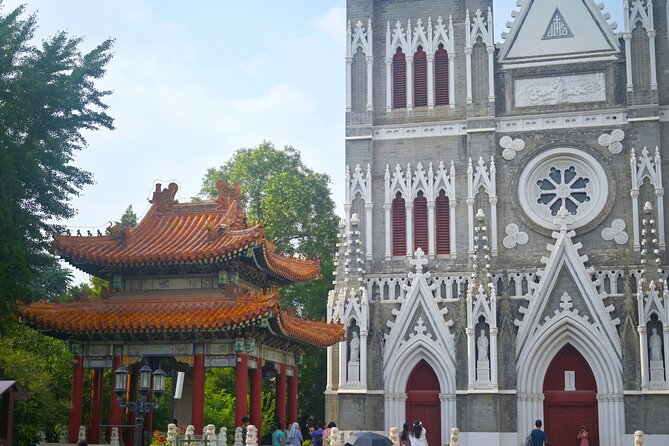
- Start at Xishiku Church: the story of an early Beijing landmark
- Guangji Temple: finger paintings and traditional temple geometry
- Zhengyang Shuju: a Yuan Dynasty pagoda inside an older Beijing mood
- Zhuanta Lane hutong: the best place to learn how neighborhoods work
- Temple of Successive Emperors: ancestral respect in grand scale (if open)
- White Stupa Temple views: learn pagodas from the outside
- How to time your day around this route
- What makes the guide impact huge here
- Who this tour fits best (and who should consider alternatives)
- Should you book this hutong walking tour?
- FAQ
- How long is the Beijing Hutong walking tour?
- Where does the tour start and end?
- How much does it cost?
- Is admission included?
- What’s included besides the visits?
- What’s the group size limit?
- Do I need to worry about weather?
- What’s the cancellation window?
- Is the tour ticket mobile?
Key highlights
- Xishiku Church: Beijing’s earliest church with a distinctive Chinese touch
- Guangji Temple finger paintings: traditional temple architecture plus ancient art you can actually see
- Zhengyang Shuju and the Wansong Brick Pagoda: a Yuan Dynasty pagoda paired with old Beijing images in a siheyuan
- Zhuanta Lane hutong walk: a focused look at daily life in one of Beijing’s older lanes
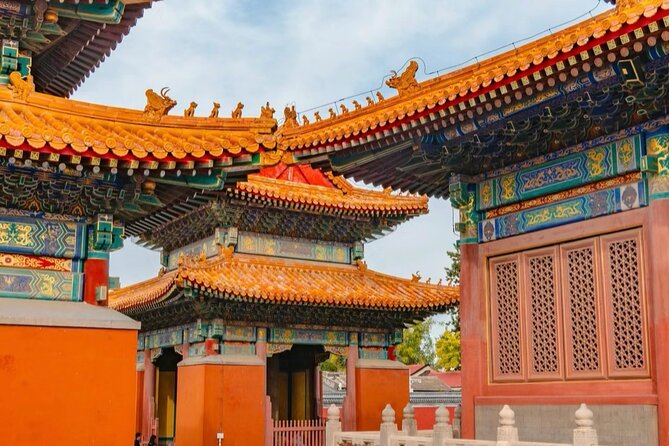
- Temple of Successive Emperors (when open): how the Chinese honor ancestors in grand imperial-scale structures
- White Stupa Temple exterior views: pagoda types explained from a nearby cafe balcony
Hutongs, temples, and a fast trip to modern Beijing
One reason I like this tour concept is the contrast. You start in the Xisi / Xishiku area (near the Xisi Metro stop and meeting around Fuchengmen Line 2, Exit C) and finish near Fuchengmen and Financial Street, so you get a real sense of how old Beijing and modern business Beijing sit side by side.
You do not spend your whole day stuck in one theme park of history. Instead, you’re moving through multiple belief-and-life spaces: a church, temples, and siheyuan courtyards—then a hutong lane where you can watch how the neighborhood works. In about 3 hours, it’s a useful way to get your bearings, especially on a first trip.
There’s also a smart group size. With a maximum of 10 people, you’re not lost in a crowd. That matters in hutongs where narrow lanes and quiet corners reward a guide who can slow down and explain.
You can also read our reviews of more walking tours in Beijing



Price and what you really get for $49
At $49 per person for roughly 3 hours, this is priced like a “short and focused” walk rather than a full-day history ticket. You’re paying for two things you can’t easily DIY: a guide who can connect architectural details to daily life, and a route that strings together several sites without wasting time.
What’s included helps the value feel concrete:
- Admission and taxes included overall
- Bottled water
- A complimentary traditional Beijing drink
- One paid-site component: the Temple of Successive Emperors is listed as included (if it’s open)
And importantly: most other stops are free at the time of the visit as presented on the tour.
The biggest “value” test for me isn’t the cost. It’s whether the time feels well spent. Here, each stop is short (10–20 minutes), but they’re not random. They build a picture of how Beijing’s spaces function—who used them, what they looked like, and why the layout and symbols matter.
Start at Xishiku Church: the story of an early Beijing landmark
Your first stop is Xishiku Church, described as Beijing’s earliest church with a unique Chinese touch. Even if you’re not studying architecture, this is a strong opener because it sets a theme: Beijing doesn’t only repeat one historical style. It adapts.
Expect the guide to connect the building to local context rather than just reciting dates. This early start also helps you get into a walking rhythm before the route deepens into temples and hutongs.
Time at the stop is about 10 minutes and admission is free, so it’s more about orientation than a long museum visit.
Potential downside: if you’re the type who wants long indoor time, you’ll likely feel the schedule is tight here. This tour moves at a “see and understand” pace.
Guangji Temple: finger paintings and traditional temple geometry
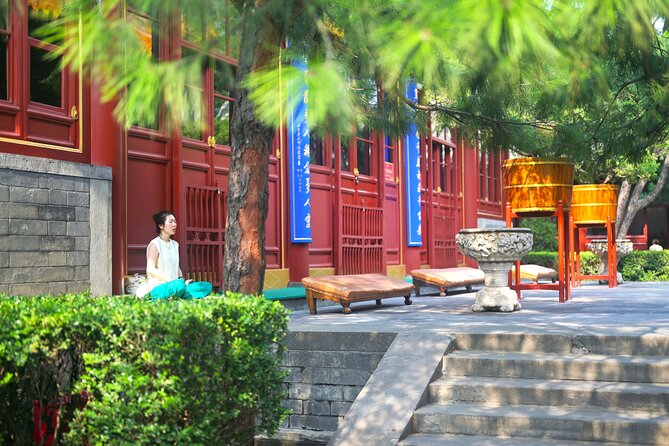
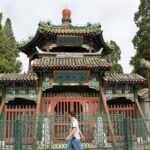
Next is Beijing Guangji Temple, with traditional Chinese temple architecture and ancient finger paintings. This stop stands out because it blends physical design with lived history. Finger paintings are exactly the sort of detail that makes a building feel inhabited, not just preserved.
The stop is around 20 minutes, and it’s another free admission stop. If you enjoy when a guide points out what to look for—lines, walls, layout—this is one of the easiest sites to follow along.
A practical note: temples often mean you’ll be outside or partially sheltered. If weather shifts, this is the point where you’ll feel it, so bring something for wind or rain.
Zhengyang Shuju: a Yuan Dynasty pagoda inside an older Beijing mood
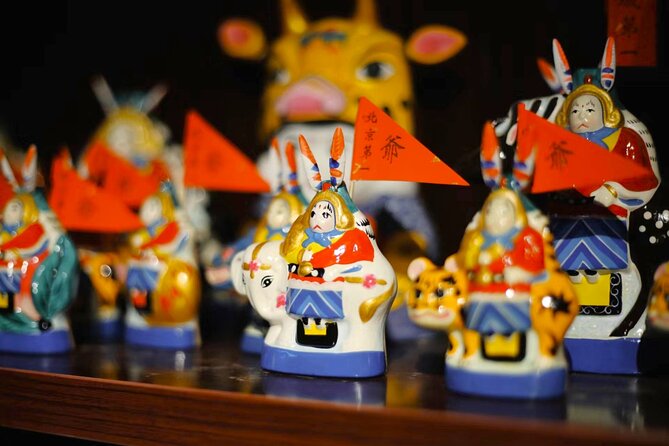
Then you move to Zhengyang Shuju, where the highlight is the Wansong Brick Pagoda from the Yuan Dynasty. Pairing a specific, named historical structure with a nearby siheyuan makes the stop feel anchored in place. It’s not only “look at the pagoda.” It’s also “here’s the courtyard setting that helped shape daily life around it.”
You’ll also explore a collection of old Beijing images inside a siheyuan. That kind of visual reference is more helpful than people expect. Even in a short tour, old photos let you compare what you’re seeing now with how the lanes and courtyards used to look.
This stop runs about 20 minutes and admission is listed as free.
Possible drawback: because the time is limited, if you want extra time with the images or want more time around the pagoda base, you may have to step aside for the group flow.
You can also read our reviews of more historical tours in Beijing


Zhuanta Lane hutong: the best place to learn how neighborhoods work
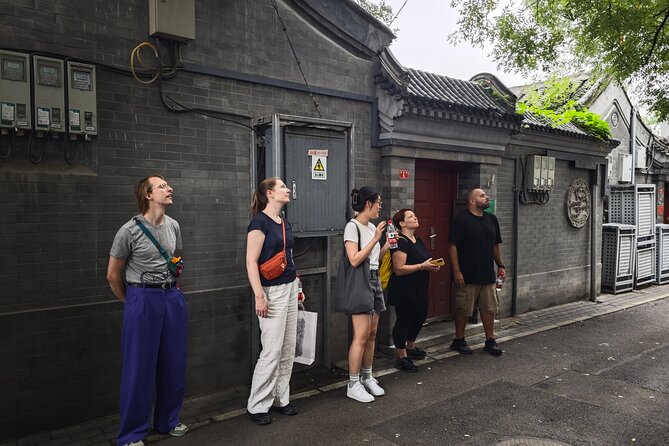
Now you get to what many people come to Beijing for: a walk through an old hutong. You’ll visit Beijing Zhuanta Lane, described as one of the oldest hutongs, with the goal of seeing the pulse of daily life.
This is where guide quality really matters. In the best versions of this tour style, the guide doesn’t just tell you that hutongs are historic. They explain how the space is structured—how the lane, doorways, courtyards, and building placements shape what happens there.
One of the most praised elements from this kind of experience is how clearly the guide can explain the layout and the significance of doors. That sounds small, but it’s actually a shortcut to understanding siheyuan culture. Door placement and design can tell you who belongs, how privacy works, and how the courtyard relates to the lane.
Stop time is about 15 minutes with free access. It’s short, but it’s focused—enough to make you feel how hutongs operate without turning it into a long street ramble.
Temple of Successive Emperors: ancestral respect in grand scale (if open)
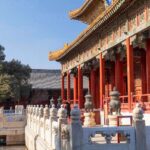
Next is Lidai Diwang Miao, also called the Temple of Previous Dynasties / Temple of Successive Emperors. Here, the tour emphasizes the grand palatial structures and how Chinese culture honors ancestors. Admission is listed as included.
The key word in the tour description is if open. So you should be prepared that sometimes you’ll arrive and only see what the day allows.
If it is open, this stop is your “wow” moment. Hutong life is human-scale. This is ceremonial and imperial-scale, and it gives you a different lens on what people valued and how they structured respect and memory in public space.
Time is about 20 minutes.
Practical consideration: it’s the kind of site where you’ll appreciate a guide who can translate what you’re seeing—why structures are arranged the way they are, and how the atmosphere is meant to be experienced.
White Stupa Temple views: learn pagodas from the outside
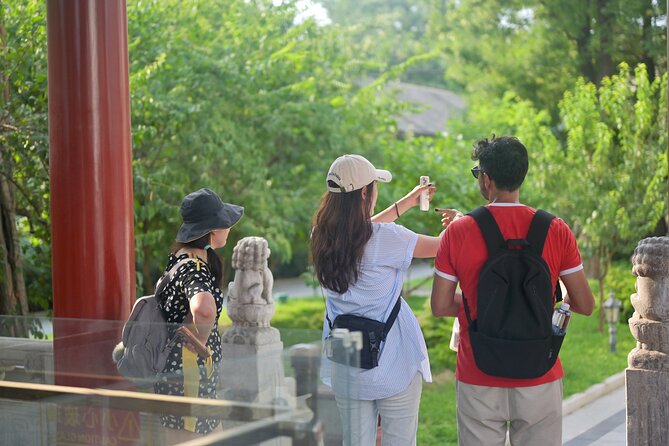
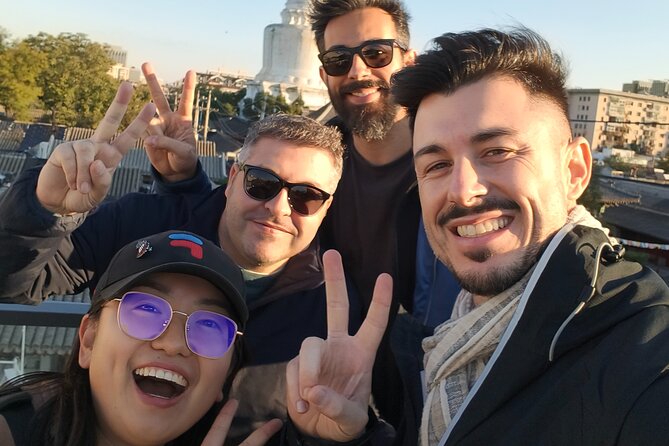
The last major site is White Stupa Temple, also known as Miaoying or Baita Si. Instead of a deep interior visit, the tour sets you up for something practical: the guide shows you the exterior design of the White Stupa from a nearby cafe balcony, and explains different types of Chinese pagodas.
That balcony approach is honestly one of the smartest parts of the experience. You can get a clean line of sight, and you don’t have to fight crowds inside. It’s built for learning while keeping your feet under you.
This stop lasts about 15 minutes and is listed as free. If you want a tour ending that leaves you with a clear mental image, this is the part that helps.
How to time your day around this route
Because the tour is roughly 3 hours including travel between stops, you can place it early or mid-day. It’s especially useful earlier in your trip because it helps you understand how Beijing’s neighborhoods are laid out.
You’ll also want to think about where you go next. The tour ends near Fuchengmen and Financial Street, which can work well if you’re moving on to shopping, a major museum, or a modern restaurant area afterward.
Bring the basics:
- Comfortable shoes for uneven hutong surfaces
- A light layer (temples and outdoor stretches can feel different depending on weather)
- A small umbrella if conditions are iffy, since the tour requires good weather
What makes the guide impact huge here
This tour succeeds or fails on one thing: whether your guide can connect architecture to real understanding. The strongest moments are the explanations—how the hutong is laid out, why doorways matter, and how different religious spaces fit into Beijing’s story.
In the feedback tied to this experience, guides named Lori and Dee stand out for being personable and responsive—people ask questions, and the guide answers. That’s not fluff. In old-city walks, your questions are the whole point. If you get clear answers, the places stop feeling like unrelated stops and start feeling like one coherent city.
If you’re the type who likes restaurant recommendations afterward, that’s also part of what these guides do well—helping you decide what to eat without turning your afternoon into a decision marathon.
Who this tour fits best (and who should consider alternatives)
This hutong walk is a good match if:
- You want a short, high-structure introduction to Beijing’s old-city fabric
- You enjoy temples, courtyards, and architecture more than nightlife
- You like guided detail (like why doorways or layouts are significant)
- You want a manageable group size (max 10)
You might want a different option if:
- You’re hoping for long stays at each site (this route is time-boxed per stop)
- You want purely interior museum-style visits (some highlights are outdoors or exterior-view based)
- You’re traveling in weather that’s unstable (the tour requires good weather, and you don’t want to lose momentum)
Should you book this hutong walking tour?
I’d book it if you want a practical first taste of Beijing beyond the biggest-name landmarks. For $49, you’re buying time-saving structure plus real guidance through hutongs, siheyuan spaces, and temple architecture—plus that included traditional drink.
The main reasons to hold off are simple: if you’re going in questionable weather, or if you absolutely need the Temple of Successive Emperors to be open. Otherwise, this is the kind of route that helps you see the city differently, not just photograph it.
If you want a short tour that turns into confidence for the rest of your trip, this one makes sense.
FAQ
How long is the Beijing Hutong walking tour?
The tour lasts about 3 hours, including time traveling between each location.
Where does the tour start and end?
It starts in the Xisi / Xishiku area (meeting around Fuchengmen Line 2, Exit C). It ends near Fuchengmen Station, C East-South Exit and the Financial Street area.
How much does it cost?
It costs $49.00 per person.
Is admission included?
Yes. The tour includes all fees and taxes, and most stops are listed as free. The Temple of Successive Emperors is listed as admission included (if open).
What’s included besides the visits?
You get bottled water and a complimentary traditional Beijing drink.
What’s the group size limit?
The tour has a maximum of 10 travelers.
Do I need to worry about weather?
Yes. The experience requires good weather, and if it’s canceled due to poor weather, you’ll be offered a different date or a full refund.
What’s the cancellation window?
You can cancel for a full refund if you cancel up to 24 hours in advance of the experience start time.
Is the tour ticket mobile?
Yes, it’s a mobile ticket. Confirmation is received at booking time.