REVIEW · BEIJING
Beijing Private Tai Chi Class
Book on Viator →Operated by Beijing San Feng Tai Chi Club · Bookable on Viator
Calm in motion. This private attention tai chi class in Beijing pairs slow, beginner-friendly movement with an English-speaking master, so you get clear guidance instead of guesswork. You’re also taught the Taoist ideas behind the practice, like yin and yang and the meaning of Qi, not just the choreography.
I like that the lesson is beginner-focused and built around a 9-step form, plus standing meditation, a push-hands experience, and self-massage for daily aches and stress. One consideration: the class requires good weather, and there’s no hotel pickup, so you’ll want to plan to get to the meeting point yourself.
In This Review
- Key highlights at a glance
- Where you’ll practice: Beijing’s park energy near Tian Tan
- Your 90 minutes: what happens from start to finish
- Learning the 9-step tai chi form (and why beginners benefit)
- Meditation and push hands: calm movement with real-world balance
- Self-massage techniques you can use the same day
- The Taoist yin-yang explanation: learning the why, not just the how
- Meeting point, shoes, and the reality of traveling in Beijing
- Price and value: is $58 fair for 90 minutes?
- Who this is best for (and who should skip it)
- Should you book this Beijing private tai chi class?
- FAQ
- How long is the Beijing private tai chi class?
- How much does it cost?
- Is this a private class or a shared group tour?
- Is the class designed for beginners?
- What will I learn during the lesson?
- Do I get to choose a morning or afternoon time?
- Where does the class meet?
- Are hotel pickup and drop-off included?
- What if the weather is bad or I need to cancel?
Key highlights at a glance
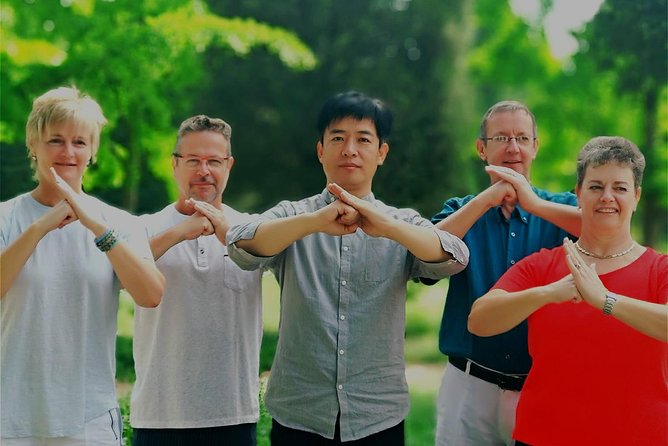
- Private class, your group only: full focus from the instructor, tailored to beginners.
- 9-step tai chi form: a structured start that feels achievable.
- Meditation plus push hands: you learn how the calm work connects to interaction.
- Self-massage techniques: practical relief for stress and pain in everyday life.
- Taoist yin-yang philosophy and Qi: the why behind the movement, explained clearly.
- Mobile ticket and simple flow: meet, practice, and return to the same spot.
Where you’ll practice: Beijing’s park energy near Tian Tan
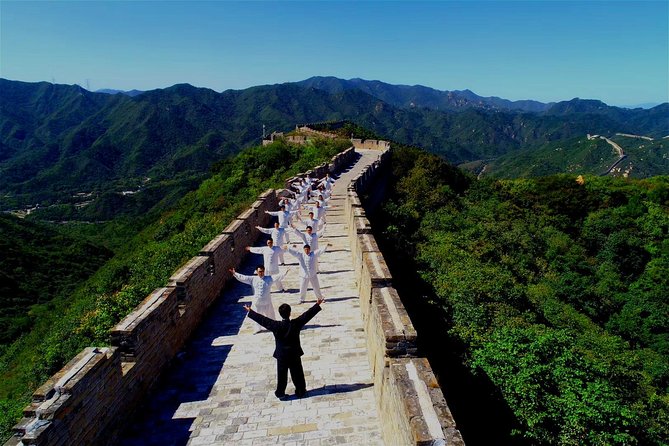
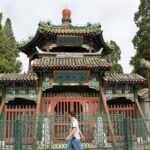
This class meets at 旻园1 (Tian Tan Dong Lu), Dong Cheng Qu, Beijing 100061. That area puts you in the Beijing rhythm where people often practice in public spaces, and tai chi fits right into the morning or afternoon flow.
You’ll start and end at the same meeting point, so you’re not bouncing around the city. That matters because tai chi is the kind of activity where you want your body warmed up and your mind settled—not rushed between stops.
A detail worth planning for: there’s no hotel pickup or drop-off. If you don’t know Beijing well, that’s not a deal-breaker, but it does mean you should set aside time to reach Tian Tan Dong Lu on your own.
You can also read our reviews of more private tours in Beijing



Your 90 minutes: what happens from start to finish
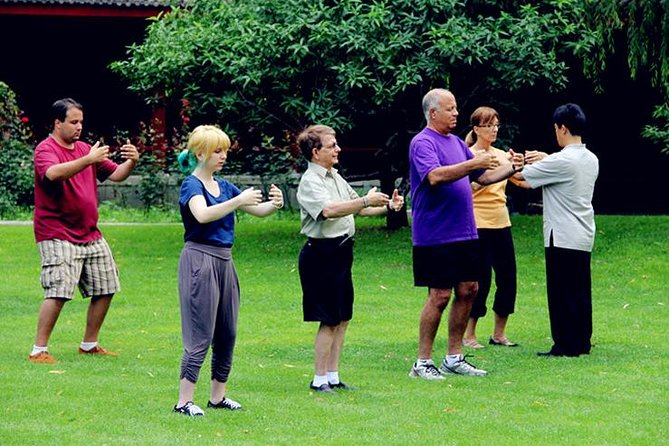
The class runs about 1 hour 30 minutes. For a tai chi lesson, that’s a good length: long enough to learn real movement, but not so long that you lose focus or feel overwhelmed.
Here’s how the time typically feels, step by step:
1) Culture and foundations first
Before you start moving, you’ll get oriented to tai chi as an internal martial art and to the Taoist lens behind it. You’ll hear how yin and yang ideas shape the way you move, breathe, and pay attention.
2) The form practice in a simple sequence
The class teaches nine steps of a tai chi form. Beginners tend to worry about doing it perfectly; the structure helps you learn it in a proven order and build confidence.
3) Standing meditation and stillness work
You’ll also practice standing meditation. This is where the lesson stops being only physical. You learn how to coordinate breath and focus, while keeping your movements slow and deliberate.
4) Push hands experience
Then you get a taste of push hands. This isn’t described as something technical or competitive; it’s more about learning how connection and balance work when both people stay relaxed.
5) Self-massage for pain and stress relief
Finally, you learn self-massage methods tied to stress and daily aches. This is a practical add-on: you leave with a few things you can use back at your hotel or at home.
You can choose a morning or afternoon class, which is great if you’re pairing tai chi with sightseeing. Morning tends to fit well with the calm focus of the practice, while afternoon can work if you want a slower activity before dinner.
Learning the 9-step tai chi form (and why beginners benefit)
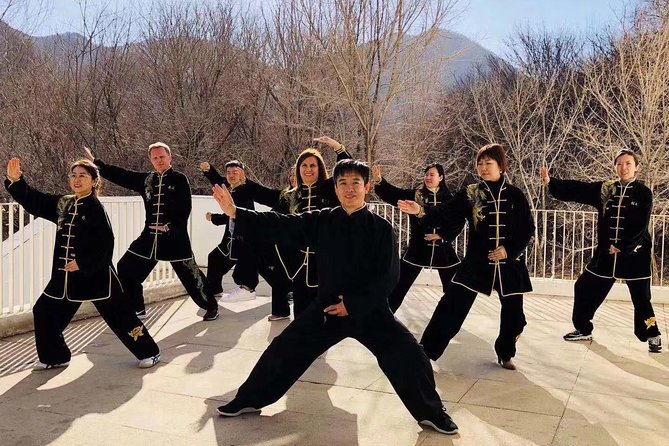
The big promise here is straightforward: you learn the basics of tai chi during a private class with step-by-step instruction. The lesson is specifically described as made for beginners, and that shows in the way the form is taught.
Instead of throwing a long sequence at you, you start with 9 steps. That’s a smart move for visitors because:
- You can actually remember what you learned.
- You get a sense of flow without feeling like you need a month of practice just to stand correctly.
- It helps you understand how tai chi uses transitions, weight shifts, and posture—not just arm positions.
Also, the instructor doesn’t treat this as rote “copy the teacher.” You’ll get guidance on how to slow down, stay balanced, and connect breath and intention to movement. That’s the difference between doing tai chi and doing something that only looks like it.
If you’re the type who likes clear tasks—watch, copy, then correct—this format should feel satisfying.
Meditation and push hands: calm movement with real-world balance
Tai chi is known for being slow, but this class doesn’t stop at stillness. You’ll practice standing meditation and a push-hands experience.
Why that combo matters: standing meditation teaches you to settle your attention and keep your body steady. Push hands then tests that steadiness in a way that feels connected rather than aggressive. Even if you don’t become a “martial artist,” balance and awareness are skills you can carry into daily life.
A beginner-friendly push hands experience can also reduce the fear factor. Instead of thinking tai chi is only for people with perfect control, you learn how sensitivity and softness work together.
You’ll also be taught about Qi. The class description frames Qi as something you can obtain through natural practice, along with breath and focus. You don’t need to have a spiritual background to follow along; the class is positioned as a guided introduction, with cultural context explained.
Self-massage techniques you can use the same day
One of my favorite reasons to book this kind of class is the “leave with tools” feeling. Here, that tool is self-massage—specifically methods intended to help relieve pain and stress from daily life.
For travelers, that’s practical. Walking all day can tighten your shoulders, stiffen your hips, and make sleep less restful. A short routine you can repeat later is more valuable than a class that only gives you photos and a memory.
You should go in with the expectation that you’ll learn a few techniques, not a medical protocol. The emphasis is on comfort and self-care within tai chi’s broader internal-martial-art approach.
You can also read our reviews of more tours and experiences in Beijing




The Taoist yin-yang explanation: learning the why, not just the how
This class includes the “why” behind the movements: Taoism, yin and yang, and the concept of Qi. That matters because it turns tai chi from a sequence of motions into a method of attention.
When you understand yin and yang in plain terms, you start seeing the practice differently:
- Why you shift weight gradually instead of forcing it.
- Why softness and relaxation are part of power.
- Why breath and focus are treated as part of the physical training.
The instructor you’ll meet is an English-speaking master. In past lessons, an instructor named Eric Liu has been highlighted in feedback for being friendly and patient, especially for people who start with zero experience. If you like a teacher who explains concepts clearly and keeps you from feeling lost, that’s a strong sign.
Meeting point, shoes, and the reality of traveling in Beijing
A couple practical notes to keep your day smooth:
- Wear comfortable shoes. You’ll be doing slow standing and movement work, and good footing helps.
- Plan to arrive a few minutes early so you can settle before you start.
- Bring water if you like, though the class does not include food and drinks.
Because there’s no hotel pickup, your main job is simple: get yourself to 旻园1 / Tian Tan Dong Lu. If that’s intimidating, do a quick check of local transit options before you go—this is the only real “logistics” hurdle.
Also note: confirmation happens at booking time, and the class ends back at the meeting point. That keeps the experience easy to integrate with the rest of your Beijing plans.
Weather matters here. The activity requires good weather, and if it’s canceled due to poor weather, you’ll be offered a different date or a full refund.
Price and value: is $58 fair for 90 minutes?
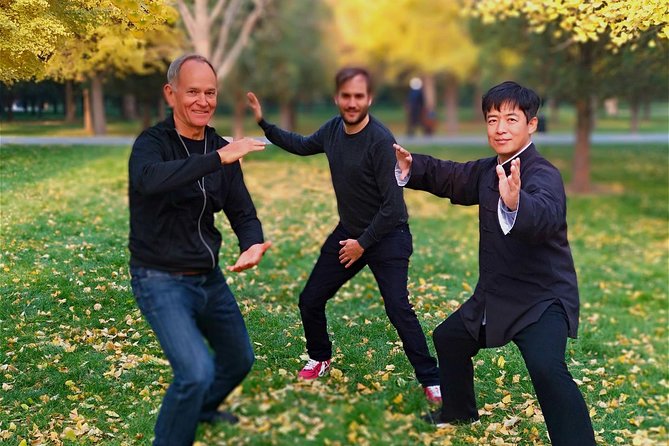
At $58 per person, this class lands in the “worth it if you like direct instruction” category. For the money, you get:
- A private class (only your group).
- An English-speaking master.
- A lesson that covers form practice, meditation/standing work, a push-hands experience, and self-massage.
- An entrance ticket.
What you don’t get: hotel pickup/drop-off and food and drinks.
So where’s the value?
- If you’re a beginner, private instruction can prevent frustration. You learn the right basics faster.
- The lesson isn’t just physical. You get cultural framing—yin/yang, Taoism, Qi—plus practical self-massage methods you can repeat.
- The structure (including 9 steps) makes it feel like progress, not just watching.
One more sign of demand: this experience is typically booked about 17 days in advance on average. That usually means you should reserve early, especially if you want a specific morning or afternoon slot.
Who this is best for (and who should skip it)
This class is a strong fit if:
- You’re a beginner or returning to tai chi after a long break.
- You want a calmer activity in Beijing that still feels productive.
- You like a teacher who explains the concepts, not just the moves.
- You want tools for everyday comfort, not only a workout.
It might not be the best fit if:
- You need a fully indoors experience every time, because good weather is required.
- You want someone to collect you from your hotel. There’s no pickup included.
If you’re traveling with a friend, a couple, or a small group, the private format can feel especially efficient, because you’re sharing the experience but still getting personal attention.
Should you book this Beijing private tai chi class?
I think you should book it if you want a beginner-friendly tai chi start with clear step-by-step guidance, plus meditation, push hands, and self-massage in one session. The price makes sense for what’s included, especially because it’s private and taught by English-speaking masters.
Book it soon if you’ve got tight plans, since it’s commonly reserved about 17 days in advance. And if you’re sensitive to weather disruptions, keep a flexible schedule so you can handle a reschedule if the day is too rainy.
If your goal is a real, calming skill you can practice again later (instead of a one-time photo stop), this lesson is the kind of Beijing experience that pays off.
FAQ
How long is the Beijing private tai chi class?
The class lasts about 1 hour 30 minutes.
How much does it cost?
It costs $58.00 per person.
Is this a private class or a shared group tour?
It’s a private tour/activity. Only your group will participate.
Is the class designed for beginners?
Yes. The class is specifically made for beginners.
What will I learn during the lesson?
You’ll learn tai chi forms (including a 9-step form), meditation (including standing meditation), a push hands experience, and self-massage techniques for pain and stress relief. You’ll also learn about tai chi’s culture, including Yin Yang and Taoist philosophy, and the idea of Qi.
Do I get to choose a morning or afternoon time?
Yes. You can choose between a morning or afternoon class to fit your schedule.
Where does the class meet?
The meeting point is 旻园1, Tian Tan Dong Lu, Dong Cheng Qu, Bei Jing Shi, China, 100061.
Are hotel pickup and drop-off included?
No. Hotel pickup and drop-off are not included.
What if the weather is bad or I need to cancel?
The experience requires good weather. If it’s canceled due to poor weather, you’ll be offered a different date or a full refund. Cancellation is free, and you can cancel up to 24 hours in advance for a full refund.